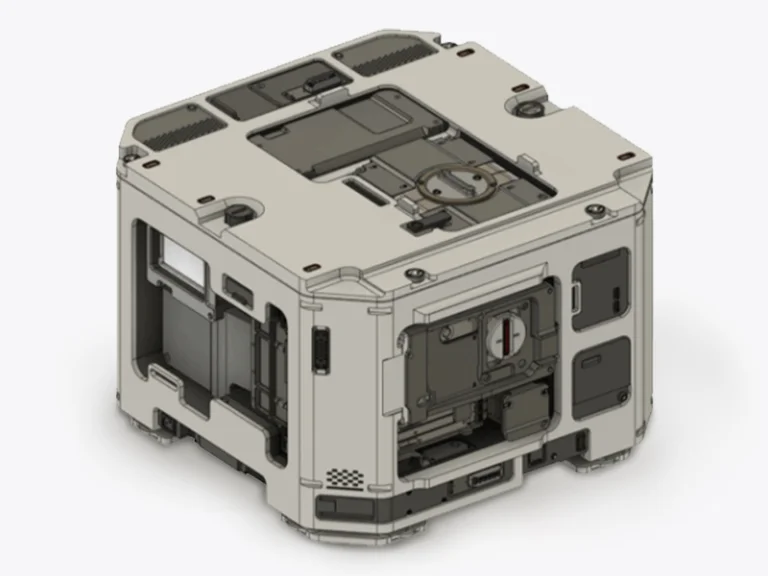
CNC machining refers to computer numerical control processes that remove material from a workpiece to create a precise part, in which pre-programmed computer software dictates the movement of factory tools and machinery. This process allows for high-precision manufacturing of complex parts with consistent quality. Different part geometries and materials often require different CNC machining types, making it essential to understand the options available.
Main CNC Machining Types
CNC machining encompasses a wide range of processes, each suited to particular materials and applications.
Turning
In turning, the workpiece rotates on a lathe while a stationary cutting tool removes material. The process creates cylindrical or symmetrical shapes through continuous contact along the axis of rotation. Operators use single-point tools for external diameters, internal bores, and threads.
Suitable materials include metals such as aluminum, steel, brass, and titanium, as well as some plastics and composites that hold shape during rotation.
Typical applications cover shafts, bolts, bushings, and engine components in automotive and aerospace sectors.
Drilling
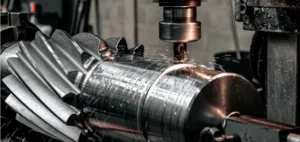
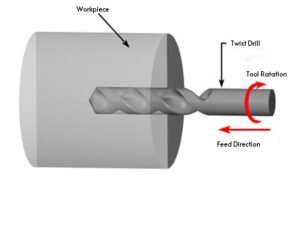
Drilling uses a rotating multi-point tool to create circular holes in a stationary workpiece. The drill bit advances along its axis, removing material in the form of chips. CNC machines position the tool accurately for multiple holes in one setup. The process supports various hole sizes and depths with consistent positioning.
Common materials range from soft metals like aluminum to harder alloys and non-metals such as wood or plastics.
Applications include fastener holes in structural frames, cooling channels in molds, and mounting points in electronics housings.
Grinding
Grinding employs an abrasive wheel that rotates at high speed to remove small amounts of material. The process achieves fine surface finishes and tight tolerances through controlled abrasion. CNC systems guide the wheel along programmed paths for flat or cylindrical surfaces. Grinding corrects minor dimensional errors left by prior operations.
Materials suited to grinding include hardened steels, ceramics, and carbides that resist conventional cutting.
Applications appear in precision tools, bearing surfaces, medical implants, and aerospace turbine blades.
Electrical Discharge Machining (EDM)
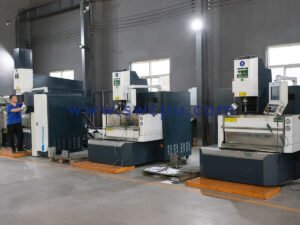
EDM removes material through repeated electrical sparks between an electrode and the workpiece in a dielectric fluid. Each spark erodes a tiny portion of the conductive surface without physical contact. CNC controls electrode movement for complex cavities.
The process works only on electrically conductive materials, primarily tool steels, titanium, and carbides.
Applications include injection mold cavities, die components, and intricate features in aerospace parts. EDM handles hard materials that conventional tools cannot cut easily.
Laser Cutting
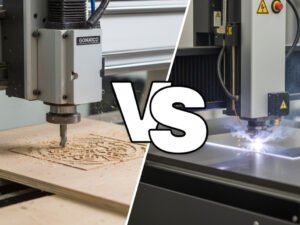
Laser cutting focuses a high-power laser beam to melt or vaporize material along a precise path. Assist gas blows away molten residue while the CNC system directs the beam. The method produces clean edges on flat sheets.
Suitable materials cover metals such as steel, aluminum, and stainless steel, plus non-metals like acrylic and wood.
Applications involve sheet metal brackets, signage, automotive panels, and prototype enclosures.
Waterjet Cutting
Waterjet cutting forces a high-pressure stream of water mixed with abrasive particles through a nozzle to erode material. The CNC-guided jet follows programmed contours without generating heat.
The process cuts almost any material, including metals, stone, glass, composites, and laminates.
Applications include aerospace panels, architectural stone, medical devices, and thick plate components.
CNC Machining by Machine Axis
Another way to classify CNC machining types is by the number of axes on the machine. The number of axes affects the complexity of parts that can be machined, as well as the required programming and machine capabilities.
3-Axis
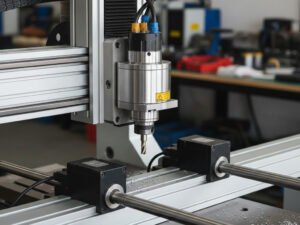
Three-axis machines move the tool or table along X, Y, and Z linear directions. This setup handles flat or prismatic parts that require machining on one side or through multiple setups. Most shops start with 3-axis systems due to lower cost and simpler programming.
Three-axis machines are commonly used in prototyping, small batch production, and machining simpler parts such as plates, brackets, and housings.
4-Axis
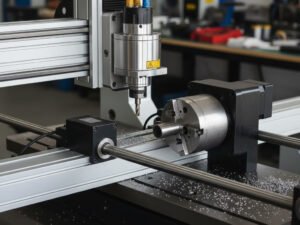
Four-axis machines add a rotary axis, usually A-axis rotation around the X direction. The extra movement allows machining on multiple sides of cylindrical parts without repositioning.
Four-axis machining is frequently used for automotive components, precision shafts, and intricate mechanical parts.
5-Axis
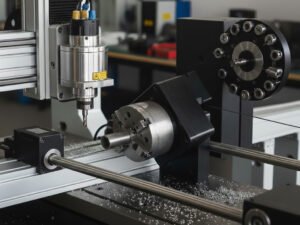
Five-axis CNC machines add rotation along two axes, providing the ability to machine complex, multi-dimensional parts without repositioning. These machines excel in producing highly detailed components with intricate contours.
This configuration produces complex freeform surfaces found in turbine blades, orthopedic implants, and aerospace brackets.
How to Choose the Right CNC Machining Type
Selecting the appropriate CNC machining type requires consideration of several factors:
Selection starts with part geometry. Rotational symmetry favors turning, while flat or prismatic shapes suit 3-axis milling or drilling. Complex contours with undercuts require 4-axis or 5-axis systems.
Material properties guide the next step. Heat-sensitive composites call for waterjet cutting to avoid distortion. Hard, non-conductive ceramics need grinding. Conductive tool steels work well with EDM.
Precision and tolerance requirements determine the final process. Standard tolerances of ±0.1 mm allow basic 3-axis methods. Demands below ±0.01 mm often combine grinding or 5-axis machining.
Production quantity also matters. Low-volume prototypes benefit from flexible laser or waterjet cutting. High-volume runs favor turning or drilling for speed and repeatability.
Common Industries Using CNC Machining
CNC machining types are applied across numerous industries, providing high-quality components efficiently:
- Automotive: Engine components, transmission parts, and custom brackets.
- Aerospace: Aircraft structural parts, turbine components, and high-precision assemblies.
- Medical Devices: Surgical instruments, implants, and prosthetics.
- Electronics: Housings, connectors, and heat sinks.
- Tool and Die Making: Molds, dies, and precision tooling for manufacturing.
Conclusion
CNC machining types vary to match different part structures and materials. These methods support applications across aerospace, automotive, medical, and other sectors. Selecting the appropriate CNC process ensures high-quality results, efficiency, and consistency. Cooperation with a professional and experienced manufacturer will help to get a highly effective CNC machining outcome. Jiangzhi provides types of high-quality custom CNC machining. Welcome to contact us and get a professional service.