In modern manufacturing, machining remains a core process for producing metal and plastic components. CNC machining and manual machining are two primary approaches that dominate the shop floor. While both methods remove material to achieve the desired shape, they differ significantly in control, precision, cost, and application. This article examines CNC machining vs manual machining across key factors.
What is Manual Machining?
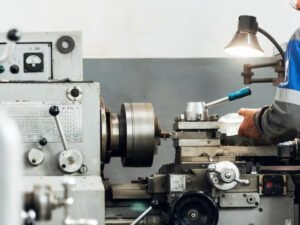
Manual machining is the process of shaping or cutting materials using hand-operated machine tools such as lathes, mills, grinders, and drill presses. The machinist manually controls tool movement through handwheels and levers, sets cutting speed, feed rate, and depth of cut in real time, and performs all measurements and tool changes by hand. Compared with automated methods, setup is quick for simple jobs, but production time increases as part complexity rises.
Manual machining is best suited for low-volume work, one-off prototypes, simple geometries, repairs, and shop environments where flexibility and hands-on control are more important than speed. It remains a practical choice for creating straightforward parts quickly and economically without the need for complex programming.
What is CNC Machining?
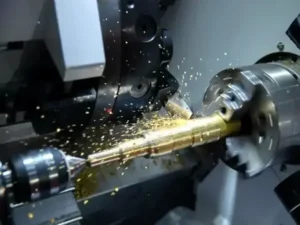
CNC machining uses computer-controlled equipment to automate the cutting, shaping, and finishing of materials. A CAD model is converted into G-code, which directs the machine’s multi-axis movements, cutting paths, speeds, and tool changes with high precision. Once programmed and set up, CNC machines operate with consistent accuracy and can run unattended for long periods.
CNC machining is ideal for medium to high-volume production, complex geometries, and parts requiring tight tolerances and repeatability. It is widely used in industries such as aerospace, medical devices, and automotive, where precision and consistency across large batches are essential.
CNC Machining vs Manual Machining: Key Comparison
1. Precision and Complexity
- CNC machines can handle intricate geometries and tight tolerances that are difficult to achieve with manual machines. Additionally, CNC machines can repeat the same operations with consistency, making them ideal for mass production.
- Manual machining relies on the skill of the operator. The process is more prone to human error, and slight variations in setup or operation can affect the quality of the final product. Manual machines are more suited to simpler designs and less intricate components.
2. Productivity and Efficiency
- Once programmed, CNC machines can run continuously with little to no supervision. This reduces setup time, minimizes downtime, and allows for faster production cycles, especially in high-volume manufacturing.
- Manual machining is slower and requires more hands-on labor. It is often less efficient for large-scale production.
3. Cost Considerations
- Manual machines are less expensive to purchase and set up, but they often require more labor to operate and maintain. That tends to have higher operational costs due to the need for skilled labor and longer production times.
- CNC machines have higher initial costs. However, CNC machining offers cost savings in the long run due to faster production speeds, reduced labor costs, and fewer errors.
4. Labor and Skill Requirements
- Manual machining places a heavy emphasis on operator skill.
- CNC machining is less dependent on manual dexterity.
Advantages and Disadvantages of CNC Machining vs Manual Machining
Advantages of CNC Machining
- Precision and Repeatability: Once programmed, CNC machines can replicate the same part with identical dimensions and quality across multiple batches. The automated process eliminates human error.
- Complexity Handling: CNC machining excels at producing intricate, multi-axis designs. The use of CAD/CAM software allows for the creation of complex geometries, curves, and detailed contours with ease.
- Higher Efficiency and Speed: Once a program is set up, CNC machines can run continuously, producing parts at a faster rate than manual machining.
- Reduced Labor Requirements: CNC machines are typically operated by a single machinist who monitors multiple machines at once, reducing labor costs.
Disadvantages of CNC Machining - High Initial Cost: CNC machines can be expensive to purchase, particularly those with advanced features like multi-axis capabilities.
- Programming Time: The setup and programming time for CNC machining can be lengthy, especially for the first part setup.
Advantages of Manual Machining
- Lower Initial Investment: Manual machines are typically less expensive than their CNC counterparts. This is particularly beneficial for low-volume production or small-scale manufacturing.
- Flexibility and Customization: The machinist has complete control over the process, making it easier to adjust parameters on the fly. This is especially useful in prototyping, repair, or situations where unique part designs are required.
- Simpler Maintenance: Manual machines are generally simpler in design, which makes them easier and more affordable to maintain.
- No Need for Complex Software or Programming: Manual machining does not require programming or CAD/CAM software. The design changes can be modified immediately without reprogramming.
Disadvantages of Manual Machining
- Higher Labor Costs: Manual machining requires highly skilled labor, which can be costly, particularly when the machining is complex or involves high-quantity runs.
- Limitations in Complexity: Manual machines cannot handle a variety of shapes and sizes.
- Lower Precision and Repeatability: Manual machining is prone to human error. Repeatedly producing identical parts with the same precision is challenging, especially in large batches.
- Slower Production Rates: In manual machining, each part must be carefully set up and monitored, which increases the time it takes to complete a project.
Choosing Between CNC and Manual Machining
Selecting between CNC and manual machining depends on several factors, including the type of part being produced, production volume, budget, and required precision.
- Product Complexity: If the part is highly complex or requires tight tolerances, CNC machining is the better option. CNC machines can handle intricate geometries that would be difficult or impossible to achieve with manual machines.
- Production Volume: For high-volume production runs, CNC machining offers the advantage of speed and consistency. Manual machining is better suited for low-volume or one-off parts where flexibility and customization are more important than speed.
- Budget: Manual machines are generally more affordable upfront and require less investment in programming and software. CNC machines, however, offer long-term savings due to their automation and reduced labor requirements.
- Precision Requirements: CNC machining excels in producing parts with tight tolerances and high precision. Manual machining, while capable of achieving precise results, is more prone to errors and is better suited for less intricate work.
Conclusion
CNC machining and manual machining are distinct processes; they often work together in modern manufacturing. CNC machining offers high precision, repeatability, and efficiency for high volume; manual machining offers flexibility and cost-effectiveness for low-volume, custom work. Jiangzhi provides high-quality CNC machining services. Whether you are producing prototypes, low-volume parts, or large-scale production runs, we will supply a custom machining solution.