If you’re deciding between CNC machining and 3D printing for a new part, the wrong choice can lead to unnecessary cost, delays, or performance issues.
This guide breaks down the real differences based on practical manufacturing scenarios.
Basic Principles of CNC Machining vs 3D Printing
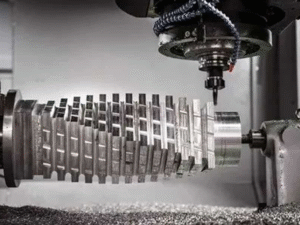
CNC Machining service (Computer Numerical Control machining) is a subtractive manufacturing process where a computer-controlled machine tool removes material from a workpiece to create the desired part. The process starts with a solid block of material, and through precise cutting, drilling, or milling, the final shape is produced. CNC machining is known for its high precision, ability to work with various materials (including metals, plastics, and composites), and its capability to create complex geometries with tight tolerances.
3D printing is an additive manufacturing process. It builds parts layer by layer from a digital file. Technologies include FDM (fused deposition modeling), SLA (stereolithography), SLS (selective laser sintering), and metal processes such as DMLS (direct metal laser sintering) or binder jetting. This allows for the creation of parts with intricate geometries and internal structures that would be challenging or impossible to achieve with traditional machining.

Advantages and Limitations of CNC Machining vs 3D Printing
CNC Machining
Advantages:
- High precision: Typically achieves ±0.01–0.05 mm, suitable for parts requiring tight fits or sealing
- Strong materials: Supports metals like aluminum and stainless steel for functional and load-bearing parts
- Good surface finish: Produces smooth, production-ready surfaces with minimal post-processing
- Scalable production: More cost-effective for medium to high volumes
Limitations:
- Material waste: Removes excess material, increasing cost for expensive materials
- Limited for complex internal geometry: Difficult to machine enclosed or organic structures
- Higher setup cost: Programming and fixturing make it less efficient for very low quantities
3D Printing
Advantages:
- Design flexibility: Ideal for complex geometries and internal features
- Low setup cost: No tooling required, suitable for prototypes and small batches
- Fast iteration: Parts can be produced within 1–3 days for quick testing
- Material efficiency: Uses only the material needed, reducing waste
Limitations:
- Lower precision: Typically ±0.1–0.3 mm, may not meet tight tolerance requirements
- Poor surface finish: Often requires post-processing for functional use
- Limited material performance: Not suitable for high-strength or high-temperature applications
- Not cost-effective at scale: Slower and more expensive for large production runs
Key Differences: CNC vs 3D Printing
| Factor | CNC Machining | 3D Printing |
|---|---|---|
| Tolerance | ±0.01–0.05 mm | ±0.1–0.3 mm |
| Surface Finish | Smooth, production-ready | Rough, often requires post-processing |
| Lead Time | 3–7 days | 1–3 days |
| Cost (Low Volume) | Higher | Lower |
| Cost (Higher Volume) | Lower | Higher |
| Material Options | Metals + engineering plastics | Mostly plastics, limited metals |
CNC and 3D Printing Typical Use Cases
CNC Machining Applications
CNC machining is used in aerospace because it provides high precision and structural strength:
- Aerospace: turbine blades and structural components requiring tight tolerances
- Automotive: engine and transmission parts that must withstand stress
- Medical: surgical tools and implants requiring precise geometry
- Industrial: gears, pumps, and valves exposed to mechanical load
3D Printing Applications
3D printing is preferred for early-stage development and complex geometry:
- Prototyping: fast design validation and iteration
- Complex structures: internal channels and lightweight lattices
- Low-volume parts: customized or one-off production
CNC Machining vs 3D Printing: How to Choose the Right Technology
When deciding between CNC machining vs 3D printing, the choice depends on several factors, including the complexity of the part, material requirements, production volume, and desired surface finish.
- Part Complexity: If the part has a simple, regular shape, CNC machining may be the better option. However, if the part requires intricate geometries or internal structures, 3D printing provides a clear advantage.
- Material Requirements: For parts that require high-performance materials or exceptional strength, CNC machining is typically preferred. 3D printing has limitations in some metals and polymer materials.
- Production Volume: CNC machining excels in mass production or medium-volume runs due to its speed and repeatability once set up. However, for low-volume or prototyping needs, 3D printing offers faster turnaround times and lower setup costs.
- Cost Considerations: While CNC machining may have a higher upfront cost due to tooling and setup, the per-unit cost decreases with higher production volumes. 3D printing, on the other hand, is better suited for low-volume runs, where tooling costs are not a concern.
- Precision: When it comes to precision, CNC machining typically outperforms 3D printing. CNC machines can achieve tight tolerances with micron-level accuracy. 3D printing typically achieves tolerances of +/- 0.1 mm, which may not be sufficient for high-precision applications.
- Surface Quality: CNC-machined parts can be finished to a very high standard, offering smooth surfaces that meet the stringent requirements for functional and aesthetic parts. 3D printing parts often exhibit a rougher surface finish and require post-processing.
Common Mistakes When Choosing Between CNC and 3D Printing
A common mistake is choosing 3D printing for functional parts that require precision or strength, which can result in poor fit or part failure.
Another mistake is using CNC machining for highly complex geometries that could be produced faster and more efficiently with 3D printing.
Making the right decision depends on understanding not just the technology, but the actual requirements of your part.
Conclusion
CNC machining and 3D printing are complementary rather than competitive technologies. The most successful teams use both: 3D printing for rapid iteration and complex geometries, CNC machining for precision and final production. Many projects now follow a hybrid path that delivers the best outcome. Jiangzhi provides professional CNC machining services, offering high-quality solutions tailored to your specific manufacturing needs.
