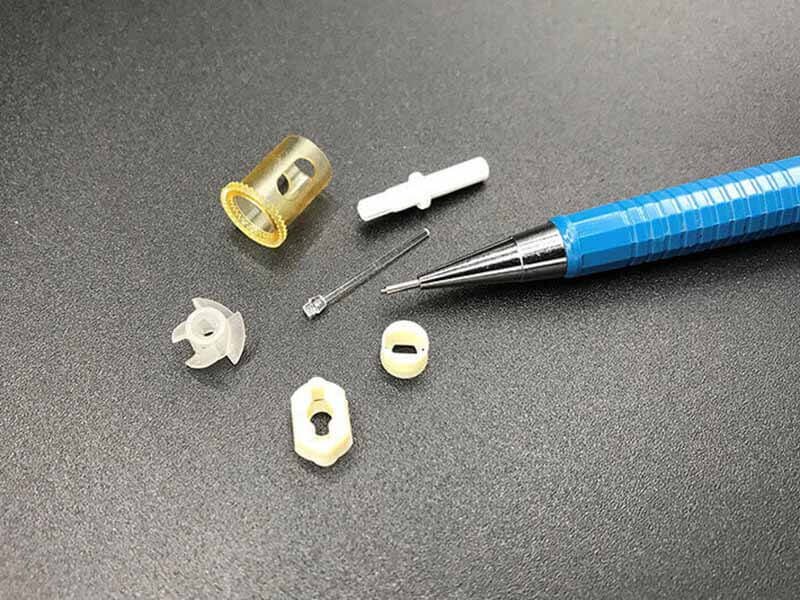
CNC milling is one of the most widely used processes in modern manufacturing, especially where precision, consistency, and flexibility are required. From prototype development to low- and medium-volume production, it plays a critical role in producing complex and functional components. However, like any manufacturing method, it is not universally suitable. In this article, we will explore the advantages and disadvantages of CNC milling.
What is CNC Milling?
CNC milling is a subtractive manufacturing process in which computer numerical control directs a rotating cutting tool to remove material from a solid workpiece. The machine follows instructions generated from a CAD model, converted into G-code that controls tool paths, spindle speed, feed rate, and axis movements.
Most CNC milling machines operate on at least three axes: X, Y, and Z. The workpiece is fixed on a table, while the tool moves along these axes to cut features such as pockets, slots, contours, and holes. Advanced setups include 4-axis or 5-axis machines, which allow rotation of the workpiece or tool for more complex geometries.
CNC Milling Advantages
CNC milling offers several practical benefits that make it suitable for custom and small-to-medium production runs.
Precision and Repeatability
The computer-controlled system eliminates variations caused by manual operation. Once programmed correctly, the machine produces parts with consistent dimensions across multiple runs. This repeatability supports tight tolerances. Parts maintain the same accuracy whether the run involves one piece or several hundred.
Efficiency and Speed
CNC milling improves production efficiency by automating the machining process. After setup and programming, machines can operate continuously with limited manual intervention. This reduces idle time and allows faster turnaround, especially for small to medium production runs. Optimized tool paths and cutting parameters further shorten cycle times compared to manual methods.
Complex Geometry Capability
CNC milling is well-suited for producing parts with complex shapes. Multi-axis machines allow the cutting tool to approach the workpiece from different angles, enabling the creation of features such as deep cavities, curved surfaces, and intricate contours.
Reduced Labor and Lower Risk of Error
Automation significantly reduces reliance on manual operations. Once the machining program is established, the process minimizes human intervention, which lowers the risk of dimensional errors and inconsistencies.
Compatibility with Multiple Materials
CNC milling works with a broad range of materials, including aluminum, steel, stainless steel, titanium, brass, plastics such as ABS and nylon, and composites. The process adapts to different hardness levels by adjusting speeds, feeds, and tool selection, provided the material can withstand cutting forces.
Cost Effectiveness for Appropriate Volumes
For prototypes, one-offs, and small-to-medium runs, CNC milling provides good value. Because there is no need for dedicated molds or tooling, initial setup costs are lower compared to processes like injection molding. This makes CNC milling a practical choice for customized or frequently changing designs.
CNC Milling Disadvantages
Despite its strengths, CNC milling has limitations that affect certain projects.
Material Waste
As a subtractive process, it starts with a block larger than the final part and removes excess material. This generates scrap, particularly for parts with large cavities or thin walls. Waste increases costs for expensive materials and requires disposal considerations.
High Initial Investment and Maintenance Costs
CNC machines require substantial capital investment. In addition to the equipment itself, costs include tooling and cutting tools, software for programming (CAM systems), maintenance, and calibration. These costs can be a barrier for smaller operations or projects with limited budgets.
Skill Requirements for Operators and Programmers
Although the machining process is automated, it still depends on skilled personnel to create programs, select tools, set parameters, and troubleshoot issues. A lack of expertise can lead to inefficient machining, tool damage, or quality issues.
Limitations in Precision and Material Constraints
While capable of high accuracy, factors such as tool deflection, thermal expansion, vibration, and material properties can affect results. Very hard materials increase tool wear, while very soft materials may deform during machining. The extremely thin features risk distortion. These factors must be considered when selecting materials and designing parts.
Not Ideal for High-Volume, Low-Cost Production
One of the key CNC milling disadvantages is its limited efficiency in mass production scenarios. Each part requires machining time, which leads to higher per-unit costs when production volume increases. Processes such as injection molding are more suitable for high-volume production.
Typical Applications of CNC Milling
CNC milling is widely used across multiple industries due to its precision and flexibility. Common applications include:
- Aerospace components: The brackets, housings, and structural components.
- Automotive parts: Functional components, such as engine components, fixtures, and custom fittings.
- Medical devices: Custom parts like surgical instruments, implants, and device enclosures.
- Electronics enclosures: Precision housings, heat sinks, and connector parts.
- Industrial equipment: Machine parts, fixtures, and tooling.
CNC Milling vs Other Manufacturing Methods
The following table compares CNC milling with selected alternatives on key factors:
| Comparison Factor | CNC Milling | Injection Molding | 3D Printing |
|---|---|---|---|
| Process Type | Subtractive machining using rotating tools | Forming process using molds | Additive manufacturing (layer by layer) |
| Design Flexibility | High; easy to modify designs via programming | Low; mold redesign required for changes | Very high; no tooling constraints |
| Complex Geometry Capability | Excellent, especially with multi-axis machines | High, but depends on mold design complexity | Excellent for intricate and internal structures |
| Precision and Tolerance | High | High consistency but depends on mold quality | Moderate; |
| Material Options | Wide range (metals and plastics) | Mostly plastics and rubber materials | P20 Steel |
| General Tolerance | General Tolerance | General Tolerance | Normally +/- 0.008in.(0.2mm) or less |
| Wall Thickness | Wall Thickness | Wall Thickness | 0.5 mm to 5 mm |
| Tooling | Tooling | Tooling | Rapid Tooling: recommended for 100-10,000 parts / Production Tooling: recommended for over 10,000 parts |
| Lead Time | Lead Time | Lead Time | Starts at 7-14 business days |
Conclusion
CNC milling excels in delivering accurate, repeatable parts for prototypes, custom designs, and small-to-medium runs across diverse materials and industries. However, material waste, equipment costs, and skill requirements must be factored in. As a manufacturer offering custom services, Jiangzhi applies this process to meet client specifications with controlled quality and timely delivery. If your next project involves precision components, contact us to discuss how CNC milling fits your requirements.