Modern product design increasingly requires components that combine multiple materials, colors, or functional layers within a single structure. Traditional single-material molding followed by assembly can meet these requirements, but it often introduces additional processing steps, alignment risks, and higher long-term production costs. Multi-shot injection molding provides an alternative by enabling multiple materials to be molded together in one continuous manufacturing cycle, producing integrated parts without secondary assembly.
What is Multi-Shot Injection Molding?
Multi-shot injection molding refers to a plastic molding process where multiple materials are injected into a single mold to form a composite part. This method produces items with distinct sections made from different plastics, elastomers, or even colors, all in one operation. It differs from traditional single-shot molding by allowing the combination of materials with varying properties, such as rigid and flexible elements, in the same component.
How Does Multi-Shot Injection Molding Work?
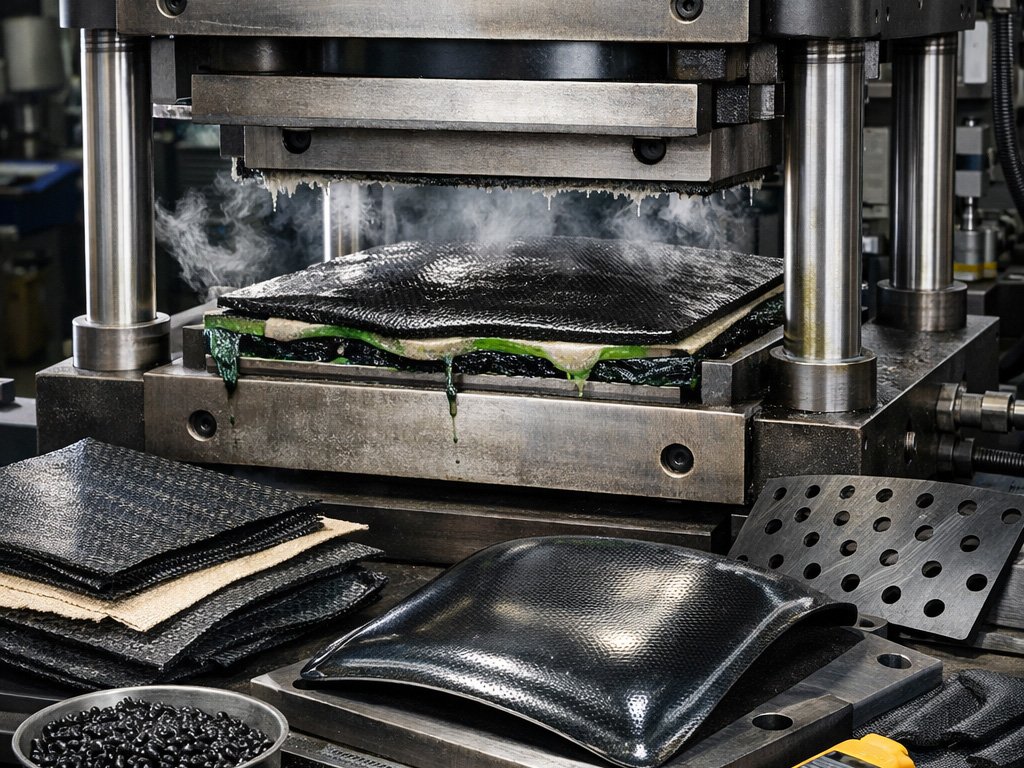
The process begins with the preparation of the mold, which is designed to accommodate multiple injection points or stages. In the first step, the primary material is injected into the mold cavity and allowed to cool partially. Then, the mold is repositioned, often through rotation or transfer, and a secondary material is injected onto or around the first layer. This sequence can repeat for additional materials if needed. The machine controls temperature, pressure, and timing to ensure proper adhesion between layers. Equipment typically includes multi-barrel injection units or indexing platens to handle the different materials without contamination.
When Should You Use Multi-Shot Instead of Standard Molding?
Selecting multi-shot injection molding rather than standard single-material molding depends on product requirements, production volume, and cost structure. The process is most appropriate when multiple materials must be permanently integrated or when assembly reduction is a major design objective.
Below is a simplified comparison framework.
| Decision Factor | Multi Shot Injection Molding | Standard Injection Molding |
|---|---|---|
| Material Usage | Multiple materials molded in one cycle | Single material only |
| Assembly requirements | No secondary assembly | Assembly required for multi-material products |
| Tooling complexity | Higher | Lower |
| Production volume suitability | Most effective at medium to high volumes | Flexible across volume ranges |
| Functional layering | Directly integrated | Requires bonding or fastening |
| Long-term unit cost | Often lower at scale | May increase with assembly labor |
Types of Multi-Material Injection Molding
Several process variants fall within the broader field of multi-material injection molding. Each uses different methods to combine materials within a single component.
Two-Shot Molding
Two-shot molding involves injecting two different materials sequentially into the same mold. The first material forms the base, and the second adheres to it, often used for parts with color variations or different textures.
Overmolding
Overmolding places one material over a previously molded substrate, typically to add a soft layer over a hard one, either within the same machine cycle or through a secondary molding step, to add functional or ergonomic features.
Co-Injection
Co-injection uses a single nozzle to inject two materials simultaneously, forming a core-and-skin structure. The outer layer provides aesthetics or durability, while the inner core offers strength or cost savings.
Insert + Multi-Shot Hybrid.
This combines insert molding with multi-shot techniques by placing a metal or plastic insert in the mold before injecting multiple materials around it. It is applied in parts requiring embedded reinforcements, such as electronic housings.
Material Compatibility in Multi-Shot Molding
Material compatibility is essential in multi-shot injection molding to ensure strong bonding between layers. Compatible materials must have similar melting temperatures and shrinkage rates to prevent defects like warping or delamination. For example, thermoplastic elastomers often pair well with polypropylene because they form strong chemical bonds during processing. Testing is conducted to verify adhesion strength under various conditions, including heat and stress.
Incompatible materials can lead to poor interface quality, resulting in part failure. Factors such as chemical composition and surface energy influence compatibility. Manufacturers use guidelines from material suppliers to select combinations that maintain structural integrity. Surface treatments or primers are sometimes applied to enhance bonding in challenging cases. Overall, proper material selection reduces production issues and extends the lifespan of the finished product.
Advantages of Multi-Shot Injection Molding
The benefits of multi-shot injection molding extend beyond material combination. The process affects design capability, manufacturing efficiency, and product performance.
- Functional integration is a primary advantage. Designers can combine rigid structural elements with soft sealing features, incorporate multiple colors, or create layered functional zones within one component.
- Assembly elimination reduces labor, equipment requirements, and alignment variability. Parts exit the mold fully integrated, which improves dimensional consistency and production repeatability.
- Improved product performance often results from stronger material interfaces formed during molding rather than through adhesives or mechanical fastening.
- Manufacturing efficiency increases because multiple production steps are consolidated into a single automated cycle. This reduces handling time and potential sources of process variation.
- Design flexibility expands. Engineers can integrate features that would be difficult or impractical to assemble manually, enabling more compact or functionally complex products.
Is Multi-Shot Injection Molding Expensive?
Cost evaluation for multi-shot molding requires consideration of multiple economic dimensions rather than a single cost metric.
Initial Cost
Tooling for multi-shot injection molding is more complex than standard molds. Multiple injection channels, movable cores, or rotating platens increase design and manufacturing requirements. Specialized molding machines with multiple injection units may also be necessary. As a result, initial capital investment is typically higher.
Per-Unit Cost
Once production begins, per-unit cost often decreases relative to assembled alternatives. Eliminating secondary bonding, fastening, or manual assembly reduces labor and process time. Automated integration also lowers defect rates associated with alignment or adhesive application.
When It Becomes Cost-Effective
The process becomes economically favorable when production volume is sufficiently high to distribute tooling investment across many units. Products with complex assembly requirements or long production lifecycles benefit most. When integrated molding replaces multiple manufacturing steps, the total system cost can be significantly reduced over time.
Applications of Multi-Shot Injection Molding
Because multi-shot plastic injection molding supports functional material integration, it is widely used across industries that require durable multi-material components.
- Automotive manufacturing uses the process to produce components combining rigid structural materials with sealing or vibration-damping elements.
- Medical device production applies multi-shot molding for instruments that require soft contact surfaces integrated with rigid housings, as well as components requiring precise material interfaces.
- Consumer electronics rely on multi-material injection molding for protective housings, button assemblies, and ergonomic grip surfaces formed directly onto structural frames.
- Industrial tools and equipment frequently incorporate soft-touch regions molded over rigid handles, improving usability without additional assembly.
- Sealing and fluid control systems benefit from integrated elastomeric features molded directly onto rigid substrates, ensuring consistent sealing geometry.
Conclusion
Multi-shot injection molding provides a method for producing complex plastic parts efficiently. When applied to appropriate product designs and production volumes, multi-shot molding provides a technically efficient method for manufacturing multi-material components with consistent quality and streamlined processing.