Threaded inserts for plastic injection molding are essential in industries that require durable, reusable fasteners in plastic components. Threaded inserts provide a reliable solution by reinforcing the plastic and ensuring secure fastening.


What Are Threaded Inserts?
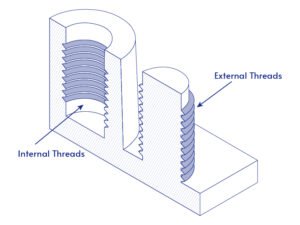
Threaded inserts are metal components that are embedded in plastic parts to create durable, reusable threads. These inserts are typically made of brass, steel, or stainless steel, and they provide a way to fasten or attach components securely to plastic parts. Plastic materials, while commonly used in injection molding, do not possess the necessary strength to maintain threads under repeated stress, especially in high-torque applications. A threaded insert for plastic molding solves this problem by providing a robust, long-lasting fastening solution. They are widely used in applications where frequent assembly or disassembly is required, such as automotive, electronics, and medical device manufacturing.
Comparison of 4 Methods for Installing Threaded Inserts
There are several methods for installing threaded inserts in plastic parts, each with its unique advantages and limitations. Understanding these methods helps manufacturers choose the most suitable option for their specific needs.Insert Molding
This method involves placing the threaded insert into the mold before injecting the plastic. As the molten plastic fills the mold, it surrounds the insert, bonding with it as it cools. Insert molding ensures a strong, permanent connection between the insert and the plastic part. This method is widely used when the insert needs to be securely integrated during the molding process.Ultrasonic Insertion
In this technique, high-frequency ultrasonic waves are used to heat the threaded insert. The heated insert is then pressed into the plastic, causing the surrounding material to soften and bond with the insert. This method is fast and efficient but is best suited for applications where precise control over the insert’s depth and positioning is required.Heat Staking
Heat staking involves heating the threaded insert to a specific temperature and then pressing it into the plastic part. The heat causes the plastic to soften, allowing the insert to become securely embedded. This method works well for applications requiring moderate force and is commonly used in automotive and consumer electronics.Press-Fitting
This method involves mechanically pressing the insert into a pre-molded plastic part. It does not require any heat or ultrasonic waves. Press-fitting is often used when the plastic part has been molded with an appropriate cavity for the insert. While this technique is straightforward, it may not offer the same level of durability as the other methods, especially for high-stress applications.
Material Selection for Threaded Inserts
Material selection for threaded inserts in plastic injection molding affects performance, cost, and compatibility. Common materials used for threaded inserts include:Brass
Brass is widely used for threaded inserts for plastic due to its machinability and corrosion resistance. It provides good strength and is cost-effective, making it suitable for general-purpose plastic molding of threaded inserts, particularly in consumer electronics and household products.Steel
Steel inserts are stronger and more durable than brass. They are commonly used in applications where high strength and wear resistance are critical, such as in automotive or industrial machinery.Stainless Steel
Stainless steel offers higher strength and excellent corrosion resistance, ideal for harsh environments in threaded inserts for injection molding. Grades like 303 or 416 provide durability without lead, complying with regulations such as RoHS. This material is preferred when high torque or pull-out forces are expected, though it increases costs slightly.Aluminum
Aluminum is chosen for lightweight applications in threaded inserts for plastic, reducing overall part weight by up to 70% compared to brass or steel. It is recyclable and corrosion-resistant but has lower strength, limiting it to low-load scenarios. The choice of material depends on the specific requirements of the application. For example, parts used in high-torque situations may benefit from the strength of steel or stainless steel inserts, while consumer products might be well-suited to brass inserts. In addition to strength and corrosion resistance, the material should also be selected based on factors such as cost, availability, and ease of manufacturing. The right material ensures that the threaded insert will perform optimally over the part’s lifespan.Design Recommendations for Plastic Parts with Threaded Inserts
Design guidelines for plastic parts incorporating threaded inserts focus on ensuring structural integrity and ease of installation.
Tolerance
Proper tolerance ensures that the insert fits snugly into the plastic part without excessive play or stress. Tolerances that are too tight can make insertion difficult, while tolerances that are too loose can compromise the insert’s hold.Wall Thickness
Wall thickness around the insert should be at least twice the insert’s diameter to avoid bulging or sinking during molding. In thin-walled parts, adding ribs can reinforce the area without increasing overall thickness.Edge Distance
The distance between the threaded insert and the edge of the plastic part is another crucial factor. If the insert is placed too close to the edge, there is a risk of the part cracking or failing under load. A proper edge distance ensures that the insert is fully supported by the surrounding plastic.Applications of Threaded Inserts for Plastic Injection Molding
Threaded inserts find use in various industries where plastic parts require secure fastenings.- Automotive Industry: Car bumpers, dashboards, and engine components.
- Electronics: Computer housings.
- Medical Devices: Medical diagnostic machines, surgical instruments.