A Sprue Bushing is an important component in an injection mold. It connects the injection molding machine nozzle to the mold’s main flow channel and directs molten plastic into the runner system or mold cavity. Its dimensions, contact surface, and internal geometry affect melt flow, pressure loss, and sprue removal. An incorrectly designed or installed sprue bushing may cause material leakage at the nozzle interface, sprue sticking, or unstable filling conditions. These problems can increase cycle time and affect production consistency.
What Are Sprue and Sprue Bushings?
A Sprue Bushing is a metal component installed in the fixed half of an injection mold. It is usually mounted in the locating or fixed plate and positioned to align with the injection molding machine nozzle.
The bushing contains an internal tapered passage that receives molten plastic from the nozzle and directs it into the mold’s flow channel. In a cold runner mold, the plastic inside this passage cools and solidifies during each cycle. The resulting sprue is then removed during mold opening.
The main functions of a Sprue Bushing include:
- Connecting the machine nozzle to the mold’s flow channel.
- Providing a controlled passage for molten plastic.
- Maintaining a suitable contact interface to reduce material leakage.
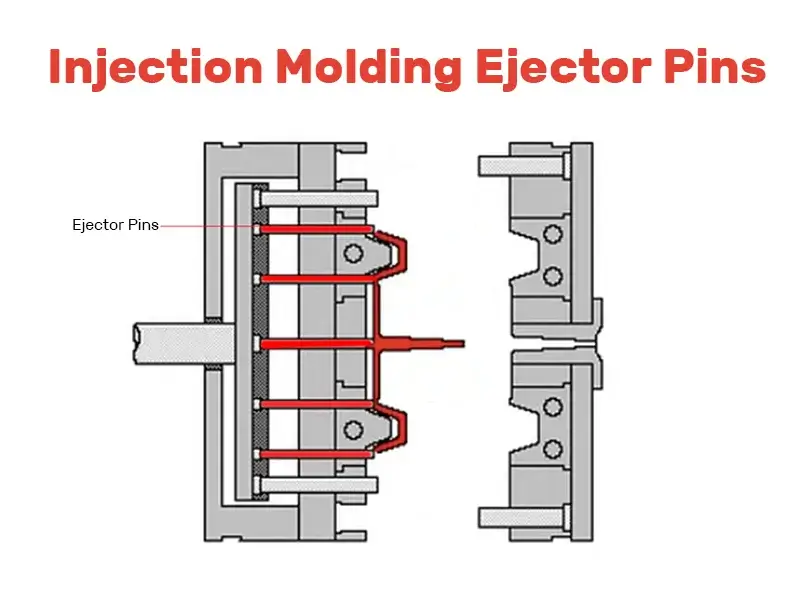
- Supporting smooth removal of the solidified sprue in cold runner molds.
Sprue vs. Runner vs. Gate
The sprue, runner, and gate are parts of the same melt delivery system, but each has a different role.
| Component | Function | Main effect on molding |
| Sprue | Carries melt from the machine nozzle into the mold | Pressure loss, cooling time, sprue release, material waste |
| Runner | Distributes melt from the sprue to one or more gates | Cavity balance, filling consistency, material use |
| Gate | Controls melt entry into the mold cavity | Gate mark, flow direction, appearance, packing behavior |
Main Types of Sprue Bushings
Sprue bushings can be classified according to their heating arrangement. The two main options are Cold Sprue Bushings and Hot Sprue Bushings.
Cold Sprue Bushing
A Cold Sprue Bushing does not have an independent heating element. When molten plastic enters the mold, it gradually cools and solidifies inside the sprue passage along with the other cold runner material. After the mold opens, the solidified sprue is removed and separated from the molded parts.
Advantages of Cold Sprue Bushing
- Simple structure and relatively low manufacturing cost.
- No additional heating or temperature control system is required.
- Easy to maintain and suitable for conventional injection molds.
- Compatible with a wide range of standard molding applications.
Disadvantages Cold Sprue Bushing
- Produces solidified sprue material that must be removed.
- The sprue requires cooling before ejection, which may increase cycle time.
- Material is consumed in the runner system and may require additional recycling or processing.
Typical applications of Cold Sprue Bushing
Cold Sprue Bushings are suitable for conventional cold runner molds, small- to medium-volume production, and projects where tooling cost and maintenance simplicity are important.
Hot Sprue Bushing
A Hot Sprue Bushing uses an integrated or associated heating element to keep the plastic inside the sprue passage molten. This reduces or eliminates the formation of a solidified sprue within the heated section. Depending on the mold design, a heated sprue bushing may form part of a hot runner system or serve a specific heated sprue application.
Advantages of Hot Sprue Bushing
- Reduces solidified sprue material and associated waste.
- Can reduce the time required to cool and remove the sprue.
- Improves material utilization in suitable production applications.
- Can support continuous production when properly designed and controlled.
Disadvantages of Hot Sprue Bushing
- Higher initial tooling and component costs.
- Requires heating elements, temperature sensors, and control systems.
- Temperature deviations may cause material degradation or unstable melt flow.
- Maintenance and troubleshooting are more complex.
Typical applications of Hot Sprue Bushing
Hot Sprue Bushings are worth considering for high-volume production, projects using expensive engineering plastics, and applications where reducing runner waste and cycle time can provide measurable cost benefits.
The choice between cold and hot designs depends on production volume, material cost, mold structure, and temperature control requirements.
Key Design Considerations for Sprue Bushings
Correct Sprue Design requires more than selecting a standard bushing size. The contact interface, internal passage, material, and installation dimensions must all match the injection molding machine and mold structure.
Nozzle Match and Sealing
The sprue bushing must match the injection molding machine nozzle. The nozzle seat radius and entrance diameter should be compatible with the machine specification. If the contact surfaces do not match correctly, molten plastic may leak during injection.
The nozzle and bushing must also be properly aligned. Before selecting a replacement component, confirm the machine nozzle specifications and inspect both contact surfaces for wear or damage.
Sprue Diameter and Taper
The sprue passage is generally tapered, with a larger diameter near the nozzle and a smaller diameter toward the runner. The taper helps the solidified sprue release from the bushing during mold opening. If the taper is insufficient, the sprue may stick inside the passage. If the passage is unnecessarily large, it increases the volume of material that must cool and may extend the molding cycle.
A common sprue taper falls in the range of about 2 to 6 degrees total included angle, although the exact value should be selected according to the material, sprue length, cooling conditions, and ejection method. The objective is to achieve reliable release without adding unnecessary material or cooling time.
Sprue Length and Flow Path
Sprue length affects material volume, pressure loss, and cooling time. A longer sprue may increase melt-flow resistance and increase cooling time. The connection between the sprue and runner should have a smooth transition. Sudden changes in cross-section or sharp corners can increase flow resistance and create areas where material may cool unevenly.
Sprue length should also be kept as short as the mold structure allows. A longer sprue increases pressure loss and material waste. In three-plate molds, the sprue and runner layout should be reviewed together because the feeding system is more complex than in a standard two-plate mold.
Internal Surface Finish
The internal surface of a Sprue Bushing should be smooth and free from deep machining marks, scratches, and corrosion. A damaged surface can increase friction during sprue removal and contribute to sticking. It may also affect the consistency of material flow.
Suitable machining and polishing processes help maintain the required surface condition. Regular inspection is important, especially when processing abrasive, glass-fiber-reinforced plastics.
Material Selection
Sprue bushings are commonly made from hardened tool steel because they must resist repeated injection pressure, heat, and nozzle contact. H13 tool steel is widely used because it maintains hardness at elevated temperatures and offers good wear resistance.
Other material options may be appropriate for specific applications:
- Stainless Steel: Suitable where corrosion resistance is required.
- Copper Alloy: Provides higher thermal conductivity and can improve cooling performance.
- Carbide-Lined Bushing: Used for highly abrasive or corrosive resins.
- Surface-Treated Bushing: Can improve wear resistance and release performance.
Material selection should consider resin abrasiveness, operating temperature, production volume, maintenance requirements, and cost.
Common Sprue Bushing Problems and Solutions
Problems involving a Sprue Bushing may affect mold opening, material flow, and production stability. Identifying the actual cause is important before making tooling or process adjustments.
Sprue Sticking
Sprue sticking occurs when the cooled sprue does not release properly from the mold.
Common causes include insufficient taper, a rough internal surface, inadequate cooling, excessive packing pressure, or material behavior that does not match the sprue geometry.
Sprue sticking can interrupt automatic production, increase cycle time, and create scrap.
Solutions may include adjusting the taper, improving the internal surface finish, reviewing cooling conditions, adjusting molding parameters, or changing the sprue bushing material.
Leakage and Flash
Leakage at the nozzle seat is often related to a damaged contact surface, an incorrect nozzle radius, poor alignment, or plastic residue on the seat. If the sprue bushing and nozzle do not seal correctly, the molding process may become unstable.
Flash can also occur when injection pressure, clamp force, or mold sealing conditions are not properly controlled. While the sprue bushing is not the only cause of flash, a poor nozzle connection can contribute to unstable injection and material leakage.
Surface Damage
The sprue bushing nozzle seat can develop dents, chips, cracks, burrs, or rolled edges over time. Repeated nozzle contact during mold opening and closing can gradually damage the surface.
Using hard steel tools to remove a stuck sprue can also scratch or damage the internal bore. Softer tools, such as brass rods, are often preferred for removing residual material. Avoiding unnecessary force during maintenance helps preserve the nozzle seat and internal surface.
Maintenance and Inspection
Regular inspection helps identify problems before they cause production interruptions. Key checks include:
- Inspecting the nozzle contact surface and spherical radius.
- Checking the internal passage for scratches, corrosion, and material residue.
- Verifying the bushing’s mounting and alignment.
- Checking whether the sprue releases smoothly.
- For heated designs, inspecting heating elements, temperature sensors, and control systems.
Inspection frequency should depend on production volume, resin characteristics, and operating conditions.
How to Choose the Right Sprue Bushing
The selection of a Sprue Bushing should consider machine specifications, mold design, material properties, and production requirements.
When to Choose a Cold Sprue Bushing
A Cold Sprue Bushing is generally suitable when:
- The mold uses a conventional cold runner system.
- Production volume is small or moderate.
- Sprue waste has a limited impact on total production cost.
- A lower initial tooling cost is preferred.
- Simple maintenance and mold structure are priorities.
When to Choose a Hot Sprue Bushing
A Hot Sprue Bushing may be a better option when:
- Production volume is high.
- Reducing material waste is important.
- The resin has a relatively high material cost.
- Shorter cycle times can improve production efficiency.
- The mold can accommodate heating and temperature control components.
The additional investment should be evaluated against expected material savings, cycle time reduction, maintenance costs, and production volume.
Specifications to Confirm Before Ordering
Before purchasing or manufacturing a Sprue Bushing, confirm the following specifications:
- Injection machine nozzle radius and contact type.
- Sprue inlet and outlet diameters.
- Internal bore taper and overall length.
- Mounting dimensions and fixing method.
- Material and hardness requirements.
- Heating requirements for heated designs.
Conclusion
The sprue bushing is only one component in the injection molding system, but its design affects filling, cooling, sprue release, material waste, and production stability.
At Jiangzhi, mold design, precision machining, and injection molding are considered together when developing custom tooling. We can evaluate Sprue Design, nozzle compatibility, and mold flow channel requirements based on your product drawings and production specifications. Contact us to discuss your injection molding project and request a design evaluation and quotation.