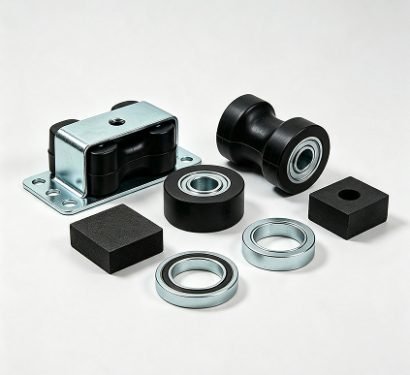
Rubber-to-Metal Bonded Parts
Custom rubber-to-metal bonded parts for structural and vibration load, matched to the right bonding method for your part.

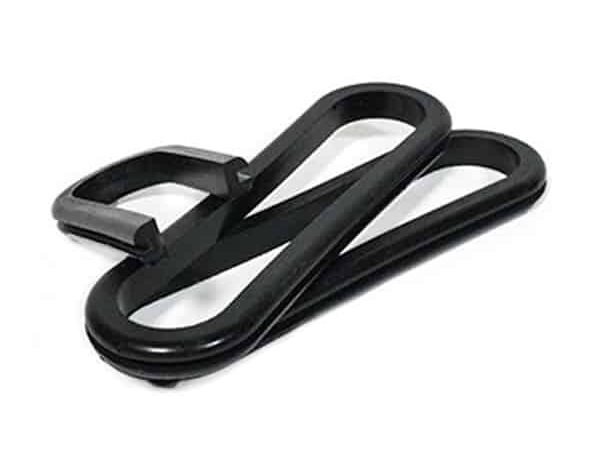
EPDM Rubber
Suitable for outdoor, water, steam, and weather-resistant applications with excellent aging resistance.

Nitrile Rubber (NBR)
Provides good resistance to oils and fuels, making it suitable for automotive and industrial applications.

Silicone Rubber (VMQ)
Used where wide temperature capability and flexibility are required.

Fluoroelastomer (FKM / Viton)
Chosen for demanding environments requiring chemical and heat resistance.

Natural Rubber (NR)
Provides excellent elasticity and vibration damping performance.

Neoprene Rubber(CR)
Offers good weather,
ozone, oil, and abrasion
resistance.
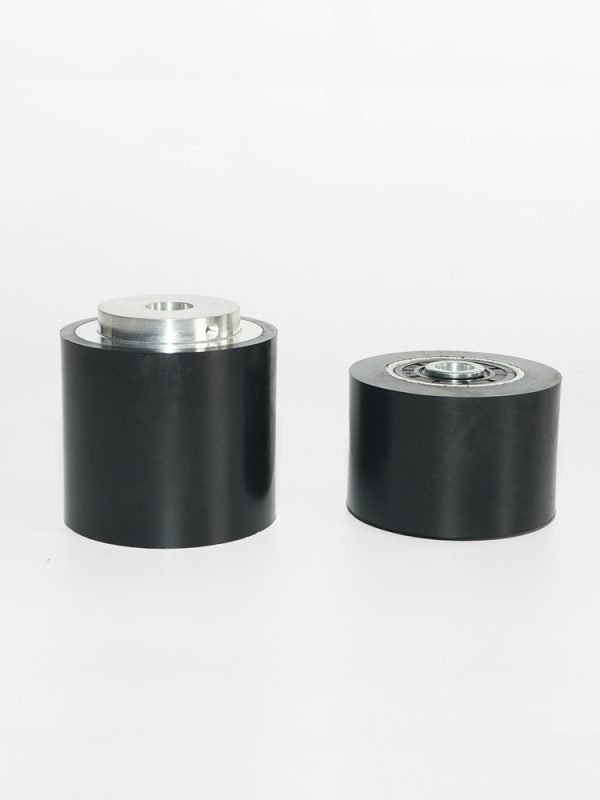
Mechanical Interlock (as a supplement, not a substitute)
We design knurling, grooves, or undercuts into the metal component to add mechanical retention alongside the chemical bond. This is a backup for bond reliability under sustained cyclic load, not a replacement for surface preparation and priming. We don't recommend interlock-only designs without a chemical bond behind them for any part under continuous vibration or shock loading.
Mechanical features such as grooves or knurling can improve retention, but they are normally used together with chemical bonding for vibration-critical parts.
Not sure which applies to your part? Tell us your load case and volume and we'll recommend a method during DFM review, before you commit to tooling.
Mechanical features such as grooves or knurling can improve retention, but they are normally used together with chemical bonding for vibration-critical parts.
Not sure which applies to your part? Tell us your load case and volume and we'll recommend a method during DFM review, before you commit to tooling.
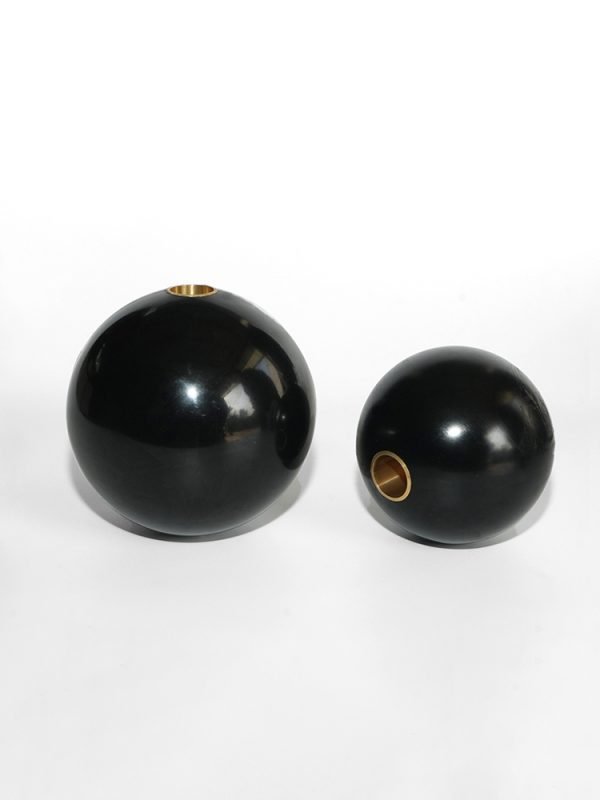
Vulcanization Bonding (Chemical Bond During Cure)
Use this when the bond line carries real mechanical or vibration load — engine mounts, anti-vibration bushings, structural dampers. The metal is primed, and the rubber chemically bonds to it during the molding cycle itself, so there's no adhesive layer to fail separately from the rubber. This is our default recommendation for anything load-bearing.
Don't use this when your production volume is very low and tooling cost isn't justified by the part count — compression bonding is usually the better call there.
Don't use this when your production volume is very low and tooling cost isn't justified by the part count — compression bonding is usually the better call there.
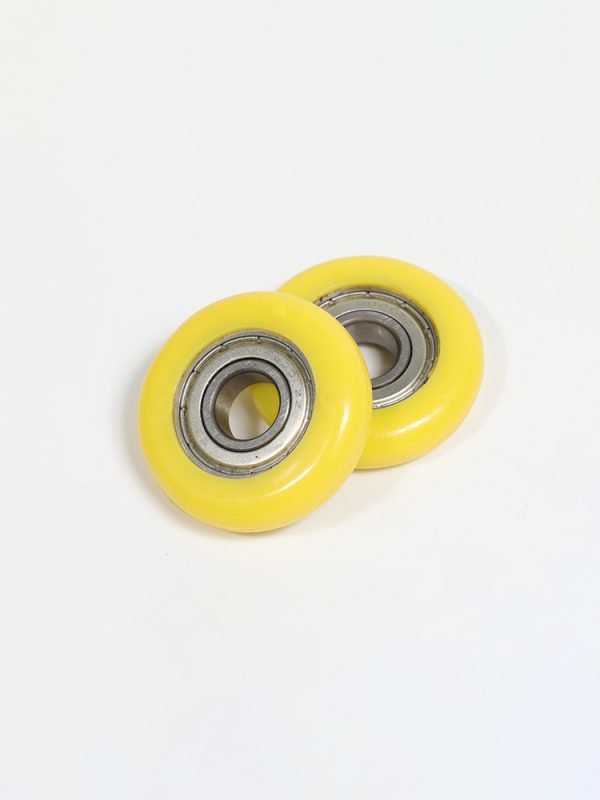
Compression-Molded Bonding
Use this for larger parts, lower production volumes, or when tooling cost needs to stay low — buffer blocks, large gaskets with metal backing plates, industrial pads. The tradeoff is looser dimensional control than injection-based bonding.
Don't use this if your part has tight tolerance requirements on the rubber section — compression molding shrinks less predictably than transfer or injection processes.
Don't use this if your part has tight tolerance requirements on the rubber section — compression molding shrinks less predictably than transfer or injection processes.