
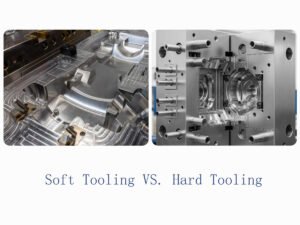
The choice between soft tooling vs. hard tooling is one of the earliest and largest decisions in an injection molding project. Injection mold tooling determines the shape and quality of the part, the cycle time, and the cost per part, and it is usually the biggest one-time investment in the project. Soft tooling is faster and cheaper to build but has a limited life. Hard tooling costs more up front and takes longer, but it lasts far longer and gives the lowest cost per part at volume.
What Is Soft Tooling?
Soft tooling refers to molds made from materials that are generally easier to machine and less expensive than hardened production tool steel. In injection molding, aluminum is one of the most common materials used for this type of tooling.
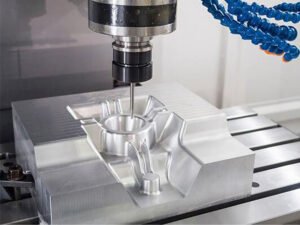
An aluminum injection mold can be used to produce functional plastic parts for design validation, pilot production, and selected low-volume manufacturing projects. Compared with steel molds, aluminum is easier to machine, which can reduce initial tooling costs and manufacturing lead time.
Common Materials of Soft Tooling
High-strength aluminum alloys, such as the 7075 type, are the usual choice. For very small quantities, epoxy or 3D-printed resin molds are sometimes used. Silicone molds are used in urethane casting, which is a related but distinct process.
Advantages of Soft Tooling
- Lower Initial Tooling Cost: Aluminum is generally less expensive and easier to machine than hardened tool steel. This can reduce the initial investment, especially for simple molds or projects that do not require a long production life.
- Shorter Manufacturing Lead Time: Aluminum can be machined more quickly than many tool steels. For suitable mold designs, this helps shorten the time needed to manufacture the mold and produce the first samples.
- Easier Design Modifications: During product development, engineers may need to adjust dimensions, gates, or other mold features. Aluminum is relatively easy to machine, so certain design changes can be completed with less time and expense.
- Suitable for Product Validation: Soft tooling allows manufacturers to produce parts using the intended injection molding process and production resin. These samples can be used to evaluate dimensions, assembly, appearance, and function before committing to a more expensive production mold.
Limitations of Soft Tooling
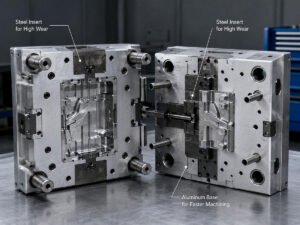
- Aluminum is soft and wears, dents, and scratches easily. Parting lines are especially vulnerable, even during routine maintenance.
- It is not suited to abrasive resins, such as glass-filled or carbon-filled grades, or to high-temperature resins such as PEEK and PSU, which wear gates and cavity details quickly.
- Delicate sliders, lifters, and fine inserts are hard to keep accurate under repeated friction.
- A very high polish is difficult to maintain. Optical-grade surfaces generally need hardened steel (see our article on mold polishing).
- At higher volumes, the cost per part rises because the tool wears out and has to be replaced.
Typical Applications of Soft Tooling
Soft tooling is commonly used for:
- Prototype development and design verification.
- Functional and assembly testing.
- Pilot production before mass manufacturing.
- Low-volume production with limited demand.
- Bridge production while a product design or market demand is being evaluated.
What Is Hard Tooling?
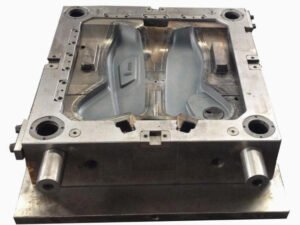
Hard tooling refers to injection molds made from durable tool steels selected for repeated production and longer service life. These molds are generally used when product designs are stable, and the expected production volume justifies a higher initial investment.
Common Materials and Manufacturing Characteristics
Several steel grades are used in hard tooling:
- P20 Steel: A pre-hardened mold steel commonly used for general-purpose injection molds. It offers a practical balance of machinability, strength, and wear resistance.
- H13 Steel: A hot-work tool steel with good resistance to heat and thermal fatigue. It may be selected for demanding molding conditions.
- S136 or 420 Stainless Steel: Stainless mold steels used when corrosion resistance, polishing quality, or specific surface requirements are important.
- Other Tool Steels: Additional grades may be selected according to resin characteristics, mold design, and production expectations.
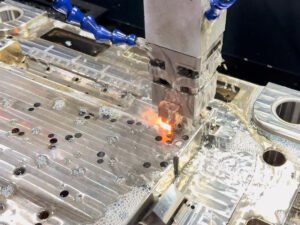
Hard tools are built with CNC machining and electrical discharge machining (EDM). Grades that need hardening are heat treated after roughing, then finished and polished. That adds steps and time, but it allows more complex structures, including multiple cavities, hot runners, and side actions.
Advantages of Hard Tooling
- Longer Tool Life: Steel molds generally provide better wear resistance than aluminum molds. When the material grade and mold design are appropriate, they can support hundreds of thousands to millions of parts.
- Better Suitability for Long Production Runs: Hard tooling is designed for repeated production. It is often a better choice for products with stable demand and regular manufacturing schedules.
- Resistance to Abrasive Materials: Suitable tool steels are generally better equipped to handle engineering plastics that contain glass fiber or mineral fillers over extended production runs.
- Support for Complex Mold Structures: Steel tooling can be used for complex mold designs, including multiple cavities, sliders, lifters, and other mechanisms. The actual design depends on the part geometry and manufacturing requirements.
- Long-Term Cost Efficiency: Although hard tooling requires a higher initial investment, its longer service life can reduce the need for frequent mold replacement. For high production volumes, the tooling cost can be distributed across more parts.
- Tight Tolerance: Hard tooling has rigidity and dimensional stability, which hold tighter tolerances.
Limitations of Hard Tooling
- High upfront cost and long lead time.
- Once the design is frozen, changes are complex and expensive. They often need EDM or weld repair, and welding carries a risk of distortion.
- A maintenance plan is required.
- Committing to a hard tool before the design is mature carries risk.
Typical Applications
Hard tooling is commonly used for:
- Medium- to high-volume injection molding.
- Long-term production programs.
- Products with stable and finalized designs.
- Parts made from abrasive or demanding engineering plastics.
- Applications requiring repeated production and consistent quality.
Soft Tooling vs. Hard Tooling: Key Differences
The main differences between soft tooling and hard tooling involve mold materials, initial investment, manufacturing lead time, tool life, maintenance, and production capacity.
Mold Material
Soft tooling is mostly aluminum alloy, and sometimes epoxy or 3D-printed resin. Hard tooling is tool steel. Hardness and wear resistance explain most of the other differences.
Manufacturing Cost
An aluminum injection mold costs less up front than a steel mold. Upfront cost is not total cost, though. A hard tool delivers the lowest cost per part at volume, while a soft tool costs more per part as volume rises and may need replacing. A simple way to compare them:
Total cost = Tooling cost + (Piece price × Quantity), plus the cost of a replacement tool if the soft tool wears out before the run ends.
Lead Time
Soft tools are generally built in weeks, because aluminum is easy to machine and needs no heat treatment. Hard tools take longer, since steel is harder to cut and the build includes EDM, heat treatment, polishing, and trial runs.
Tool Life
Typical shot life differs by orders of magnitude, and depends on the resin, the part geometry, and maintenance. Silicone or epoxy molds last tens of shots. Aluminum injection molds run from a few hundred to roughly ten thousand. Hardened steel molds can reach hundreds of thousands to millions. Silicone-mold figures are often quoted for soft tooling in general, but they do not apply to aluminum.
Maintenance Cost
Aluminum is easily damaged and needs careful handling, and it is usually replaced when its life is used up instead of being repaired for long. Steel needs regular cleaning, polishing, vent cleaning, and replacement of wear parts, but its long life spreads that cost over many more parts. Repairs and modifications cost more on hardened steel.
Production Quantity
Soft tooling fits prototypes through low volume. Hard tooling fits medium volume through high volume and long-term orders. The dividing line depends on part price, cavity count, cycle time, and resin.
A quick comparison table:
| Item | Soft Tooling | Hard Tooling |
|---|---|---|
| Typical material | Aluminum alloy; sometimes epoxy or 3D-printed resin | P20, H13, S7, 420 stainless |
| Upfront cost | Lower | Higher |
| Lead time | Shorter | Longer |
| Tool life | Hundreds to about ten thousand shots (aluminum) | Hundreds of thousands to millions |
| Ease of modification | Easy, by machining | Difficult, often needs EDM or welding |
| Maintenance | Careful handling; replaced at end of life | Regular maintenance; long life |
| Resin compatibility | Mainly standard resins | Nearly all resins |
| Polish level | Hard to hold a very high level | High levels achievable and lasting |
| Cost per part at high volume | Higher | Lowest |
| Typical use | Prototypes, pre-production, bridge production, low volume | Mass production, long-term orders |
Soft Tooling vs. Hard Tooling: Which Is Better for Your Project?
The appropriate tooling solution often depends on the product’s development stage and production plan.
Prototype Development: Soft Tooling
During product development, designs may still need adjustments. Soft tooling offers lower initial costs and shorter lead times, making it suitable for checking dimensions, assembly, and function before finalizing the design.
Low-Volume Production: Soft Tooling
For small orders, market testing, or initial product launches, soft tooling can reduce upfront investment. An aluminum injection mold can produce functional parts using the intended production resin, provided its service life meets the required quantity.
Mass Production: Hard Tooling
When the product design is stable and production volume increases, hard tooling is generally a better option. Steel molds offer greater wear resistance and are better suited to repeated production cycles.
Long-Term Orders: Hard Tooling
For products with regular repeat orders, hard tooling can provide better long-term value. Although the initial investment is higher, its longer service life can reduce the need for frequent mold replacement and help control tooling costs over time.
How to Choose the Right Tooling for Your Production Requirements?
Start with the total quantity over the product’s life. Then consider the resin, part structure, budget, schedule, and required tool life.
| Factor | Soft Tooling | Hard Tooling |
|---|---|---|
| Quantity | Small total, a few thousand or fewer | Large total, tens of thousands or more, or long-term supply |
| Part structure | Simple structure | Fine sliders, lifters, deep undercuts, complex inserts |
| Resin | Standard resins such as ABS, PP, nylon | Glass- or carbon-filled, PEEK, PSU |
| Tolerance and surface | Ordinary tolerance and polish | Tight tolerance, high polish, optical surfaces |
| Budget | Limited upfront budget | Enough upfront budget, focus on total cost |
| Schedule | Fast launch needed | Time allows |
| Design maturity | Design may still change | Design frozen |
| Tool life needed | Short period of use | Multi-year supply |
Conclusion
The trade-off between soft tooling and hard tooling is upfront speed and cost against long-term life and cost per part. Settle the total quantity first, then the resin, the structure, how mature the design is, and the schedule.
Working with an experienced custom injection molding manufacturer can also help align mold design, trial validation, and production planning with your actual order requirements. If you are planning a new mold, send us your part drawing, resin, expected quantity, and launch plan. We can review which tooling approach fits the project.


