Transparent Parts Manufacturing Services
With 40 years of production experience, Jiangzhi manufactures custom transparent parts, using materials such as PC, PMMA, and PS to achieve excellent clarity and surface quality.


PMMA Instrument Light Cover
A manufacturer needed transparent light covers for their instrument panels. The client’s main concerns were optical clarity, scratch resistance, and consistent dimensions across large production batches.
To meet these requirements, we used high-quality PMMA and ensured the mold surfaces were highly polished. During trial runs, SPI inspections and visual checks were performed on sample parts to verify surface smoothness and clarity. For mass production, we carefully controlled injection molding parameters, including temperature, pressure, and cooling, to minimize warping and maintain consistent quality, ensuring the acrylic parts met the client’s requirements.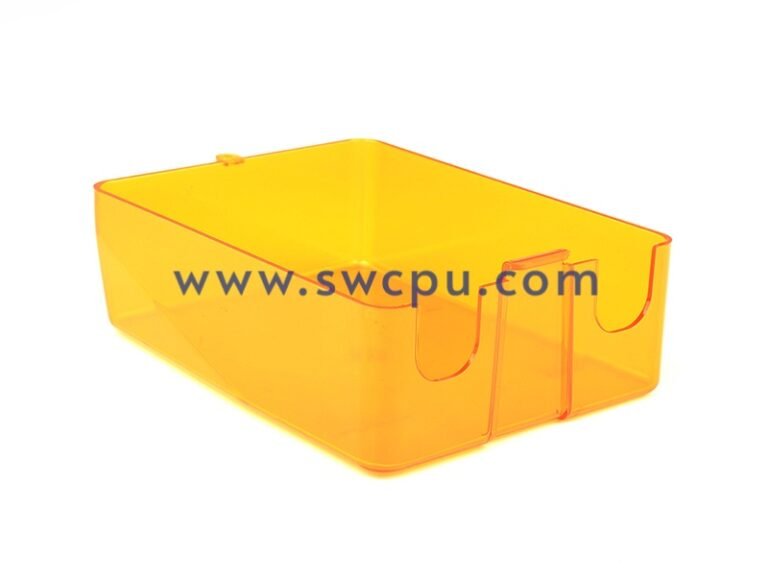
PS Cover Panel
The client needed transparent cover panels for household appliances. PS is easy to mold but scratches easily and can shrink unevenly, causing surface defects or misfit in assemblies.
We selected high-grade PS and polished the mold carefully to reduce marks. Injection parameters were adjusted to control shrinkage and surface finish. Trial pieces were inspected for smoothness and optical clarity before starting full production. The parts successfully moved into full-scale production, and the client has since placed repeat orders.
PC Automotive Headlamp Lens
A client needed transparent headlamp lenses for automotive use. To address this, we recommended PC material and polished the mold surfaces to SPI-A standard. During production, the process included:
- Pre-drying the PC pellets to remove moisture, preventing cloudiness or bubbles.
- Precision injection into the polished mold, carefully filling thin sections to avoid stress lines.
- Controlled holding pressure and cooling to reduce warping while maintaining dimensional accuracy.
- Trial inspections of sample lenses for surface smoothness, clarity, and fit.

Transparent Parts Across Industries
Transparent parts are widely used across various industries where clarity, precision, and durability are essential. They not only enhance aesthetic appeal but also provide functional benefits such as visibility, safety, and protection.
- Electronics: Device housings, display panels, protective covers.
- Automotive: Light covers, interior components, instrument panels.
- Medical & Healthcare: Protective shields, device components, lab equipment.
- Consumer Products: Household appliances, packaging, decorative components.
- Industrial Equipment: Machine guards, sight windows, control panels.
DFM
Capability

Mold & Tooling Service

Surface
Finishing

Assembly Manufacturing