
Mold material selection directly affects mold durability, production efficiency, part quality, and overall manufacturing cost. Injection molding, rubber molding, and silicone molding require different material considerations. Although each process has its own requirements, the basic logic behind Mold Material Selection is similar.
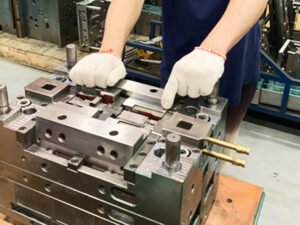
Key Factors for Mold Material Selection
Choosing the right mold material requires evaluating several factors based on the molding process, production requirements, and part specifications.
Working Environment and Temperature
The working environment and operating temperature are important factors in mold material selection. During production, molds are exposed to repeated heating and cooling cycles, injection pressure, and continuous contact with molding materials.
For injection molding, the mold material must maintain dimensional stability under high temperatures and pressure. For rubber molding and silicone molding, the material needs to withstand long-term heat exposure during vulcanization and curing processes without losing strength or surface quality.
Therefore, the mold’s operating temperature range, thermal stability, and resistance to deformation need to be considered when selecting a suitable mold material.
Wear and Corrosion Exposure
Wear and corrosion resistance directly affect mold lifespan and maintenance requirements. Some plastics, especially those containing glass fiber, carbon fiber, or mineral fillers, can cause faster cavity and core wear due to their abrasive properties.
Certain materials, such as PVC and some flame-retardant plastics, may release corrosive substances during processing and require corrosion-resistant mold materials. Rubber compounds can also contain additives that affect mold surfaces during repeated molding cycles.
For these applications, materials with higher hardness, better wear resistance, or improved corrosion resistance are often selected to reduce surface damage and maintenance frequency.
Production Volume and Total Cost
Production volume is a key factor when selecting mold materials. A prototype mold used for a small number of parts does not require the same durability as a production mold designed for millions of cycles.
For low-volume production, aluminum or softer steels are often selected because they reduce initial tooling costs and allow faster machining. For medium-volume production, materials such as P20 and 718 steel provide a good balance between cost and durability. High-volume production usually requires hardened steels such as H13 or S136 to achieve longer service life and stable production performance.
The goal of mold material selection is not to choose the most expensive material, but to find the right balance between initial tooling cost, expected lifespan, and long-term production expenses.
Surface Finish and Precision Requirements
Surface finish and dimensional accuracy requirements also influence mold material selection. Applications that require mirror polishing, optical clarity, or tight tolerances need mold materials with excellent polishing performance and good dimensional stability.
For example, transparent plastic parts often require highly polished cavity surfaces, while medical components may require smooth surfaces that are easy to clean and maintain. Textured parts also require materials that can maintain detailed surface features after repeated production cycles.
Materials such as S136 stainless steel are commonly used for applications where surface quality, corrosion resistance, and precision are critical.
Injection Mold Material Selection
The injection mold material selection process usually focuses on production quantity, plastic material characteristics, and required part quality.
Injection Mold Material Selection by Production Volume
The required mold material depends largely on production volume. The following table summarizes the commonly used mold materials for different production volumes.
| Production Volume | Recommended Mold Materials | Typical Applications |
|---|---|---|
| Prototype / Low Volume | Aluminum, soft steel | Product testing, prototypes |
| Medium Volume | P20, 718 steel | Commercial production |
| High Volume | H13, S136, hardened steel | Mass production |

Matching Mold Steel with Plastic Materials
Different plastic materials create different demands on the mold.
| Plastic Material | Recommended Mold Material | Reason |
|---|---|---|
| ABS, PP, PE | P20, 718 | General-purpose molding |
| PC | 718, H13 | Higher temperature resistance |
| Glass-filled Nylon | H13, hardened steel | Improved wear resistance |
| PVC | Stainless steel | Corrosion resistance |
| PMMA | S136 | High polishing performance |
When to Choose Different Mold Steel Materials
Different mold steels provide different levels of hardness, wear resistance, corrosion resistance, and polishing performance.
P20 Steel: P20 steel is one of the most commonly used mold materials for general injection molding applications. It provides a good balance between machinability, strength, surface finish, and cost. It is commonly used for medium-volume production of ABS, PP, PE, and other standard plastics.
H13 Steel: H13 steel is a hot-work tool steel known for its excellent heat resistance and wear resistance. It is commonly selected for applications where molds experience high temperatures, repeated thermal cycles, or continuous production conditions. This material is suitable for high-temperature engineering plastics and applications involving abrasive materials, such as glass-filled plastics.
S136 Stainless Steel: S136 stainless steel is widely used when corrosion resistance, surface quality, and precision are important requirements. It offers excellent polishing performance, good corrosion resistance, and stable performance in demanding applications. This material is commonly selected for transparent plastic parts, medical components, and precision products.
718 Steel: 718 steel is a pre-hardened mold steel that provides a good combination of strength, machinability, and surface finish. It is commonly used for medium-volume injection molds and applications that require better performance than standard P20 steel.
Mold Materials for Rubber and Silicone Molding
Rubber and silicone molding processes have different requirements compared with injection molding. During rubber and silicone parts production, molds are exposed to high temperatures, repeated pressure cycles, and chemical compounds that may affect mold performance. Therefore, mold material selection for rubber and silicone applications should focus on heat resistance, chemical stability, surface finish, and release performance.
How to Select Rubber and Silicone Mold Materials?
The selection depends on production requirements and molding conditions.
High-Temperature Rubber Molding: For rubber compression molding or transfer molding, the mold material should provide heat resistance, dimensional stability, and resistance to repeated thermal cycles. Tool steels such as P20 and H13 are commonly considered depending on production requirements.
Silicone Molding: Silicone molds often require smooth cavity surfaces, easy demolding, and corrosion resistance. Stainless steel materials may be preferred for applications requiring long-term surface quality and stable production performance. For prototype or low-volume silicone parts, aluminum molds can also be used because they provide lower tooling costs and faster production.
Copper Alloy Inserts in the Molding Process
Copper alloys are generally not used as the primary mold material. Instead, they are used as inserts or specific mold components to improve local performance.
The main advantage of copper alloys is high thermal conductivity. They can help improve cooling efficiency, reduce cycle time, and control temperature in difficult areas.
They are commonly used in injection molding cooling inserts, rubber molds with heat transfer requirements, and silicone molding applications.
Using copper alloy inserts allows manufacturers to optimize specific areas of a mold without replacing the entire mold structure.
Mold Material Cost Is Not the Only Cost Factor
The price of mold material is only one part of the total tooling cost. A lower material cost does not always result in lower production expenses. Several factors should be considered:
Mold Machining Cost
Different materials have different machining requirements. Harder materials may increase processing time, tool wear, and manufacturing difficulty. However, they may provide a longer service life.
Mold Lifespan
A durable mold material can reduce replacement frequency, repair requirements, and production interruptions. For high-volume production, a higher initial material investment may reduce long-term costs.
Maintenance Frequency
Material selection affects how often molds require polishing, surface repair, and component replacement. Proper material selection can improve maintenance efficiency.
Production Efficiency and Downtime Risk
Mold performance affects production stability. Material-related problems can lead to unexpected repairs, production delays, and additional tooling expenses.
Therefore, mold material should be evaluated based on the complete production process, not only the initial purchase price.
Conclusion
Choosing the right Mold Material requires a comprehensive understanding of the molding process, production requirements, and operating environment. The best mold material is not always the most expensive option. It is the material that provides the right balance between tooling cost, mold lifespan, maintenance requirements, and production efficiency.
If you need assistance selecting the right mold material for your injection molding, rubber molding, or silicone molding project, provide your part drawings, material requirements, and expected production volume. Jiangzhi will evaluate the application and recommend a suitable mold and tooling solution.


