Nylon CNC machining is a reliable method for producing lightweight, durable, and precision plastic components. As product requirements become more demanding, many projects need materials that provide a good balance of strength, performance, and cost efficiency. Nylon is widely used for CNC machined parts due to its excellent wear resistance, low friction, and good mechanical properties. However, selecting the right nylon grade and machining process is essential to achieve consistent results.
Understanding nylon properties, machining processes, and material selection is important for choosing the right solution for your project.
What Is Nylon?
Nylon is a family of synthetic thermoplastic polymers known for its good mechanical performance and versatility. It is commonly used as an engineering plastic in applications that require durability, dimensional stability, and resistance to wear. Compared with many general-purpose plastics, nylon provides improved strength and performance, making it suitable for machining functional parts that need to withstand mechanical stress.
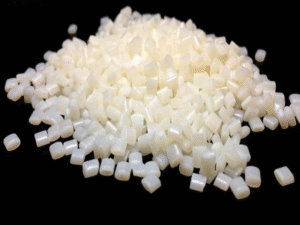
Nylon Properties
Nylon has a combination of physical, mechanical, and chemical properties that make it suitable for engineering applications.
Physical Properties
- Lightweight: Nylon has a lower density compared with many metals, making it a lightweight material option for reducing component weight.
- Low Friction Coefficient: Nylon naturally provides smooth sliding performance, which helps reduce friction between moving components.
- Moisture Absorption: One characteristic of nylon is its ability to absorb moisture from the environment. This can influence dimensional stability and should be considered during material selection and machining.
Mechanical Properties
- High Strength: Nylon provides good tensile strength and stiffness compared with many common plastics. This allows it to maintain structural performance under mechanical loads.
- Impact Resistance: Nylon can absorb impact forces without easily cracking, providing reliable performance in demanding applications.
- Wear Resistance: Nylon has excellent resistance to wear caused by repeated contact or movement.
Chemical Properties
- Chemical Resistance: Nylon can resist many oils, fuels, and industrial chemicals, depending on the specific grade.
- Temperature Resistance: Nylon can maintain its mechanical properties under moderate temperature conditions. Different nylon grades offer varying temperature performance.
Why Use Nylon for CNC Machining?
Nylon is widely selected for CNC machining because it offers good machinability while maintaining the mechanical performance required for functional plastic parts. Its material characteristics allow efficient machining, good surface quality, and reliable performance in different applications.
Good Machinability for Efficient Processing
Nylon has a lower hardness compared with many metals, which allows CNC cutting tools to remove material with relatively low cutting resistance. This makes nylon suitable for milling, turning, and other machining operations while helping maintain efficient production.
Low Friction Helps Improve Machining Performance
Nylon’s naturally low friction characteristics help reduce friction between the cutting tool and workpiece during machining. This can minimize heat buildup and reduce the risk of surface defects caused by excessive temperature.
Good Toughness for Complex Part Designs
Unlike brittle materials that may crack during machining, nylon provides good toughness and impact resistance. This allows CNC manufacturers to produce parts with complex geometries while maintaining structural integrity.
Suitable for Precision Plastic Parts
With proper machining parameters and material preparation, nylon can achieve stable dimensions and good surface finishes. This makes it suitable for custom components that require reliable accuracy.
Balanced Machining Performance and Cost
Nylon provides a practical combination of machinability, durability, and material cost. Compared with many engineering plastics, it offers an economical solution for producing functional CNC machined parts.
Nylon Grades: Choose the Right Material for Nylon CNC Machining
Common nylon materials used for CNC machining include nylon 6, nylon 66, and glass-filled nylon. Each grade offers different performance characteristics depending on the application requirements.
Nylon 6 provides good toughness, wear resistance, and machinability. It is commonly used for general mechanical components.
Nylon 66 offers higher strength, stiffness, and dimensional stability compared with standard nylon grades. It is often selected for parts requiring improved mechanical performance.
Glass-filled nylon contains reinforcing fibers that improve stiffness, strength, and dimensional stability. It is suitable for applications requiring higher load capacity.
Nylon CNC Machining Process
Nylon CNC machining involves several steps to produce accurate and reliable plastic components. The process usually includes the following steps.
Step 1: Material Selection
The first step is choosing the right nylon grade based on part requirements. Common options include nylon 6 for general-purpose mechanical parts, nylon 66 for higher strength and dimensional stability, and glass-filled nylon for improved stiffness and load-bearing applications.
Step 2: Material Preparation
Before machining, the nylon material should be properly prepared and inspected. Since nylon can absorb moisture from the environment, proper storage and drying may be required to maintain dimensional accuracy and prevent machining issues.
Step 3: CNC Setup
The nylon workpiece is securely fixed on the CNC machine before machining. Proper fixturing helps prevent part movement, surface damage, and dimensional errors. Special fixtures may be used for thin-wall or complex nylon components.
Step 4: CNC Machining
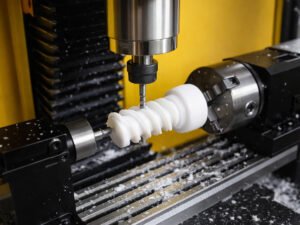
The CNC machine removes material according to the digital design. During machining, cutting conditions need to be carefully controlled to reduce heat buildup and maintain part accuracy.
Step 5: Inspection and Finishing
After machining, nylon parts are inspected to verify dimensions, surface quality, and required tolerances. Additional finishing operations, such as deburring or surface treatment, may be performed when needed.
Nylon CNC Machining Techniques
Different CNC machining techniques can be used to manufacture nylon components depending on part geometry and design requirements.
CNC Milling
CNC milling is widely used for nylon parts that require complex shapes, detailed features, and precise dimensions. It is suitable for producing components with pockets, slots, and customized geometries.
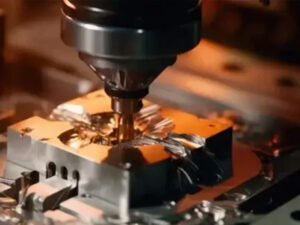
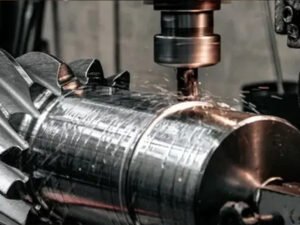
CNC Turning
CNC turning is commonly used for producing cylindrical nylon components with accurate dimensions. This method is suitable for parts that require rotational symmetry and consistent surface finishes.
Drilling and Other Machining Operations
Drilling and secondary machining operations are often used to create holes, openings, and additional design features.
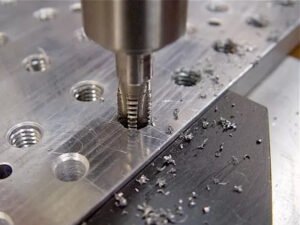
These methods are usually combined with other machining processes to complete complex nylon components.
Applications of Nylon CNC Machined Parts
Nylon CNC machined parts are widely used in industries that require lightweight, durable, and functional components.
- Automotive Components: bushings, gears, clips, mechanical supports
- Industrial Equipment: rollers, wear components, bearings, machine parts
- Electronics Applications: insulating components, housings, custom fixtures
- Medical Equipment: lightweight structural parts, custom prototypes
Nylon vs Delrin in CNC Machining
Nylon and Delrin(POM) are both commonly used engineering plastics for CNC machining, but they offer different performance characteristics.
| Property | Nylon | Delrin |
|---|---|---|
| Strength | High | Medium |
| Wear Resistance | Excellent | Excellent |
| Friction Performance | Good | Excellent |
| Temperature Resistance | Medium | Medium |
| Cost | Lower | Medium |
| Common Applications | Mechanical parts, gears, bushings | Precision components, low-friction parts |
The right material depends on factors such as mechanical requirements, temperature conditions, environmental exposure, and budget. For more information, explore our article about POM CNC machining and plastic CNC machining options for different engineering plastics.
Conclusion
Nylon CNC machining provides an effective way to produce lightweight, durable, and precision plastic components for various applications. With different nylon grades available, you can select materials that match specific performance requirements.
Jiangzhi provides custom CNC machining services for nylon and other engineering plastics. Contact our team to discuss your project requirements and find the right solution for your custom plastic parts.
FAQs About Nylon CNC Machining