Injection molding is one of the most widely used manufacturing processes in modern industry. It allows for the mass production of high-precision plastic parts, offering efficiency, repeatability, and versatility in design. There are types of injection molding, including overmolding, insert molding, injection compression molding, etc., each suited to different production needs.
What is Injection Molding?
Injection molding is a manufacturing process where thermoplastic or thermoset materials are melted and injected into a mold cavity under high pressure. Once the material cools and solidifies, it takes the shape of the mold, forming a finished part. A wide range of polymers can be used, from standard plastics to engineering-grade materials with enhanced mechanical or thermal properties in injection molding.
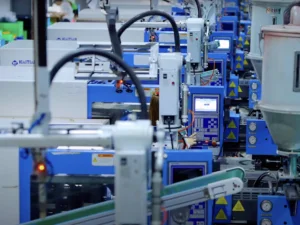
Injection molding offers advantages such as high production rates, low labor costs, and minimal waste. However, it requires significant upfront investment in tooling. Molds are typically made from steel or aluminum, with steel providing durability for high-volume runs.
Variations in the process lead to different types of injection molding, each optimized for particular requirements. These types modify the standard cycle to improve part quality or incorporate additional features.
Common Types of Injection Molding
Several types of injection molding exist to handle diverse design and production needs. Below are details on the key injection molding types.
Insert Molding
In the insert molding process, the pre-formed components, such as metal inserts or other durable materials, are placed into the mold before the plastic is injected. The plastic then encapsulates the insert, creating a single integrated part.
Insert molding is used to combine materials with different properties, reducing assembly steps. It eliminates the need for separate fastening operations, which can lower costs and improve part strength. However, the tooling would be more complex and expensive than the traditional injection molding, and there would be insert misalignment during injection.

Common Applications:
- Electronic housings with embedded connectors
- Bushings
- Brackets
- Medical devices requiring embedded metal parts
- Electrical connectors with metal pins
Overmolding
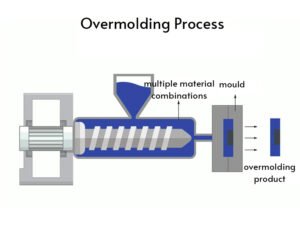
Overmolding involves injecting a second material over a pre-molded substrate. This creates a layered part, often with a soft outer layer for grip or protection. The compatible materials include TPE (thermoplastic elastomer) over rigid plastics like ABS.
The process requires two stages: first, molding the substrate, then transferring it to another mold or using a rotating mold for the overmold material. The second material is injected, adhering to the substrate through heat or chemical bonding.
Overmolding is selected for enhancing functionality, combining rigid and flexible materials, or adding color differentiation. It provides better vibration damping and aesthetic improvements without additional assembly. Drawbacks involve material compatibility issues and longer cycle times due to multiple shots.
Common Applications:
- Handheld tool handles and grips
- Electronic device enclosures
- Sealing components
Gas-Assisted Molding
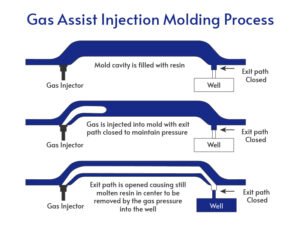
Gas-assisted injection molding is a type of injection molding that uses pressurized gas to hollow out thick sections of the part. In this process, molten plastic is partially injected into the mold. Then, inert gas, usually nitrogen, is introduced through a nozzle or the mold, pushing the plastic against the mold walls and creating internal voids. Materials such as polypropylene and ABS work well due to their flow properties.
This method reduces part weight, minimizes shrinkage and warping, and improves dimensional stability. It is particularly effective for large or thick-walled parts where conventional molding may lead to defects. However, this process needs specialized equipment and potential gas leakage issues.
Common Applications:
- Automotive dashboards and panels
- Furniture components
- Large plastic housings
Injection Compression Molding
Injection compression molding combines injection with compression. The process starts with injecting molten plastic into a partially open mold. The mold then closes fully, compressing the material to fill the cavity evenly. This compression step distributes the material and reduces warpage. Materials like polycarbonate and acrylic are frequently employed for their transparency.
This process reduces internal stresses, improves optical surface quality, and enhances dimensional accuracy. It is often selected for parts requiring high precision or optical clarity. However, the precise control of mold movement and higher machine costs are challenges.
Common Applications:
- Lenses
- Light guides
- High-precision medical devices
- Components with tight tolerance requirements
Multi-Shot Molding
Multi-shot molding, also known as multi-material or two-shot molding, is a type of injection molding that injects multiple materials in sequence into the same mold. This produces parts with integrated colors or materials. The process uses a mold with multiple cavities or a rotating platen. The first material is injected and partially cooled, then the mold adjusts for the second injection, which bonds to the first. Materials like different thermoplastics or colors of the same polymer are used.
It allows for the combination of materials with different properties, colors, or textures into a single part. This method reduces assembly time, provides seamless integration, design flexibility, and improves the overall quality of multi-material products. However, this process needs complex tooling and materials that bond well.
Common Applications:
- Buttons
- Dashboards
- Multi-color consumer electronics
- Packaging components requiring both rigid and flexible materials
- Multi-color keycaps
How to Choose the Right Injection Molding Process?
Selecting the appropriate type of injection molding depends on part design, production volume, and performance requirements.
- Evaluate production volume. High-volume runs benefit from efficient types like multi-shot molding, which reduces post-processing. Low volumes may favor simpler types to minimize tooling costs.
- Consider material needs. If combining rigid and flexible materials, overmolding or multi-shot types are suitable. For lightweight hollow parts, gas-assisted molding is effective. If the part involves metal components, consider insert molding.
- Assess part geometry. Thick sections prone to sinks suggest gas-assisted or injection compression types. Thin walls require processes that ensure even filling without defects.
- Review tolerances and cosmetics. Optical or precise parts lean toward injection compression molding for better surface finish.
- Budget and timeline are factors. Advanced types like multi-shot increase initial costs but save on assembly. Prototype with standard molding before scaling to specialized types.
Conclusion
Injection molding remains a key manufacturing method due to its versatility. Understanding each type will help to choose the right injection molding type to improve the part quality and efficiency. Jiangzhi is a professional on-demand manufacturer that provides different types of injection molding. Feel free to contact us to get a professional custom solution for your project.