PVC Injection Moulding
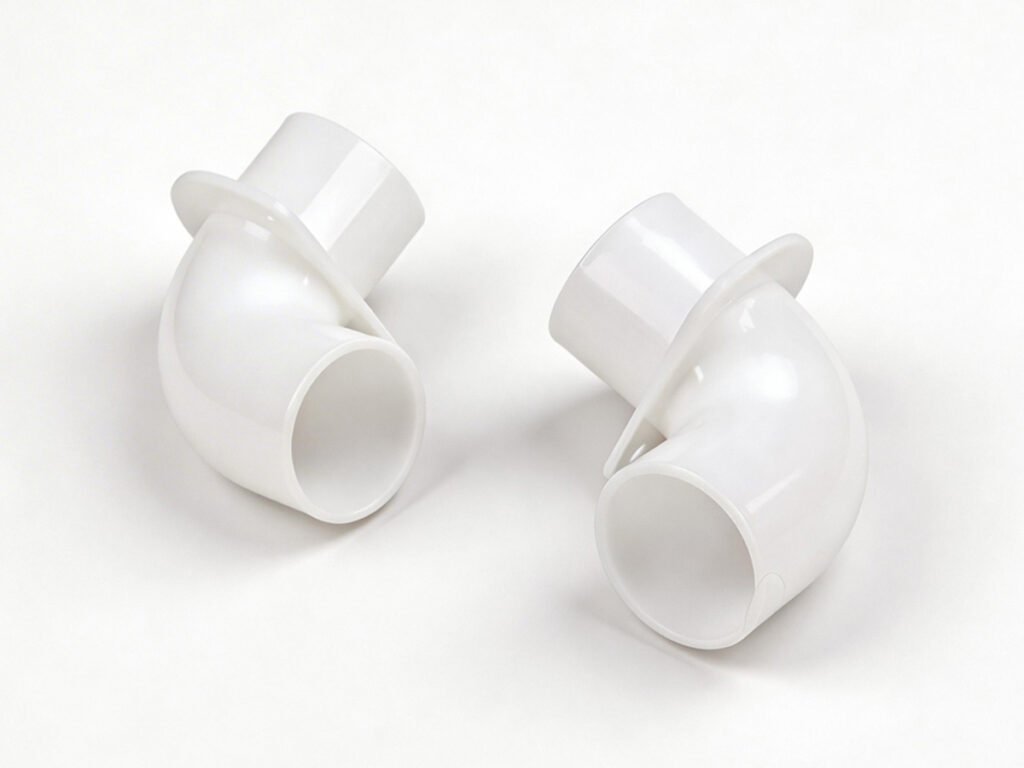
PVC Injection Molding Solutions
From rigid to flexible PVC, we help you produce durable, chemically resistant parts with stable quality — even for challenging designs sensitive to heat and degradation. With strict temperature control, optimized mold design, and corrosion-resistant tooling, we ensure consistent PVC molding without degradation or defects.
Common Challenges in PVC Molding
We address these with controlled processing windows and optimized tooling.
- Material degradation due to overheating
- Corrosion to molds and equipment
- Flow instability and burn marks
- Tight tolerance issues
PVC Injection Molding Capabilities & Options
Typical parameters for PVC injection-molded parts we manufacture are shown below for reference. Values can be adjusted based on part geometry, tolerance requirements, surface expectations, and end-use application.
| Parameter | Recommended Range |
|---|---|
| Max Part Size | 2500mm * 2000mm(98 inch * 78 inch) |
| Color Options | Pantone / Sample / Custom colors |
| Surface Finishes | Semi-glossy / Matte / Textured Finish |
| Tolerances | ±0.10–0.20 mm |
| Cost | ⭐⭐☆☆☆ |
PVC Material Properties
Injection molded PVC (Polyvinyl Chloride) is available in both rigid and flexible forms. Known for its chemical resistance, self-extinguishing nature, and cost efficiency, PVC plastic molding is widely used in applications requiring insulation, strength, and durability. Key Material Properties:
- Chemical resistance – withstands acids, alkalis, and many organic solvents.
- Electrical insulation – excellent dielectric properties, suitable for cable sheathing.
- Fire retardancy – inherently flame-resistant, making it ideal for safety-critical applications.
- Rigidity or flexibility – available in rigid or plasticized grades depending on your needs.
| Property | Density | Tensile Strength | Flexural Strength | Impact Strength (Unnotched) | Heat Deflection Temp (0.45 MPa) |
|---|---|---|---|---|---|
| Value/Description | 1.3 - 1.45g/cm³ | 35 - 60 MPa | 45 - 85 MPa | 2-15 kJ/m² | 60 - 95℃ |
- The above parameters represent the baseline performance of the materials. Actual application should be dynamically optimized based on specific working conditions.
Related Process
Looking for High-Quality PVC Injection Molding?
Advantages & Disadvantages of PVC Injection Moulding
PVC injection moulding is widely used in various manufacturing applications. Like any material, it offers both strengths and limitations. Understanding these trade-offs can help you choose the right injection molding solution for your PVC product and performance goals.
Advantages
- Excellent chemical and flame resistance
- Cost-effective for high-volume production
- Dimensional stability
- Flexible or rigid options
Disadvantages
- Degrades if overheated, releasing harmful fumes.
- Requires corrosion-resistant molds and precise temperature control.
- Rigid PVC may be brittle under high-impact loads.
- Limited adhesion without surface treatment or primers.
Applications of Injection Molding PVC
Electrical & Electronics

- Cable insulation and connectors
- Enclosures and switches
- Circuit board carriers
Construction & Infra

- Pipe fittings and drainage components
- Window profiles and wall panels
- Flooring trims and corner guards
Medical Devices

- IV components and fluid containers
- Tubing and connectors
- Disposable medical housings
Consumer Goods

- Toys and flexible parts
- Decorative PVC mouldings
- Household tool handles and cases
Jiangzhi PVC Moulding Solutions are Guaranteed