
Transparent Parts Manufacturing Services


PMMA Instrument Light Cover
A European medical instrument manufacturer needed transparent light covers for their diagnostic panel assemblies. Their previous supplier had recurring issues with surface haze and inconsistent dimensions, causing assembly line stoppages.
We addressed every stage known to cause failure in clear parts: PMMA dried at 80°C to prevent silver streaking, cavities polished to SPI A1 standard, gate placement keeping weld lines out of the optical zone, and temperature, pressure, and cooling tightly controlled batch to batch. Final inspection used directional lighting to catch any flow marks or cloudiness before shipment. The client has been in continuous production with us since, with zero part-related line stoppages.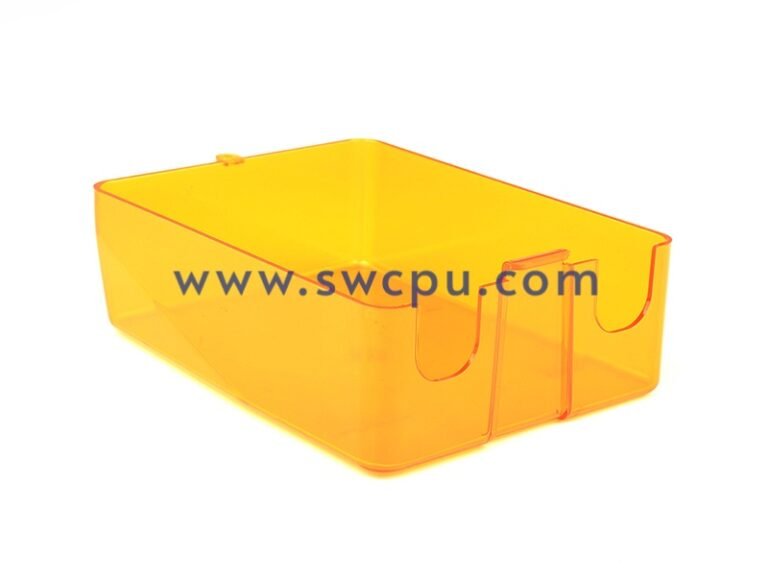
PS Cover Panel
A home appliance manufacturer in Southeast Asia was developing a new product line that required PS cover panels with a clean appearance and precise snap-fit assembly. Although the previous supplier achieved acceptable dimensions during trial production, slight edge warpage appeared after production volumes increased, resulting in visible gaps between the panel and the housing.
After reviewing the project, we found that the issue was related to shrinkage variation across multiple mold cavities rather than the PS material itself. By optimizing packing pressure and cooling conditions for each cavity and improving mold polishing to reduce drag marks during ejection, we achieved stable dimensional consistency and a smooth cosmetic finish suitable for repeatable mass production.
PC Automotive Headlamp Lens
A German Tier-2 supplier had been struggling for months with flow marks and haze on their PC headlamp lenses. Scrap was above 18%, OEM deadlines were slipping, and their assembly line was backing up.
When they came to us, we pulled their process data and inspected the lenses. The issues were consistent — mold surface breaking down under PC's processing temperature, single-stage pressure unable to follow the lens geometry, and uneven cooling causing dimensional drift across cavities.
We upgraded to SPI A1 diamond polish, tuned multi-stage pressure profiles to the wall transitions, and rebalanced cooling cavity by cavity. First submission passed ECE and SAE optical certification. Scrap dropped to under 1.5%, tolerances held within ±0.05mm, and their OEM delivery schedule was back on track.Hard Coating for Surface Protection

AR Coating for Optical Enhancement
Spray Painting for Functional & Decorative Finishes
Silk Screen Printing for Identification & Branding
Ultrasonic Welding for Clean Assembly

Transparent Parts Across Industries
Transparent parts are widely used across various industries where clarity, precision, and durability are essential. They not only enhance aesthetic appeal but also provide functional benefits such as visibility, safety, and protection.
- Electronics: Device housings, display panels, protective covers.
- Automotive: Light covers, interior components, instrument panels.
- Medical & Healthcare: Protective shields, device components, lab equipment.
- Consumer Products: Household appliances, packaging, decorative components.
- Industrial Equipment: Machine guards, sight windows, control panels.
DFM
Capability

Mold & Tooling Service

Surface
Finishing

Assembly Manufacturing

Quality Management


