

Classification System of Injection Molds
There is a wide variety of injection molds, which can be categorized across multiple dimensions. Different classification dimensions reflect different core elements of mold design. Understanding these classifications helps engineers and procurement personnel make correct injection mold selection decisions based on product requirements, volume targets, and cost budgets.
Injection molds are primarily classified into the following four dimensions:
- By Number of Plates: Two-plate mold, three-plate mold, stack mold.
- By Runner System: Cold runner mold, hot runner mold, insulated runner mold.
- By Number of Cavities: Single-cavity mold, multi-cavity mold, family mold.
- By Special Processes: Two-shot/Two-color mold, insert mold, overmolding mold, etc.
Classification by Number of Plates
Two-Plate Mold
A two-plate mold is the simplest and most widely used type among all injection mold types. As the name suggests, the mold is divided into a moving plate and a fixed plate by a single parting line.
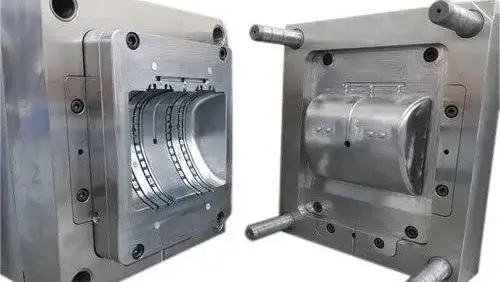
Working Principle of Two-Plate Mold
Molten plastic enters the mold through the sprue, reaches the cavity via runners and gates. When the mold opens, the two plates separate along the single parting line, and the ejector system pushes the product off the core. The runner system is connected to the product and needs to be separated manually or by a robotic arm.
Key Features of Two-Plate Mold
- Simple structure, low mold manufacturing cost.
- Single parting line, suitable for products with relatively simple geometries.
- The runner is connected to the product, requiring secondary separation and generating material waste.
- Compatible with both cold and hot runner systems.
- Easy to debug and maintain, making it the most common entry-level mold.
Typical Applications of Two-Plate Mold
Consumer electronics housings, automotive interior parts, household appliance accessories, industrial parts, and the vast majority of injection-molded products.
Three-Plate Mold
A three-plate mold has two parting lines, and the mold consists of three plates: the fixed plate (clamping plate), the intermediate plate (runner plate), and the moving plate. This structure allows the runner and the product to separate automatically when the mold opens.
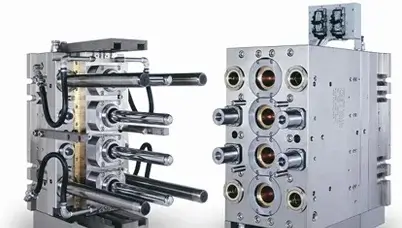
Working Principle of Three-Plate Mold
During mold opening, the mold opens sequentially at two parting lines: the first parting line separates the runner and sprue from the product, and the second parting line separates the product from the core. The runner system is guided to a separate discharge area, achieving automated separation without manual intervention.
Key Features of Three-Plate Mold
- Two parting lines enable automatic separation of the runner and the product.
- Allows pin gating, leaving extremely small gate vestiges.
- The mold structure is more complex than a two-plate mold, resulting in higher manufacturing costs.
- Runner waste can be directly fed into a granulator for recycling, suitable for scenarios with high material utilization requirements.
- Suitable for multi-point gate designs to improve filling uniformity in large or complex parts.
Typical Applications of Three-Plate Mold
Thin-walled parts requiring center pin gates, complex parts with multi-point gating, and products requiring high cosmetic appearance (minimal gate marks).
Stack Mold
A stack mold is an advanced mold structure that stacks multiple layers of two-plate molds onto the same mold base, which is equivalent to running multiple molds on a single injection molding machine. Common types include two-layer, three-layer, and four-layer stack molds.
Working Principle of Stack Mold
The cavities of each layer in a stack mold are fed through a central hot runner system, with independent cavity faces between each layer. Within a single injection cycle, cavities across all layers are filled, cooled, and ejected simultaneously, doubling or multiplying output while the required clamping force remains virtually unchanged.
Key Features of Stack Mold
- Output can be increased by 100% (for a two-layer stack mold) or more under the same clamping force.
- Extremely high production efficiency, significantly reducing per-part costs.
- Large mold height requires an injection molding machine with a larger opening stroke.
- Usually fed by hot runners, featuring a complex mold structure.
- High upfront investment cost, ideal for ultra-high-volume production.
Typical Applications of Stack Mold
Dairy containers and lids, thin-walled packaging containers, disposable medical consumables, and other mass-production scenarios.
Classification by Runner System
Cold Runner Mold
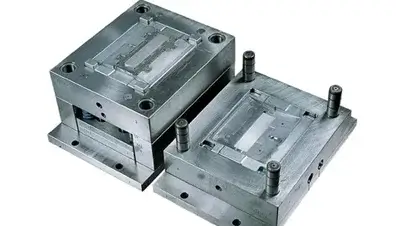
A cold runner mold refers to a mold system where the runner cools and solidifies along with the product after each injection. Cold runner systems can be used in combination with two-plate or three-plate molds. After each mold opening, the solidified runner must be removed together with the product, which can be discarded or crushed for recycling.
Advantages of Cold Rubber Mold
- Simple mold structure, low manufacturing and maintenance costs.
- Wide adaptability to materials and colors, easy color changes.
- Low barrier for process debugging, easy to operate.
Limitations of Cold Rubber Mold
- Runner waste is generated with every injection, leading to lower material utilization compared to hot runners.
- The runner requires cooling time, resulting in a relatively longer molding cycle.
- Requires a runner separation mechanism during automated production.
Applicable Scenarios of Cold Rubber Mold
Small to medium batch production, projects requiring frequent material or color changes, and cost-sensitive projects.
Hot Runner Mold
Hot runner molds keep the plastic in a molten state throughout the entire delivery process via a built-in heated runner system, injecting it directly into the cavity without generating runner waste. A hot runner system consists of two core components: the hot manifold and hot nozzles, with temperature controlled independently in each heating zone via precise temperature controllers.
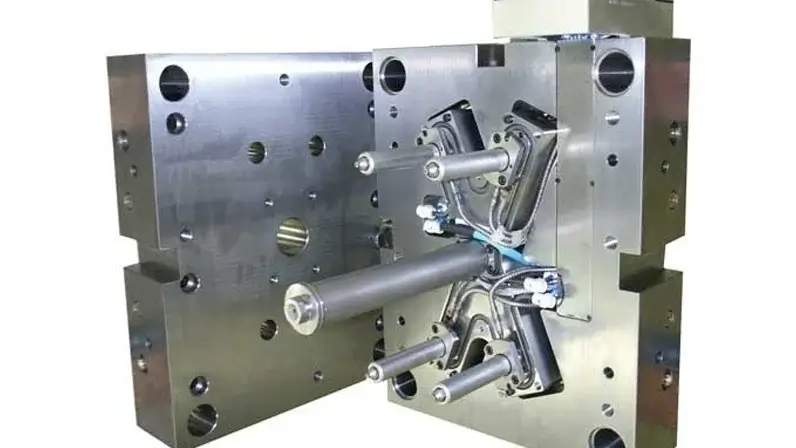
Hot nozzles are divided into two main types:
- Open Gate: Simple structure, suitable for materials with good fluidity, but may suffer from drooling issues.
- Valve Gate: Controls the opening and closing of a valve pin via pneumatic or hydraulic pressure, leaving minimal gate vestiges and offering precise control.
Advantages of Hot Runner Mold
- No runner waste, high material utilization, and lower long-term comprehensive costs.
- Short molding cycle, high production efficiency.
- More balanced filling between cavities, ensuring excellent product consistency.
- Suitable for large multi-cavity molds, reducing single-part injection costs.
Limitations of Hot Runner Mold
- High initial mold investment cost (the hot runner system itself is expensive).
- Complex temperature control system, requiring high maintenance standards.
- Material and color changes are less convenient than with cold runners, carrying a risk of color mixing.
Applicable Scenarios of Hot Runner Mold
Mass production, high-material-value products, multi-cavity molds, and situations with high product appearance requirements.
Insulated Runner Mold
Insulated runner molds use oversized runner cross-sections so that the outer layer of plastic solidifies first to form an insulating layer, while the inner layer of plastic remains molten during continuous production without requiring external heating devices. Its cost is lower than that of hot runner molds, but stable operation relies on a continuous, uninterrupted production rhythm. It is mostly used for the stable mass production of products like polyethylene (PE) and polypropylene (PP).
Classification by Number of Cavities
Single-Cavity Mold
A single-cavity mold produces only one product per injection. Its advantages include low mold manufacturing costs, short debugging cycles, simple process control, and high product consistency.
It is best suited for the following scenarios:
- Product development and validation stages, requiring rapid sampling and iterative modifications.
- Low expected production volumes, where the extra investment of multi-cavity molds cannot be recouped through cost reductions.
- Large product dimensions or extremely complex structures where a single cavity fully occupies the mold base space.
- Frequent changes in product materials or colors.

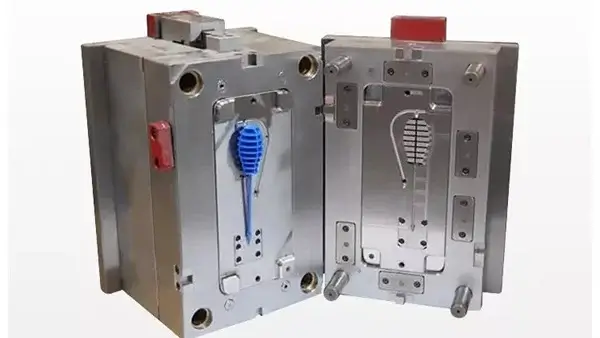
Multi-Cavity Mold
A multi-cavity mold features multiple identical cavities within the same mold, producing multiple identical products simultaneously per injection. The number of cavities can range from 2, 4, 8, to 64 or even more, determined by the injection molding machine’s clamping force, shot volume, and mold base size.
The key to multi-cavity mold design is ensuring balanced filling across all cavities. The runner system must use a symmetrical layout (such as an H-shape or X-shape) to ensure consistent filling time, pressure, and temperature for each cavity, thereby guaranteeing uniform quality across all products.
Advantages of Multi-Cavity Mold
- Significantly increases production efficiency and lowers single-part production costs.
- In high-volume scenarios, the payback period for multi-cavity molds is drastically shortened.
- Fully utilizes the clamping force and shot volume of the injection molding machine.
Challenges of Multi-Cavity Mold
- High complexity in mold design and manufacturing, requiring a large upfront investment.
- If an issue occurs in any single cavity, the entire mold must be shut down for maintenance, impacting overall capacity.
- High requirements for balanced design between cavities, demanding precise runner and cooling layouts.

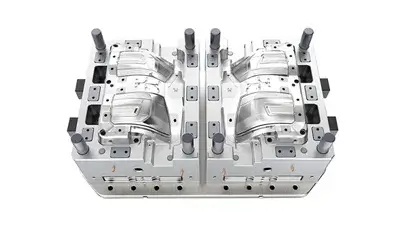
Family Mold
A family mold (also known as a combination mold) features multiple cavities of different shapes within the same mold to simultaneously produce different matching parts of the same product. For example, producing the upper and lower covers of a product in a single injection.
The core value of a family mold lies in reducing the number of mold sets, lowering total mold investment, and simplifying production management. Its design challenge lies in the filling balance of parts with different shapes, requiring meticulous calibration of gate sizes and cooling systems.
Applicable Conditions of Family Mold
Matching parts must use the same material and color, have similar wall thicknesses and volumes, and possess stable production volumes with a fixed ratio.
Special Process Molds
Two-Shot / Two-Color Mold
A two-shot mold can complete two injections within the same mold to produce a composite product with two materials or two colors.
Working Principle of Two-Shot Mold
The substrate of the product is formed in the first injection. Subsequently, the rotary table rotates 180° to transfer the substrate to the second set of cavities for the second injection, bonding the two materials into a single integrated part. The entire process is completed within one continuous molding cycle without manual transfer.
Typical Applications of Two-Shot Mold
- Toothbrush handles (rigid PP substrate + soft TPE non-slip grip)
- Automotive interior parts (structural substrate + soft skin material)
- Power tool handles (rigid housing + soft rubber protective layer)
- Transparent window products (transparent PC + opaque ABS frame)
The advantages of two-shot molds include stable processes, high bonding strength, beautiful appearance, and no need for post-assembly.
The disadvantages are an extremely complex mold structure, high cost, and the need for specialized two-shot injection molding machines.
Insert Mold
Insert molding involves placing pre-prepared metallic or non-metallic inserts into the cavity before injecting plastic, enabling the plastic and the insert to form an inseparable, integrated structure.
Common Insert Types:
- Metal Nuts and Bolts: Used where high-strength threaded connections are required.
- Metal Conductive Terminals: Used for electronic connectors and plug-ins.
- Metal Reinforcement Ribs: Used to locally enhance structural strength.
Insert molds combine the strength of metal with the design freedom of plastic, and are widely used in automotive electronics, connectors, medical devices, and other fields.
Overmolding Mold
Overmolding refers to a secondary injection of another material onto a previously molded substrate part. Unlike insert molding, the substrate is typically also a plastic part. The most common application is adding a soft material (such as TPE, TPU, silicone) layer onto a rigid substrate to achieve non-slip, cushioning, sealing, or improved tactile effects. Phone cases, medical instrument handles, and sports equipment widely utilize this process.
Classification by Mold Material
Mold materials directly dictate the mold’s lifespan, manufacturing cycle, and production cost, making them a vital consideration during mold selection.
Silicone Molds / Soft Tooling
Used for extremely small batch production (a few to dozens of pieces) during the product validation phase. The cost is extremely low, and the manufacturing cycle is short (1–3 days), but the service life is limited, making it unsuitable for mass production.
Aluminum Molds
Aluminum alloys offer excellent thermal conductivity, fast machining speeds, short manufacturing cycles, and lower costs than steel molds. They are suitable for rapid tooling, prototyping during design iterations, and products with high cooling efficiency requirements. The service life is typically between thousands and tens of thousands of injections, making them ideal for small to medium batch production.
Pre-Hardened Steel Molds (e.g., P20)
Pre-hardened tool steel is easy to machine and suitable for producing molds that do not require frequent modifications and have an expected output of under hundreds of thousands of cycles. The cost falls between aluminum molds and fully hardened steel molds, making it one of the most commonly used steels for mass-production molds.
Fully Hardened Steel Molds (e.g., H13)
Molds made of heat-treated tool steel (hardness 52–54 HRC) offer extremely high wear and compression resistance, with a service life exceeding millions of injections. They carry the highest manufacturing cost and longest processing cycles, making them ideal for ultra-high-volume production scenarios.


