
Plastic parts exposed to UV radiation may experience fading, cracking, and loss of mechanical properties over time. UV resistant plastics are specially designed to withstand UV exposure and maintain reliable performance in demanding environments.
In this article, we’ll explore what UV resistant plastic is, common material options, typical applications, and key selection factors.
What Is UV Resistant Plastic?
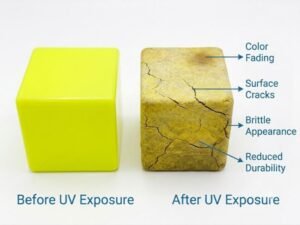
Ultraviolet (UV) radiation is a form of electromagnetic radiation that can degrade polymer materials over time. When plastics are exposed to UV radiation, chemical reactions can break down polymer chains and cause discoloration, surface cracking, and reduced mechanical performance.
UV resistant plastics are specially formulated materials designed to withstand UV exposure and maintain their appearance and performance over time. Some plastics have naturally better UV resistance, while others are enhanced with additives such as UV stabilizers and absorbers.
Although UV resistant plastics cannot completely prevent UV degradation, they can significantly slow down the aging process and extend the service life of plastic components in demanding environments.
How Does UV Exposure Affect Plastic Parts?
When plastic parts are continuously exposed to sunlight, UV radiation can trigger chemical reactions within the polymer structure. This degradation process may gradually affect both the appearance and functional performance of the components.
Common effects of UV exposure include:
- Discoloration: UV radiation can break down pigments and surface structures, causing plastic parts to fade, yellow, or lose their original appearance.
- Reduced Mechanical Strength: Long-term UV exposure may make plastic materials more brittle, reducing impact resistance and overall durability.
- Surface Cracking: As polymers degrade, small cracks may appear on the surface, which can eventually lead to part failure.
- Shortened Service Life: Without proper UV resistance, outdoor plastic components may require more frequent replacement due to reduced performance and durability.
For applications exposed to sunlight for long periods, selecting suitable UV resistant plastic materials is essential to ensure stable product performance.
Common UV Resistant Plastic Materials
Different plastic materials offer different levels of UV resistance depending on their chemical structure and the use of UV stabilizers or other additives. The following materials are commonly used for improved UV resistance.
ASA (Acrylonitrile Styrene Acrylate)
ASA is one of the most widely used UV resistant plastics due to its excellent weather resistance and color stability. Compared with ABS, ASA provides better resistance to UV degradation because its acrylic rubber component offers improved stability under prolonged UV exposure.
It maintains good surface appearance, dimensional stability, and mechanical performance in environments where long-term UV resistance is required.
Polycarbonate (PC)
Polycarbonate is a high-performance plastic known for its excellent impact resistance, toughness, and transparency. While standard PC may degrade after prolonged UV exposure, UV-stabilized grades can provide improved resistance to weathering.
Its combination of strength, durability, and optical performance makes it suitable for demanding applications requiring long-term reliability.
PMMA(Acrylic)
PMMA(Polymethyl Methacrylate) is a transparent plastic material recognized for its excellent UV stability and optical clarity. Compared with many other transparent plastics, PMMA can maintain its appearance and transparency after extended UV exposure.
Its strong resistance to yellowing and good surface quality make it a common choice when both durability and visual performance are important.
Polypropylene (PP)
Polypropylene is a lightweight and cost-effective plastic widely used in various industries. Since standard PP has limited resistance to UV radiation, UV stabilizers are often added to improve its weather resistance.
UV-stabilized PP provides improved durability while maintaining the material’s advantages in weight, flexibility, and cost efficiency.
Polyethylene (PE)
Polyethylene(PE) is a common plastic material with good chemical resistance, toughness, and weather resistance. Among different types of Polyethylene , HDPE (High-Density Polyethylene) is often used for outdoor applications because it offers higher strength, stiffness, and better resistance to environmental stress.
Applications of UV Resistant Plastic Parts
UV resistant plastics are widely used in products that require long-term exposure to sunlight, outdoor environments, or changing weather conditions.
Automotive Components
Automotive exterior parts are frequently exposed to sunlight, temperature variations, and environmental factors. UV resistant plastics help maintain appearance and durability in components such as:
- Exterior trims
- Mirror housings
- Sensor covers
- Protective covers
Outdoor Electronics and Electrical Enclosures
Outdoor electronic equipment requires protective housings that can withstand sunlight while protecting internal components.
Typical applications include:
- Electrical enclosures
- Communication equipment housings
- Charging equipment covers
Industrial Equipment Components
Many industrial products operate in outdoor or semi-outdoor environments. UV resistant plastic parts are used for:
- Equipment covers
- Protective housings
- Machine components
Consumer Products and Outdoor Equipment
Outdoor consumer products often require UV resistant plastic parts to maintain long-term durability and appearance. Common examples include:
- Outdoor tools
- Garden equipment
- Recreational products
- Sports equipment
How to Choose the Right UV Resistant Plastic Material
Choosing the right UV resistant plastic means balancing UV performance with the actual needs of the final part. In practice, the best material depends on exposure conditions, mechanical requirements, appearance, and manufacturing needs.
1. Consider the Level of UV Exposure
The required level of UV resistance depends on how and where the plastic part will be used.
For components exposed to direct sunlight for extended periods, materials with excellent weatherability are usually preferred. For example, ASA is often selected over standard ABS for outdoor applications because it provides better resistance to UV degradation and maintains color stability over time.
2. Balance UV Resistance with Mechanical Performance
UV resistance is only one part of material selection. The plastic must also maintain the mechanical properties required for the application.
For example, PC may be preferred when a part requires both UV protection and high impact resistance, such as protective covers or components exposed to mechanical stress. However, for applications where transparency and long-term optical performance are more important, PMMA may be a better choice due to its excellent UV stability and resistance to yellowing.
3. Consider Appearance Requirements
For visible plastic components, maintaining appearance during long-term use is often critical.
For example, ASA is commonly considered when color retention and surface appearance are important, as it can maintain its appearance better than many general-purpose plastics under outdoor exposure. Meanwhile, PMMA is often chosen for transparent parts where clarity and resistance to yellowing are required.
4. Consider Manufacturing and Cost Requirements
Material selection should also take manufacturing process, part design, and production requirements into account.
For example, UV-stabilized PP can be a practical option for projects that require a balance between UV resistance, lightweight properties, and cost efficiency. On the other hand, higher-performance materials may be selected when longer service life or more demanding environmental resistance is required.
Reviewing available plastic materials for custom manufacturing can help identify the right balance between performance and cost.
Conclusion
Choosing the right UV resistant plastic is essential for producing durable plastic components that can maintain their performance and appearance over time. Through understanding how UV radiation affects plastics, the characteristics of different UV resistant materials, and the key factors involved in material selection, you can make a more informed decision based on your specific product requirements.
If you are looking for UV resistant plastic products or custom plastic components, contact Jiangzhi’s custom manufacturing team to discuss your project requirements and explore a suitable solution.


