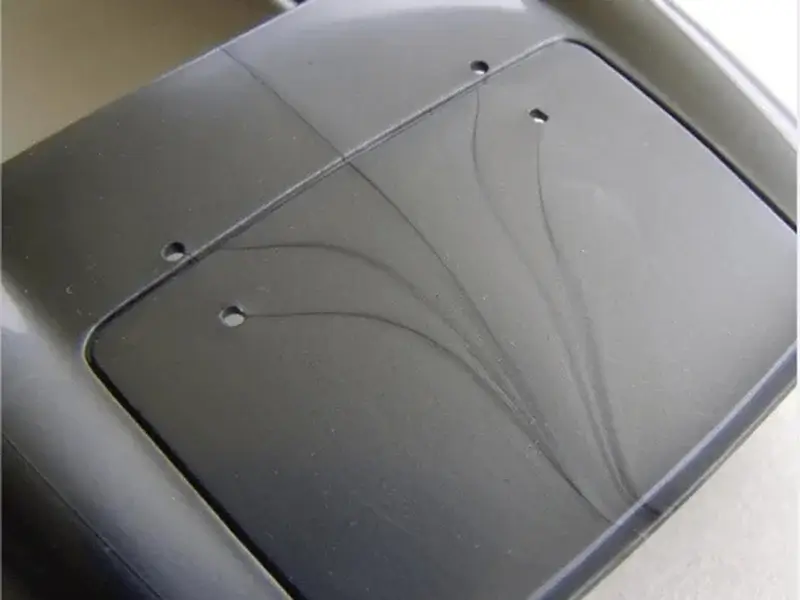
As industries push for lighter, stronger, and higher-performing components, manufacturers are turning to innovative solutions like carbon fiber injection molding. This cutting-edge process fuses the unmatched strength of carbon fiber with the flexibility of thermoplastics, delivering parts that are not only exceptionally durable but also lightweight and precisely engineered. From complex geometries to high-volume production, carbon fiber injection molding is redefining what’s possible in modern manufacturing.
What is Carbon Fiber Injection Molding?
Carbon fiber injection molding (CFIM) is a manufacturing process in which carbon fibers are incorporated into thermoplastic resins to produce reinforced plastic parts. Unlike traditional injection molding, which uses standard thermoplastics, CFIM integrates carbon fibers to enhance stiffness, strength, and thermal stability.
The process relies on the same basic principles as conventional injection molding: melting a polymer, injecting it into a mold cavity under high pressure, cooling, and then ejecting the solidified part. However, the presence of carbon fibers introduces additional considerations. The orientation, length, and distribution of fibers significantly affect the mechanical properties of the final component. For example, parts with fibers aligned along the flow direction exhibit higher tensile strength, while random orientations can improve isotropic stiffness but may reduce overall strength.
How Does Carbon Fiber Injection Molding Work?
- Material Selection and Preparation: The carbon fiber injection molding process begins with the selection and preparation of materials. A typical CFIM feedstock consists of a thermoplastic polymer and carbon fibers. These fibers may be short or long, depending on the required mechanical performance. Short fibers are easier to process and offer moderate strength improvements, while long fibers provide higher stiffness and impact resistance but require more careful handling during molding to prevent fiber breakage.
- Remove Material Moisture: Once the feedstock is prepared, it is dried to remove moisture, which can cause defects such as voids or delamination.
- Melted Material: The material is then melted in the injection molding machine barrel under carefully controlled temperatures.
- Material Injection: The molten mixture is injected into a mold cavity using high pressure.
- Cooling and Ejection: After the injection phase, the part is cooled and ejected from the mold.
- Post-Processing: Post-processing steps may include trimming, machining, or surface finishing, depending on the application.
Special considerations for CFIM include minimizing fiber damage, ensuring consistent fiber distribution, and controlling shrinkage and warpage. These factors distinguish CFIM from standard injection molding and require careful attention to material selection and process parameters.
Common Carbon Fiber Reinforced Injection Materials
Several thermoplastics are commonly used in carbon fiber injection molding, each offering specific advantages.
Polyamide (Nylon)
Polyamide reinforced with carbon fiber offers high toughness, chemical resistance, and improved dimensional stability. It is widely used in automotive brackets, engine covers, and industrial components where both strength and flexibility are required.
Polycarbonate (PC)
Polycarbonate is known for impact resistance and transparency. Carbon fiber reinforced polycarbonate provides excellent impact resistance and rigidity. This material is suitable for electronics housings, protective casings, and structural parts that require durability without adding excessive weight.
Polypropylene (PP)
Carbon fiber reinforced polypropylene is lightweight, cost-effective, and chemically resistant. It is commonly applied in automotive interiors, consumer goods, and industrial equipment components that need moderate stiffness with reduced weight.
Polyetheretherketone (PEEK)
Polyetheretherketone is a high-performance engineering plastic used in demanding environments. Carbon fiber reinforcement enhances stiffness and thermal stability. This high-performance material is used in aerospace components, medical devices, and other applications that require strength at elevated temperatures.
The choice of polymer and fiber type depends on the intended application, desired mechanical properties, and processing considerations. Fiber content typically ranges from 10% to 40% by weight, with higher loadings providing greater stiffness but potentially increasing viscosity and processing challenges.
Advantages and Challenges of Carbon Fiber Injection Molding
Advantages of Carbon Fiber Injection Molding
- High Stiffness-to-Weight Ratio: Carbon fiber reinforcement significantly improves rigidity while keeping the part lightweight. Parts can achieve 40–60% lower weight than equivalent metal components while offering comparable or better stiffness.
- Design Flexibility: The process supports complex geometries, ribs, bosses, and inserts in one shot. This reduces assembly steps and tooling costs compared with traditional composite layup methods.
- Improved Mechanical Performance: Tensile strength, impact resistance, and dimensional stability are enhanced compared to unreinforced plastics.
- Thermal Stability: Carbon fibers increase heat resistance, allowing parts to maintain dimensional integrity in higher-temperature environments.
Challenges of Carbon Fiber Injection Molding
- Higher Material Cost: Carbon fibers and reinforced polymers are more expensive than standard plastics.
- Processing Complexity: Fiber orientation, distribution, and potential breakage require careful control of processing parameters.
- Surface Finish Limitations: Fiber presence can affect cosmetic appearance, requiring post-processing or specialized mold design for smooth surfaces.
- Mold Wear: Carbon fibers are abrasive, which can increase mold maintenance and reduce tool life if not properly managed.
Design Considerations for Carbon Fiber Injection Molding
Unlike conventional plastics, carbon fiber imparts anisotropic mechanical properties and affects flow, shrinkage, and surface finish. Designing parts for carbon fiber injection molding (CFIM) requires special attention.
Fiber Orientation Control
The flow paths during molding ensure that fibers are aligned with the main load directions. Critical load-bearing areas should be oriented with the majority of fibers running along stress lines to maximize stiffness and tensile strength.
Wall Thickness Optimization
Carbon fiber composites are more prone to warpage and fiber breakage in thick sections. Uniform wall thickness helps maintain consistent fiber orientation and reduces residual stresses. Avoid abrupt thickness changes that can cause sink marks or internal stresses.
Gate Placement and Flow Design
Gate locations must be chosen to guide fiber flow. Poorly positioned gates can lead to fiber misalignment, reduced strength, or surface defects. Flow analysis is recommended to predict fiber orientation and optimize mechanical performance.
Rib and Boss Design
Ribs and bosses enhance rigidity but should be designed to prevent fiber breakage. Sharp corners should be avoided, and fillets should be incorporated to reduce stress concentrations.
Shrinkage and Warpage Compensation
Carbon fiber composites shrink differently along fiber directions. Adjust mold dimensions, cooling rates, or support structures accordingly to avoid anisotropic shrinkage.
Surface Finish and Cosmetic Considerations
Fibers can cause surface roughness or visible streaks. Critical cosmetic areas may require additional mold polishing, surface coatings, or strategic fiber orientation to achieve acceptable aesthetics.
Mold Wear Considerations
Carbon fibers are abrasive and increase tool wear. Designs that minimize sharp corners or long flow paths reduce mold stress, extending tool life and improving part consistency.
Applications of Carbon Fiber Injection Molding
Carbon fiber injection molding is widely used in industries where weight reduction and mechanical performance are critical.
- Automotive: Structural brackets, engine covers, interior panels, etc.
- Aerospace: Aircraft interiors, drones, and UAVs.
- Electronics: Housings, brackets, and heat-resistant components.
- Sporting Goods: Bicycle frames, protective gear, etc.
- Industrial Equipment: Machine components and fixtures.
Conclusion
By combining the mechanical benefits of carbon fiber with the versatility of thermoplastics, carbon fiber injection molding offers a practical solution for producing lightweight, strong, and dimensionally stable plastic components.
Jiangzhi provides professional carbon fiber injection molding services, from material selection and design optimization to precision manufacturing. Contact us to custom-design CFIM solutions that meet your production and performance goals.