Plastic materials are widely used in modern manufacturing due to their versatility, durability, and cost efficiency. They are used across many industries, from consumer products to industrial components. Different types of plastics have different chemical structures and performance characteristics, which determine how they are classified and processed.
This article explains different types of plastic materials and how they are classified across industries, helping you better understand their characteristics and choose the most suitable option for your application.
What Is Plastic?
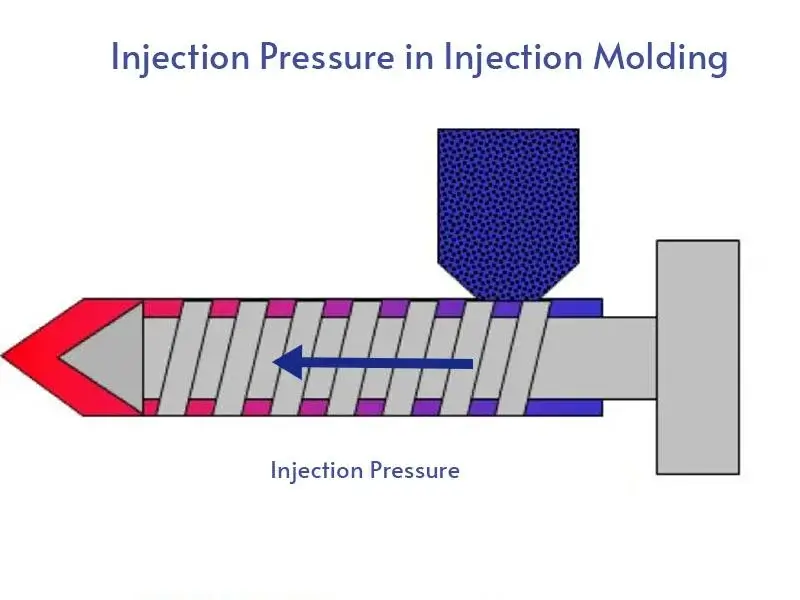
Plastic is a synthetic material made from polymers, which are long chains of repeating molecular units. It can be molded and shaped under heat and pressure, making it suitable for a wide range of manufacturing processes such as injection molding and extrusion.
Plastics are generally lightweight, durable, and resistant to corrosion. Because of these properties, they are widely used in both industrial and consumer products across many industries.
Different types of plastic materials can behave very differently depending on their molecular structure and processing characteristics. They are classified into various categories.
Types of Plastic Materials
Plastic materials can be classified in several ways depending on their thermal behavior, molecular structure, performance level, and functions.
Thermoplastics vs Thermosetting Plastics
Based on thermal behavior, plastics are divided into thermoplastics and thermosetting plastics. This classification is mainly based on their molecular structure and how they respond to heat during processing.
Thermoplastics
Thermoplastics are a type of plastic that becomes soft and moldable when heated and solidifies upon cooling. This process is reversible, meaning they can be melted and reshaped multiple times without significant chemical change.
Due to their excellent processability, design flexibility, and cost efficiency, thermoplastics are widely selected for injection molding services across various industries. They are widely used in automotive components, consumer electronics, industrial equipment, and various other industries.
Common thermoplastics include:
- Polypropylene (PP)
- Polyethylene (PE)
- Acrylonitrile Butadiene Styrene (ABS)
- Polycarbonate (PC)
- Nylon (PA)
Thermosetting Plastics
Thermosetting plastics, once cured, cannot be remelted or reshaped. They form a permanent chemical structure that provides excellent heat resistance and mechanical stability.
Because of these properties, they are often used in electrical components, automotive applications, and environments requiring high thermal or chemical resistance.
Common thermosetting plastics include epoxy resin, phenolic resin, and polyester resin.
Thermosetting plastics are commonly processed through compression molding, transfer molding, and other molding methods that involve permanent curing.
If you would like to explore a more detailed comparison between these two material types, please read our article on thermoset vs thermoplastic injection molding comparison.

Crystalline vs Amorphous Plastics
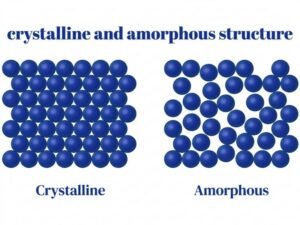
In terms of the molecular structure, plastics are generally divided into two main categories: crystalline (semi-crystalline) plastics and amorphous plastics. This classification helps explain differences in physical behavior during processing and in final applications.
Crystalline Plastics
These plastics have an ordered molecular structure, which provides good mechanical strength, wear resistance, and chemical resistance. However, they usually shrink more during cooling and are less transparent. Due to these properties, semi-crystalline plastics require careful process control during injection molding and CNC machining.
As a result, they are commonly used in mechanical structural components such as gears, bearings, bushings, automotive components, and mechanical parts.
Typical crystalline plastic examples are polyethylene (PE), polypropylene (PP), and polyamide (PA).
Amorphous Plastics
These plastics have a more random molecular structure, which makes them easier to process. They also offer better transparency and maintain their shape more consistently after molding. This makes them suitable for injection molding, thermoforming, and optical applications.
They are often used in applications requiring clarity, precision, and impact resistance, such as transparent covers, instrument panels, and electronic housings.
Examples of such plastics include polycarbonate (PC), acrylonitrile butadiene styrene (ABS), and polystyrene (PS).
The classifications above focus mainly on thermal behavior and molecular structure. From a practical manufacturing perspective, plastics are also categorized based on performance level and application requirements.
Commodity Plastics vs Engineering Plastics
Plastics can be classified into commodity plastics and engineering plastics depending on their overall performance and application requirements.
Commodity Plastics
Commodity plastics are low-cost materials that are commonly processed using high-volume manufacturing methods such as injection molding and extrusion. They offer basic mechanical performance and are widely used in everyday products.
Common examples:
- Polypropylene (PP)
- Polyethylene (PE)
- Polyvinyl Chloride (PVC)
- Polystyrene (PS)
Typical applications include packaging, disposable products, and household items.
Engineering Plastics
Engineering plastics offer superior mechanical strength, thermal resistance, and dimensional stability compared to commodity plastics. They are often used in precision manufacturing processes, including injection molding and CNC machining.
Typical materials include polycarbonate (PC), polyamide (PA), polyoxymethylene (POM), polybutylene terephthalate (PBT), and ABS.
They are widely used in automotive components, electronic parts, and precision industrial applications.
Grades of Plastic Materials
In addition to material categories, plastics are often supplied in different grades to meet specific performance or regulatory requirements.
- Standard Grade Plastic: general-purpose applications
- Reinforced Grade Plastic: filled with glass fiber or minerals for higher strength
- Flame-retardant Grade Plastic: suitable for electrical and safety-critical parts
- Food Grade Plastic: compliant with food contact regulations
- Medical Grade Plastic: used in healthcare and medical devices
Selecting the correct grade ensures product safety, application, and compliance with industry standards.
How to Choose the Right Plastic Material
Choosing the right plastic material depends on several key factors:
- Mechanical strength requirements
- Temperature and environmental conditions
- Chemical resistance needs
- Cost constraints
- Manufacturing process compatibility, including injection molding, CNC machining, compression molding, or other manufacturing methods
A proper material selection helps improve product performance, reduce production issues, and optimize overall cost.
Conclusion
Plastic materials can be classified into different types based on various classification criteria. Each type has unique properties that make it suitable for specific industrial applications.
Understanding these differences is essential for selecting the right material for your project. For more guidance on selecting suitable materials, please refer to our article on plastic material selection factors. For your project, Jiangzhi can provide one-stop manufacturing support from design to production.