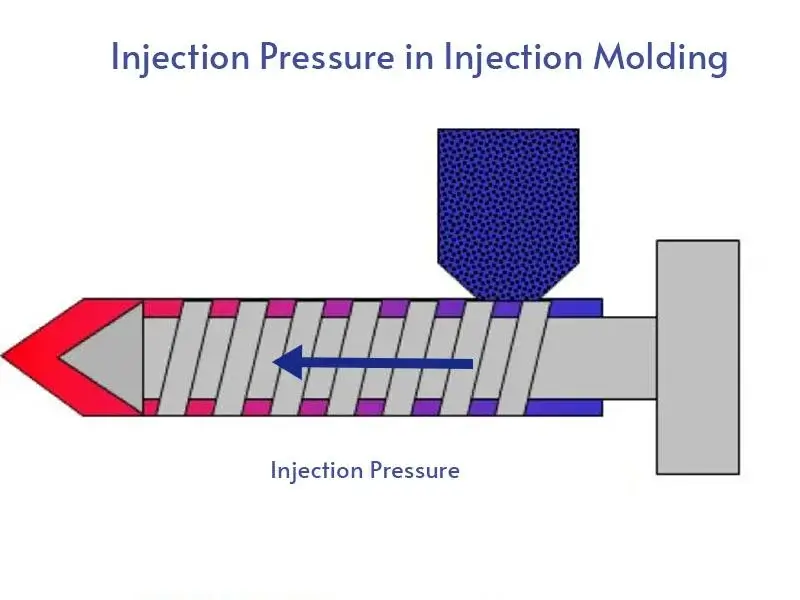
Managing tooling budgets for multi-part plastic assemblies can be a major challenge. Family mold injection molding offers a highly efficient route to produce multiple related components in a single press cycle. But when does it outshine standard tooling? Drawing from years of precision manufacturing experience at Jiangzhi, this article examines family molds, their operation, advantages, design requirements, and suitability criteria.
What Is a Family Mold?
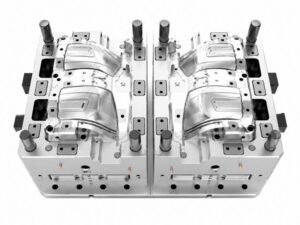
A family mold is a type of injection mold that contains multiple cavities, each shaped to produce a different part in one molding cycle. Each cavity creates a unique component, but all cavities share the same mold base, injection system, and molding process.
Single-cavity molds produce one part per cycle. They suit prototyping or very low volumes where flexibility matters most. Multi-cavity molds produce several copies of the identical part in each cycle. They support high-volume production of one component. Family molds occupy a middle position. They allow different but related parts, such as the top and bottom of an enclosure or a set of mating components, to emerge together. The approach reduces the need for multiple individual molds.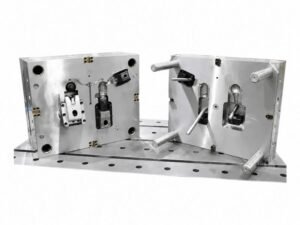
How Does Family Mold Injection Molding Work?
The basic injection molding process for a family mold is similar to that of conventional injection molding. The main difference is that the mold contains several different cavities, which require additional design and process control.
Step 1: Evaluate Part Compatibility
Before designing the mold, engineers need to determine whether the selected components are suitable for family mold injection molding.
The evaluation usually includes:
- Material compatibility
- Part size
- Part weight
- Wall thickness
- Required tolerance
- Cooling requirements
- Production quantity
Parts with similar molding requirements are easier to balance in a single tool. For example, several ABS components with similar wall thicknesses are generally more suitable than combining a thin-wall PC component with a thick TPU component.
Step 2: Design Mold Layout
The following mold factors should be determines:
- Cavity arrangement
- Runner system
- Gate locations
- Cooling channel layout
- Ejection method
The challenge is that each cavity has different filling characteristics. A small clip may require much less material compared with a large housing. Without proper design, the smaller component may fill too quickly while the larger component requires higher pressure and longer filling time.
Step 3: Balance the Filling System
The runner and gate design is one of the most important factors in family mold performance. The goal is to ensure that all cavities receive molten plastic under suitable conditions.
At Jiangzhi, our engineering team mitigates filling imbalances by systematically analyzing:
- Flow length
- Pressure distribution
- Filling sequence
- Weld line location
- Air trap risk
Mold flow simulation is often used before manufacturing the tool to identify potential filling problems.
Step 4: Trial Molding and Process Adjustment
After mold completion, trial molding is performed to verify:
- Part dimensions
- Surface quality
- Filling balance
- Warpage control
- Assembly performance
Unlike a standard single-part mold, a family mold requires evaluating multiple components at the same time. A change that improves one cavity may negatively affect another cavity, so process optimization requires careful adjustment.
The Key Differences Family Mold vs Multi-Cavity Mold
Although both family molds and multi-cavity molds are designed to increase injection molding efficiency, they solve different manufacturing challenges. The following comparison highlights the key differences between family molds and multi-cavity molds.
Understanding the differences between single-cavity, multi-cavity, and family molds is essential when selecting the right tooling solution. For a more detailed comparison of these mold types and guidance on choosing the right option, see our guide on choosing the right injection mold.
Advantages of Family Molds
A family mold provides several manufacturing advantages when multiple plastic components share similar molding requirements.
Lower Tooling Cost
Instead of developing separate molds for each individual part, a family mold combines several cavities into one tooling system, allowing different components to be produced within the same molding cycle. This approach can reduce mold development costs, simplify tooling management, and shorten the time required for mold preparation. A well-designed family mold provides the most value when multiple components have similar molding requirements.
Improve Production Efficiency
A family mold injection molding process can help shorten production lead time by producing multiple related components simultaneously. When parts are manufactured separately, each component may require different mold trials, production scheduling, and quality inspections. Family tooling reduces these coordination steps by integrating multiple parts into one production process. This is especially beneficial for products that require several plastic components before assembly.
Improved Material and Appearance Consistency
Producing related components within the same mold helps maintain more consistent material performance and appearance between parts. Since the components are molded under the same processing conditions, they typically experience similar temperature control, injection parameters, and production environments. This can reduce variations in color, surface finish, and dimensional behavior that may occur when different parts are produced using separate molds or different production processes. For products with multiple visible plastic components, maintaining consistency between parts is an important factor in final product quality.
Suitable for Assembly Products
Family molds are particularly suitable for products that contain multiple plastic components designed to work together as an assembly. Examples include electronic housings, consumer products, mechanical covers, brackets, and accessory kits. By producing these components in a single molding cycle, manufacturers can simplify production planning, reduce inventory coordination between different parts, and improve assembly efficiency. This approach works best when the components share similar materials, molding conditions, and production requirements.
When Is a Family Mold Not the Right Choice?
Although family molds provide advantages in tooling cost and production efficiency, they are not suitable for every project. Certain factors should be evaluated before selecting family mold injection molding.
Extremely High Production Volume Requirements
A family mold may not be the best option when one component requires significantly higher production volumes than the other parts in the same mold. Since all cavities run together during each molding cycle, lower-demand components may be overproduced. In such cases, a dedicated multi-cavity mold for the high-volume part may provide better long-term efficiency.
Large Differences Between Part Designs
Family molds work best when components have similar sizes, geometries, and molding requirements. Significant differences in part dimensions, wall thickness, or cooling needs can make filling and process control more challenging, potentially affecting part quality and production stability.
Different Part Materials
Conventional family molds usually require all components to use the same material and color because they are produced in the same injection cycle. Different plastics may require different processing conditions, such as melt temperature, mold temperature, and shrinkage control. When parts require different materials, separate molds are often a better choice.
Tight Tolerance and High Precision Requirements
For components with extremely tight tolerances or critical assembly requirements, a family mold may introduce additional challenges due to variations in filling, cooling, and shrinkage between cavities. Dedicated molds can provide more precise control for high-precision applications.
Before choosing a family mold, it is important to consider factors such as part design, production volume, material requirements, and quality expectations to determine whether it is the right solution for your project.
Key Design Considerations
Successful family mold injection molding depends on careful planning during the design phase. Several factors require attention.
1. Part Similarity
Parts should have comparable wall thicknesses, volumes, and cooling requirements. Significant differences can create problems during filling and cooling. Thicker sections cool more slowly than thin ones. This mismatch may cause internal stresses, warping, or sink marks on some parts while others remain acceptable. For better results, components with similar wall thickness ranges should be grouped.
2. Gate and Runner Balancing
Proper flow balance ensures each cavity fills at the correct rate and pressure. To eliminate guesswork, Jiangzhi utilizes advanced mold flow simulation software to precisely model material behavior. This data allows our team to adjust gate sizes, locations, and runner diameters based on simulation results. Larger or more distant cavities often need larger gates or wider runners to receive adequate material. Iterative testing during mold trials refines these dimensions. The goal remains even filling without excessive pressure on smaller cavities or short shots on larger ones. This step demands more attention than in multi-cavity molds with identical parts.
3. Shut-off Runners for Flexible Cavity Control
A shut-off runner system can improve the production flexibility of a family mold when different components have different demand levels. Valves or inserts in the runner system allow specific cavities to be blocked. Production can focus on high-demand parts without wasting material or machine time on unneeded components. This feature supports changing demand patterns. One component may require continuous high-volume production, while another component may only be needed in smaller quantities. By using shut-off runners, valve gate systems, or removable cavity controls, can temporarily disable specific cavities when needed. This approach allows better control of production quantities, reduces unnecessary inventory, and extends the practical application range of family tooling.
4. Tolerance Stack-Up for Mating Parts
For products containing multiple assembled plastic components, tolerance stack-up analysis is essential during family mold design. Even when each part meets its specified tolerance, the combined dimensional variation between multiple mating components can affect final assembly performance. Factors such as material shrinkage, mold wear, processing variation, and part geometry all contribute to dimensional changes. Evaluate the relationship between components during the design stage and establish appropriate tolerance ranges to ensure proper fit and function after molding. This is particularly important for housings, covers, clips, and mechanical assemblies where multiple parts produced from the same family mold must work together accurately.
Considering these factors during the early design stage can help prevent molding issues and improve production efficiency. A proper design for manufacturing (DFM) evaluation can further identify potential design risks before mold production.
Conclusion
A family mold is an effective injection molding solution for products that contain multiple related plastic components. However, successful family mold injection molding needs proper engineering evaluation. Wondering if a family mold is right for your next project? Jiangzhi’s mold tooling services can help you develop a reliable tooling solution for your project.