
If you are comparing different types of CNC machining processes for a custom part, choosing the right method is one of the most important early decisions. The method you choose can affect your cost, lead time, dimensional accuracy, and overall production efficiency. A process that works well for one component may not be the best option for another.
From milling and turning to grinding and EDM, different types of CNC machining processes offer different strengths. Understanding how each method works can help you make smarter manufacturing decisions from the start.
What Is CNC Machining?
CNC machining, or Computer Numerical Control machining, is a subtractive manufacturing process that removes material from a solid workpiece using programmed machine tools. It is widely used when you need custom metal or plastic parts with reliable precision and repeatability.
If you are developing prototypes or low-volume production parts, CNC machining is often one of the fastest and most practical manufacturing options.
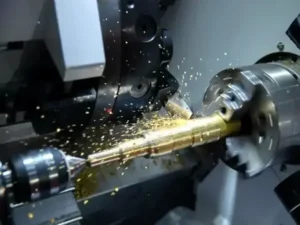
Why Choosing the Right CNC Process Matters
Choosing the right CNC process directly affects your cost, lead time, and part quality. In real production, the difference is often more significant than people expect.
What you may lose if the process is not right
If the wrong process is chosen, you may face higher machining costs due to extra setups or longer cycletimese. It can also lead to tolerance issues, poor surface finish, or even rework if the part does not meet assembly requirements. In some cases, it may also delay your delivery schedule.
What you actually gain when the process is right
When the process matches the part design, production becomes more efficient with fewer operations and more stable output. This usually means lower cost per part, more consistent quality, and a more predictable lead time from prototype to production.
7 Common Types of CNC Machining Processes
1. CNC Milling
How It Works
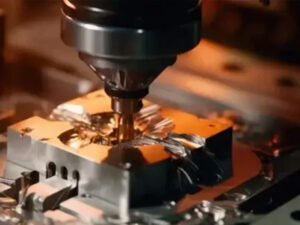
CNC milling uses a rotating cutting tool to remove material from a fixed or moving workpiece.
Best For
- Housings
- Brackets
- Pockets and slots
- Flat surfaces
- Parts with multiple machined features
Why You Might Choose It
If your part has several sides to machine or includes non-round geometry, milling is often the best place to start. It is one of the most flexible CNC processes and works well for both metals and plastics.
2. CNC Turning
How It Works
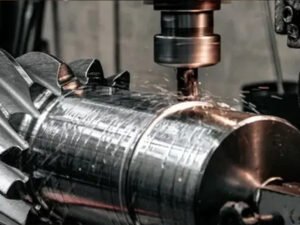
In CNC turning, the raw material rotates while a cutting tool shapes the outside diameter, internal bore, grooves, or threads.
Best For
- Shafts
- Bushings
- Pins
- Rollers
- Threaded components
Why You Might Choose It
If your part is round or symmetrical, turning is usually faster and more cost-effective than milling. It is one of the most efficient types of CNC machining processes for cylindrical parts.
3. CNC Drilling
How It Works
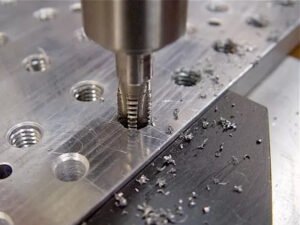
CNC drilling uses rotating drill bits to create holes with accurate size, depth, and location.
Best For
- Mounting holes
- Bolt patterns
- Through holes
- Deep holes
Why You Might Choose It
If your part requires multiple repeatable holes, drilling is typically the most efficient option. It is often combined with milling or turning in one setup.
4. CNC Grinding
How It Works
Grinding uses an abrasive wheel to remove a small amount of material and refine the final surface.
Best For
- Precision shafts
- Bearing surfaces
- Tight tolerance parts
- Hardened materials
Why You Might Choose It
If standard machining cannot achieve the finish or tolerance you need, grinding is often the next step. It is commonly used for critical fit and wear surfaces.
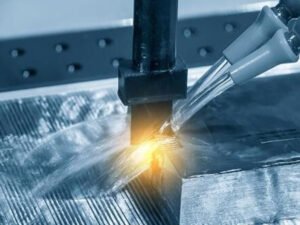
5. CNC EDM (Electrical Discharge Machining)
How It Works
EDM removes material using controlled electrical sparks instead of direct cutting contact.
Best For
- Sharp internal corners
- Mold inserts
- Hard tool steels
- Fine internal cavities
Why You Might Choose It
If cutting tools cannot reach a feature or your material is very hard, EDM can be an effective solution. It is slower than milling, but ideal for high-precision details.
6. CNC Laser Cutting
How It Works
Laser cutting uses a focused beam to melt or vaporize material along a programmed path.
Best For
- Sheet metal parts
- Thin plastic sheets
- Panels
- Engraved components
Why You Might Choose It
If you need fast cutting on thin materials with clean edges and fine detail, laser cutting is often a strong choice.
7. CNC Waterjet Cutting
How It Works
Waterjet cutting uses high-pressure water, sometimes mixed with abrasive media, to cut through material.
Best For
- Thick plates
- Composite materials
- Glass
- Stone
- Heat-sensitive materials
Why You Might Choose It
If you want to avoid heat distortion or need to cut difficult materials, waterjet cutting can be a practical option.
How to Choose the Right CNC Process?
CNC process selection is typically a step-by-step filtering process. Part geometry is usually the primary factor that determines the machining method, while complexity, accessibility, and precision requirements are used to refine and confirm the final choice. In most cases, following this order leads to a clear and practical machining decision.
1. Start with Part Shape (Most Important Factor)
The first thing to check is whether your part is mainly round or non-round. If the part is cylindrical or rotates around a central axis, CNC turning is usually the most efficient choice. If the part has flat surfaces, holes, slots, or irregular shapes, CNC milling is generally more suitable. In most cases, shape alone already narrows down the correct process.
Material can also influence machining conditions, especially for plastics or hard metals. However, it is not the primary factor in selecting the CNC process, which is mainly determined by part geometry.
2. Check How Complex the Part Is
Some parts can be machined from one direction, while others require multiple angles. Simple parts usually do not require advanced setups. More complex parts with multiple faces or 3D geometry may require multi-axis machining to avoid repeated repositioning. This step helps decide whether standard CNC or multi-axis machining is needed.
3. Check Internal Features and Accessibility
If all features are easy to reach with cutting tools, standard CNC machining is sufficient. However, if the part includes deep cavities, sharp internal corners, or narrow slots, standard tools may not be able to complete the shape. In these cases, alternative processes like EDM may be required.
CNC machining processes often work together in real production, especially when a part requires both milling and turning operations.
4. Check Precision Requirements
Most CNC parts can meet standard industrial tolerances. If the part requires extremely tight fits or very smooth surfaces, additional finishing processes may be needed. Grinding is usually used when very high precision is required.
CNC Machining Processes – Quick Reference
This summary can help you quickly identify the most suitable process before reviewing detailed requirements.
- Milling → complex parts
- Turning → round parts
- Drilling → holes
- Grinding → precision finish
- EDM → hard materials
- Laser Cutting → thin sheets
- Waterjet Cutting → thick / heat-sensitive materials
Conclusion
There is no single best option among all CNC machining processes. The right choice depends on your design, material, tolerance, and production requirements.
If you are still comparing options, that is normal. Many successful projects start with a quick review of drawings and production goals before selecting the right method.
If you are not sure which CNC machining process is best for your custom parts, Jiangzhi can help evaluate your design and recommend the most suitable manufacturing solution based on your requirements


