
Food plays an essential role in daily life, and the materials used to store, process, and transport food must meet strict safety requirements. Among these materials, food grade plastics are widely used. Unlike general-purpose plastics, food grade plastics are specially designed and approved for direct or indirect contact with food. They must comply with strict regulations to ensure that harmful substances do not migrate into food during normal use.
This article explains what food-grade plastic is, how it is identified, common types, benefits, and how to choose the right material for different applications.
What Is Food Grade Plastic?
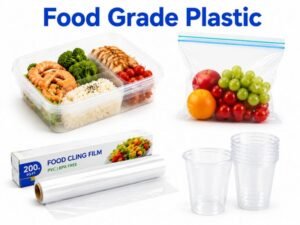
Food grade plastic refers to plastic materials that are approved for contact with food under specific conditions of use. These materials are manufactured with controlled chemical compositions to minimize the risk of harmful substances transferring into food. Food grade plastics can be used for food containers, beverage bottles, packaging, storage, etc.
Food grade plastics are one category of plastic materials with specific safety requirements. Understanding the different types of plastic materials can help explain why certain plastics are selected for specific applications.
Food Contact Safety Standards and FDA Requirements
Food grade plastics are regulated by different food safety organizations around the world. These regulations control the types of substances that can be used in plastics and limit the amount of chemical migration into food.
In the United States, the Food and Drug Administration (FDA) evaluates materials used in food-contact applications. Plastic materials must comply with FDA requirements regarding chemical safety, additives, and intended usage conditions. Other regions also have their own food-contact regulations, such as European Union food contact material standards and other national safety requirements.
Compliance with these standards helps ensure that food-grade plastics are safe for their intended applications.
How to Identify Food-Grade Plastics?
Food-grade plastics can be identified through several common indicators that help distinguish them from ordinary plastics.
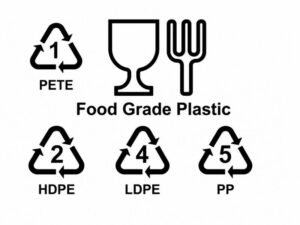
- Check the resin identification code for the plastic type, such as PET (#1), HDPE (#2), or PP (#5). Keep in mind that the recycling code only identifies the plastic type and does not by itself confirm food-contact approval.
- Look for food-contact markings such as the glass-and-fork symbol, or labels such as “food grade,” “food safe,” or “approved for food contact.”
- Look for a food-contact certification, compliance mark, or manufacturer statement that identifies the material as suitable for food contact.
- Check the material grade or product documentation for specific food-contact compliance, including references to applicable regulations and restrictions on substances such as BPA, phthalates, or lead.
Common Types of Food Grade Plastics
Different food grade plastics have different properties, making them suitable for different applications. The following are some common types of food grade plastics.
PET or PETE (Polyethylene Terephthalate)
PET is one of the most commonly used food-grade plastics, especially when product visibility is important. Its excellent transparency allows consumers to see the contents clearly, while its good barrier properties help protect products from moisture and external contamination. It is commonly used for beverage bottles, food containers, and food trays.
HDPE (High-Density Polyethylene)
With its good durability, moisture resistance, and structural stability, HDPE is suitable for products that require long-term storage and frequent handling. Common applications include milk bottles, food storage containers, and caps and closures.
LDPE (Low-Density Polyethylene)
Different from HDPE, LDPE’s properties like high flexibility, lightweight nature, and good moisture resistance make it suitable for products that require bending, squeezing, or sealing. Common applications include food bags, flexible films, and squeeze bottles.
PP (Polypropylene)
The good temperature resistance, chemical stability, and fatigue resistance of Polypropylene allow it to maintain performance during repeated heating or long-term use. It is commonly used for microwave-safe containers, yogurt cups, and food storage boxes.
PS (Polystyrene)
PS is valued for its lightweight structure and easy processing, making it a practical choice for disposable food products. It provides good rigidity and can be efficiently manufactured into different shapes, although its use depends on specific food-contact requirements. Common applications include disposable food containers, cups, and food trays.
PC (Polycarbonate)
PC is a high-performance engineering plastic that stands out for its combination of transparency and impact strength. Its excellent durability and heat resistance make it suitable for reusable products that require stronger structures, such as candy molds and serving bowls. Due to concerns related to BPA, many applications now use BPA-free alternatives or other approved materials.
How to Select the Proper Food Grade Plastic?
Choosing the right material starts with translating your “use case” into concrete performance requirements, then matching those requirements against material properties. Work through the following factors one by one:
1. Temperature Requirements
- Hot-fill applications (e.g., sauces, soups, typically above 90°C/194°F): Prioritize heat-resistant materials like PP (polypropylene), which holds its shape under higher temperatures.
- Cold storage or freezing: Choose materials that stay durable and resist cracking at low temperatures, such as HDPE or modified PET.
- Microwave heating: If you confirm the material is explicitly labeled “microwave safe”, standard PS and some PVC grades are not suitable.
2. Food Type
- Acidic foods (tomato-based products, juices, pickled items): Select materials resistant to acid corrosion with minimal leaching, such as PP or PET.
- High-fat foods (cooking oil, meat products): Consider oil resistance to prevent softening or oil migration over time. In this case, PP and PE generally perform well.
- Moisture-sensitive foods (dried goods, powders): Choose materials with strong barrier properties, or multi-layer composite structures, to reduce moisture and oxygen penetration.
3. Transportation Needs
- Long-distance transport or frequent handling: Impact- and drop-resistant materials are essential. HDPE and PP are commonly used for crates and containers due to their toughness.
- Stacked storage: Consider compressive strength to prevent deformation of the bottom layers.
4. Sustainability Goals
- If your company has environmental labeling requirements or exports to markets with recyclability standards: Prioritize easily recyclable materials like PET or HDPE, and verify that local recycling infrastructure supports that material.
- If reducing shipping costs is a priority: Choose lower-density materials or thinner designs that maintain strength while cutting weight.
5. Compliance Requirements
- The most fundamental, non-negotiable factor: regardless of how well a material fits other criteria, it must first pass food-contact certification for your target market (e.g., China’s GB 4806 series, US FDA regulations, EU 10/2011).
- Request test reports from suppliers early in the selection process to avoid costly rework later due to compliance issues.
Practical Tip: Start by listing your product’s core use case (e.g., “ambient-temperature transport of an acidic sauce requiring hot-fill packaging”), then eliminate materials that don’t meet each criterion above. Make your final decision from the remaining options based on cost. Choosing the right material is essential for achieving the required performance and reliability. Learn more about the key factors to consider when selecting plastic materials.
Why Use Food Grade Plastics?
Food grade plastics offer a reliable balance of safety, performance, and value across a wide range of applications.
Safety and Compliance
Approved food grade materials minimize chemical migration and contamination risks while helping products meet food safety regulations, making it easier to enter different markets with confidence.
Versatility and Durability
These materials are easy to process into varied shapes and complex designs, while offering the impact resistance, moisture protection, and structural strength needed to safeguard products through storage, handling, and transport.
Efficiency and Sustainability
Lightweight, durable, and often recyclable, food grade plastics reduce material and resource consumption while lowering long-term production, replacement, and maintenance costs.
Applications of Food Grade Plastic in Other Industries
Food grade plastics are widely used beyond food containers and packaging. Their safety, durability, and adaptability make them suitable for various industries that require reliable and compliant materials.
Besides food-related applications, food grade plastics are used in agriculture, transportation, medical products, and personal care industries. Common applications include agricultural films, storage and transport containers, medical components, laboratory products, cosmetic containers, and lotion bottles.
Conclusion
Food grade plastics play an important role in modern industries by providing safe, reliable, and versatile material solutions for food contact and other applications. Choosing the right plastic requires understanding material properties, regulatory requirements, and specific product needs.
Jiangzhi provides custom plastic manufacturing solutions with experience in material selection, injection molding, and quality control. If you need reliable plastic parts made from suitable materials, contact Jiangzhi to discuss your project requirements.


