
Injection molding is a widely used manufacturing process, and understanding the injection molding price is essential for optimizing production budgets. Various factors impact plastic injection molding costs, from tooling expenses to material selection. This guide covers key cost components, calculation methods, and strategies to minimize injection molding manufacturing costs.

Key Factors Influencing Injection Molding Cost
Several factors can affect the overall cost of injection molding, including equipment, tooling, materials, production requirements, and additional services. Understanding these cost drivers helps manufacturers make better decisions when selecting materials, optimizing designs, and planning production.
Equipment and Machine Costs
- Machine Size and Capacity: The type and size of an injection molding machine directly affect production costs. Larger parts require higher-tonnage machines, while precision components may need advanced equipment with tighter control, increasing operating expenses.
- Machine Requirements: Specialized machines or additional features, such as automated systems and precision controls, can improve production efficiency but may also increase the overall molding cost per part.

Mold Design and Tooling Costs
- Mold Complexity: Features such as undercuts, thin walls, complex geometries, and tight tolerances require more complicated mold designs, which can increase tooling expenses.
- Mold Material: Steel molds are commonly used for high-volume injection molding. They have higher upfront costs but provide longer service life and lower cost per part over large production runs. Aluminum molds are often used for prototype injection molding, rapid tooling, and low-volume production. They offer faster manufacturing and lower initial costs but have shorter lifespans compared with steel molds.
- Cavity Count: Multi-cavity molds can increase production output per cycle and reduce the cost per part, although they may require higher initial tooling investment.

Raw Material Costs
- Material Selection: The type of plastic resin has a significant impact on injection molding costs. Engineering plastics such as PEEK and Ultem usually cost more than standard materials like ABS and PP due to their enhanced performance.
- Material Waste: Poor material flow, excessive sprues and runners, or inefficient designs can increase material consumption and raise the total manufacturing cost.
Injection Molding Additive Costs
- Additive Selection: Additives such as colorants, UV stabilizers, flame retardants, impact modifiers, and glass fibers can improve material performance but also increase material costs.
- Additive Loading Ratio: Higher additive content, such as glass fiber reinforcement, may require more expensive materials and additional processing considerations. Selecting the right additives helps balance performance requirements and overall cost.
Labor and Overhead Costs
- Assembly and Finishing: Secondary operations, including assembly, trimming, polishing, coating, and surface finishing, require additional labor and equipment, increasing the final part cost.
- Quality Control: Inspection, testing, and quality assurance procedures help maintain product consistency but add extra labor time and operational expenses.
- Production Support: Machine operation, maintenance, and factory overhead costs also contribute to the total injection molding manufacturing cost.
Hidden Costs in Injection Molding
- Mold Maintenance and Downtime: Regular maintenance helps extend tool life and prevent unexpected production interruptions. Repairs or downtime can increase costs, especially for high-volume manufacturing.
- Shipping and Compliance: Packaging, transportation, testing, and certification requirements may add extra expenses, particularly for large parts or specialized applications.
Production Volume and Cycle Time
- Production Volume: Production quantity has a direct impact on the cost per part. Higher volumes allow fixed expenses to be distributed across more units, reducing the average manufacturing cost. For low-volume production, prototype injection molding part cost can be high due to tooling expenses, whereas large production runs significantly reduce molding cost per unit.
- Cycle Time: Factors such as material selection, part design, wall thickness, and cooling efficiency affect cycle time. Shorter cycles improve production efficiency and help reduce machine and labor costs.
Injection Molding Cost Optimization Strategies
Reducing injection molding costs requires a balance between product requirements, material selection, and manufacturing efficiency. The following strategies can help reduce injection molding costs.
1. Optimize Part Design for Manufacturing
Part design has a significant impact on injection molding costs. Simplifying part geometry, reducing unnecessary features, and avoiding overly complex structures can help lower tooling and production expenses. Maintaining consistent wall thickness and optimizing part design can also reduce material usage, improve cooling efficiency, and shorten cycle time.
Applying Design for Manufacturing (DFM) principles early in the development stage helps identify potential cost issues before production begins.
2. Choose Suitable Materials and Reduce Material Waste
Material selection plays an important role in controlling injection molding costs. Choosing a material that meets the required performance without unnecessary upgrades can help reduce resin expenses, as standard plastics are often more cost-effective than high-performance engineering materials.
In addition, improving material flow, optimizing sprue and runner design, and reducing scrap can minimize material waste. For suitable applications, recycling compatible plastic waste can further improve material efficiency and reduce costs.
Comparison Table (Title: Injection Molding Cost by Material 2024)
| Material | Price ($/kg) | Applications | Cost-Saving Tips |
|---|---|---|---|
| PP | 1.2–1.8 | Consumer product housings | Reduce wall thickness to optimize fill rate |
| ABS | 2.0–2.5 | Electronic components | Use 10–30% recycled pellets |
| PC | 4.5–6.0 | Medical/Automotive high-strength parts | Avoid overcooling to shorten cycle time |
3. Improve Production Efficiency
Improving production efficiency is another effective way to reduce injection molding expenses. Optimizing machine settings, cooling systems, and processing parameters can help shorten cycle times and increase output. For high-volume production, automation and efficient production management can reduce labor requirements and improve consistency, resulting in a lower cost per part.
4. Optimize Production Volume and Secondary Operations
Production planning also affects the overall cost of injection molding. Increasing production volume allows fixed costs to be distributed across more parts, reducing the average unit cost. At the same time, minimizing unnecessary secondary operations, such as excessive finishing, assembly, or additional surface treatments, can reduce labor and processing expenses.
Selecting the right production approach based on part requirements and order quantity helps achieve better cost efficiency.
Cost Variations Across Different Applications
The injection molding costs can vary significantly depending on the type of product being manufactured. Different industries and applications have distinct requirements, which affect not only the materials and manufacturing techniques used but also the design complexity and tooling.
Consumer Goods
Low-cost thermoplastics like PP and ABS dominate, keeping the consumer goods injection molding price low.
- Materials: Consumer goods typically use cost-effective plastics such as polypropylene or ABS, which are widely available and easy to process. These materials help lower overall injection molding cost, making the process suitable for mass production.
- Part Complexity: While many consumer goods parts have simple geometries, others may include intricate features such as snaps or inserts. Simple designs lower the injection molding price, but complex parts require more sophisticated tooling and mold design, driving up cost.
- Production Volume: High-volume production is common in the consumer goods sector, which allows for economies of scale. This reduces the cost per unit significantly, as the fixed costs of mold design and setup are spread across a larger number of parts.

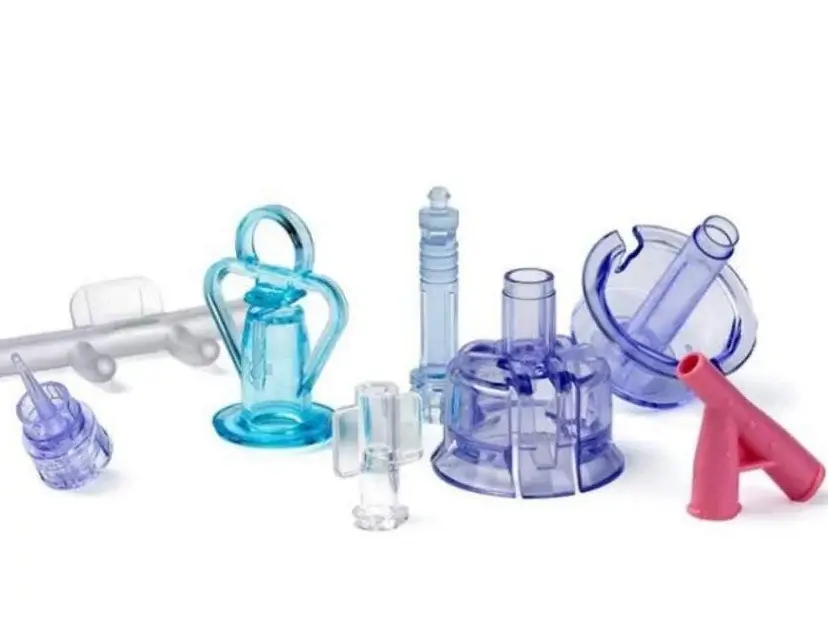
Medical Devices
Strict regulatory requirements and specialty materials raise medical injection molding costs.
- Materials: Medical devices often require medical-grade plastics that meet specific regulatory standards, that tend to be more expensive than standard consumer-grade plastics.
- Part Complexity: Medical devices often require more complex geometries and tighter tolerances to ensure functionality and safety.
- Production Volume: Although some medical device manufacturers operate at high volumes, many projects involve lower-volume, specialized runs.
Automotive Parts
High-strength polymers and large molds increase automotive injection molding cost, but high production volumes offset expenses.
- Materials: Automotive parts often require high-strength plastics or composites, such as nylon, polycarbonate, and PBT. These materials offer durability and resistance to heat, chemicals, and wear, but tend to be more costly than standard injection molding resins.
- Part Complexity: Automotive parts often have highly detailed and intricate designs, such as undercuts, complex geometries, and reinforcement features. The need for high precision and the incorporation of metal inserts or additional components can increase the injection moulding cost.
- Production Volume: The automotive industry typically involves high-volume production, which benefits from economies of scale. However, the high precision and quality standards required for these parts can make tooling more expensive and necessitate additional inspection and testing procedures.

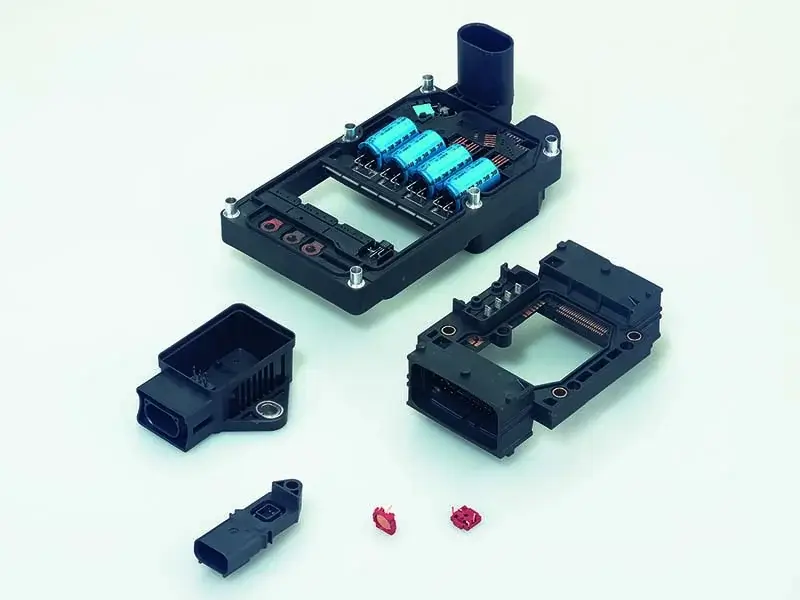
Electronics
Precision molding and heat-resistant plastics increase electronic component injection molding costs.
- Materials: Electronics parts require materials that are not only cost-effective but also offer high electrical insulation properties, durability, and resistance to heat and chemicals. Additionally, materials used in electronic components often need to meet specific fire-resistance or environmental regulations, which can increase the injection molding cost.
- Part Complexity: Electronic components tend to have intricate designs that require high precision, such as thin walls, small cavities, and complex internal features. This increases the complexity of the mold design and manufacturing process, leading to higher tooling and labor costs.
- Production Volume: The electronics industry is characterized by both high-volume production (e.g., mobile phone casings) and low-volume, highly customized runs (e.g., specialized connectors). For high-volume runs, the injection molding price per unit tends to decrease, but low-volume projects often involve higher cost due to the need for specialized molds and testing.
Getting an Accurate Injection Molding Costs Quote
When requesting a plastic injection molding quote, ask the following:
- What mold material do you use, and how does it affect mold tooling cost?
- Do you offer multi-cavity molds to reduce injection molding per unit cost?
- Can you provide low-cost injection molding options for prototypes?
- Do you offer secondary processes like surface finishing and assembly?
Conclusion
Understanding injection molding cost requires evaluating key factors throughout the manufacturing process. From tooling and setup to materials and production, each element affects the final cost per part. By optimizing these factors, it can reduce costs while maintaining product quality.
For accurate cost estimation and reliable production support, Jiangzhi provides customized injection molding solutions to help customers optimize costs and achieve high-quality plastic parts.


