Stress whitening and stress marks are common defects in injection molding that affect the appearance and structural performance of plastic products. These issues often occur in materials such as ABS, PP, and PC, resulting in visible surface flaws that can compromise product quality. As a supplier with extensive experience in injection molding, we assist customers in understanding stress mark injection molding defects from a product perspective. This includes their causes, impacts, and prevention methods.
What Are Stress Marks in Injection Molding?
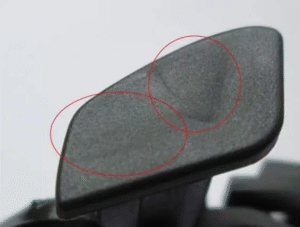
Stress marks in injection molding refer to visible defects that appear on or near the surface of plastic parts. They manifest as whitish or translucent lines, streaks, or spots and are often caused by internal stresses generated during the molding process. These marks are commonly found around critical areas such as ejector pin locations, parting lines, gate regions, and thick-to-thin wall transitions. Although stress marks may seem superficial, they often indicate underlying material deformation that can lead to mechanical weaknesses, such as cracking or warping.
Stress Whitening vs. Stress Marks
Stress whitening is closely related but slightly different from stress marks. Stress whitening refers to a milky or opaque discoloration caused by the formation of micro-voids or crazes in the material under tensile stress. In contrast, injection molding stress marks are more about surface lines from frozen stresses during flow and cooling. However, the two can overlap in injection molding. For example, high injection pressures can induce both whitening from void formation and marks from orientation stresses near gates. In practice, stress whitening may precede or accompany stress marks in areas of high strain, such as around inserts.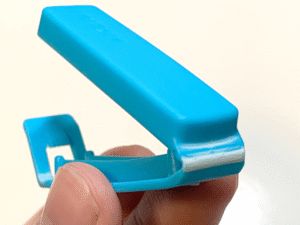
What Causes Stress Whitening and Stress Marks?
Stress whitening and stress marks are mainly caused by excessive internal stress during the injection molding process. Common causes include:
- Residual Stress During Cooling: Uneven cooling causes different shrinkage rates inside the part, leaving residual stress that may appear as whitening or surface marks.
- Excessive Injection Pressure: High pressure increases molecular orientation and shear stress, especially near gates and thin sections, leading to visible stress defects.
- Improper Mold Temperature: A mold temperature that is too low can cause uneven cooling and frozen stress, while an unsuitable temperature balance may affect part appearance.
- Poor Part Design: Sharp corners, uneven wall thickness, and abrupt transitions can create stress concentration areas where defects are more likely to occur.
- Material Sensitivity: Some plastics, such as PC and ABS, are more sensitive to residual stress and environmental factors, making them more prone to stress whitening or cracking.
Other Stress-Related Defects in Molded Parts
Besides stress whitening and stress marks, residual stress in injection molded parts can also cause other quality issues. Uneven cooling and stress concentration may lead to defects such as warpage, cracking, and premature failure. For example, excessive internal stress can reduce dimensional stability, cause deformation in thin or complex parts, and accelerate crack formation under external loads or chemical exposure. These defects may affect part performance, reliability, and service life, especially in applications requiring high precision and durability.
How to Avoid Stress Marks on Injection Molded Parts?
Preventing injection molding stress marks requires a systematic approach involving material selection, design, process parameters, and mold optimization.
Material Selection
Use materials with low thermal expansion, like PP or ABS, instead of PC to reduce stress risk. High molecular weight resins and glass fiber reinforcement improve strength and minimize internal stress, while impurities should be avoided as they act as stress points.
Process Parameter Control
Proper temperature, pressure, and cooling are key. Higher melt and mold temperatures ensure smooth flow and uniform cooling, moderate injection pressure avoids shear near gates, and shorter holding times with extended cooling stabilize the part and reduce stress marks.
Product Design
Optimize molded parts design. Keep wall thickness consistent, transitions smooth, and add generous fillets to spread stress. Match insert expansion rates with the resin and use round or elliptical holes to prevent stress buildup at weak points.
Mold Design Optimization
Position gates on thick sections, use multiple gates for large parts, and design efficient runners and cooling systems to balance flow and temperature. Optimize ejectors for smooth demolding and run simulations to adjust before production.
Conclusion
Although stress whitening and stress marking sometimes appear similar and can occur together, distinguishing them in specific products is necessary for effective prevention strategies. As a supplier with years of injection molding experience, Jiangzhi helps customers avoid these defects through design optimization, material selection, and process adjustments. This ensures durable, high-quality parts that meet procurement needs. Contact us for customized solutions to enhance your supply chain.