
Injection molding temperature is a key parameter in the production of plastic parts. It affects how the material flows into the mold, how it cools, and the final quality of the finished component. Proper control of injection molding temperature helps achieve consistent results, reduce defects, and maintain efficient cycle times. This guide examines the main elements of injection molding temperature, including melt temperature and mold temperature, their differences, and how to manage them in practice.
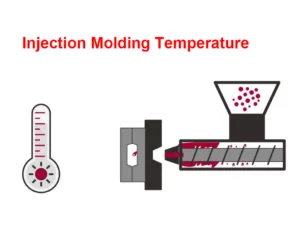
What Is Injection Molding Temperature?
Injection molding temperature refers to the heat conditions involved in the molding process, which primarily include melt temperature and mold temperature.
- Melt temperature is the actual temperature of the plastic material after it has been heated and sheared inside the barrel and as it exits the nozzle. This value is usually higher than the set barrel temperature by 10 to 30 degrees Celsius because of frictional heat from the screw. Melt temperature directly affects the fluidity of the polymer and its ability to fill the mold completely. If the melt temperature is too low, the plastic may not flow properly, resulting in incomplete parts. If it is too high, the material can degrade or cause surface defects.
- Mold temperature is the surface temperature of the mold cavity itself. This temperature controls the rate at which the injected plastic cools and solidifies. Mold temperature influences the surface finish, dimensional accuracy, and mechanical properties of the final part. Proper mold heating ensures uniform cooling, reducing internal stresses and defects such as warpage or sink marks. Different materials and part designs require different mold temperatures to achieve the desired properties.
Melt Temperature vs Mold Temperature – Which Is More Important?
Melt temperature and mold temperature serve separate functions in injection molding.
Melt temperature primarily controls the flow behavior of the plastic during the injection phase. A higher melt temperature lowers the viscosity, which allows the material to fill thin walls or complex geometries more easily. However, excessive melt temperature can lead to material degradation, discoloration, or gas formation.
Mold temperature has a greater direct effect on the finished part. It influences cooling speed, which in turn affects shrinkage, warpage, surface finish, and mechanical properties. When the mold temperature is too low, the plastic solidifies quickly near the surface while the core remains hotter, creating internal stresses. When the mold temperature is too high, cooling takes longer, and cycle times increase.
Studies and shop-floor experience show that adjustments to mold temperature often produce more noticeable improvements in part appearance and dimensional stability than changes to melt temperature alone. The interaction between the two is important. Neither value should be viewed in isolation; both must be considered together to achieve stable production.
How to Set Injection Molding Temperature?
Setting injection molding temperature requires a step-by-step approach to establish proper melt temperature and mold temperature for consistent, high-quality parts.
First, set the barrel temperatures to control the melt temperature. Start with a lower temperature in the rear zone and increase it gradually toward the front. Set the nozzle slightly lower than the front zone. After running the machine for 10–15 minutes, measure the actual melt temperature at the nozzle. Adjust the barrel settings until the melt temperature reaches the recommended range.
Next, set the mold temperature to the middle value recommended for the material. Allow the mold to stabilize and check the surface temperature.
Produce a short trial run of 10–20 shots and inspect the parts. Change only one parameter at a time. Wait for the process to stabilize after each change.
Continue these small adjustments until the parts meet quality requirements. Record the final settings for future use.
Common Temperature Defects and Solutions
Incorrect injection molding temperature is often a primary cause of part defects. Some common defects include:
- Short shots or incomplete filling: These defects occur when the melt temperature is too low. Increase melt temperature slightly or optimize mold temperature to improve flow.
- Sink marks or surface depressions: It often caused by low mold temperature or uneven cooling. Increase mold temperature or enhance cooling channel design.
- Burn marks or bubbles: That is caused by excessively high melt temperature, trapped air, or over-packing. Reduce melt temperature, check venting, and adjust injection speed.
- Warping or dimensional instability: That is results from inconsistent mold temperature or improper cooling. Ensure uniform mold heating and adequate cooling time.
Recommended Injection Molding Temperature by Material
Different plastics require different melt and mold temperatures. Below is a reference table for commonly used materials:


