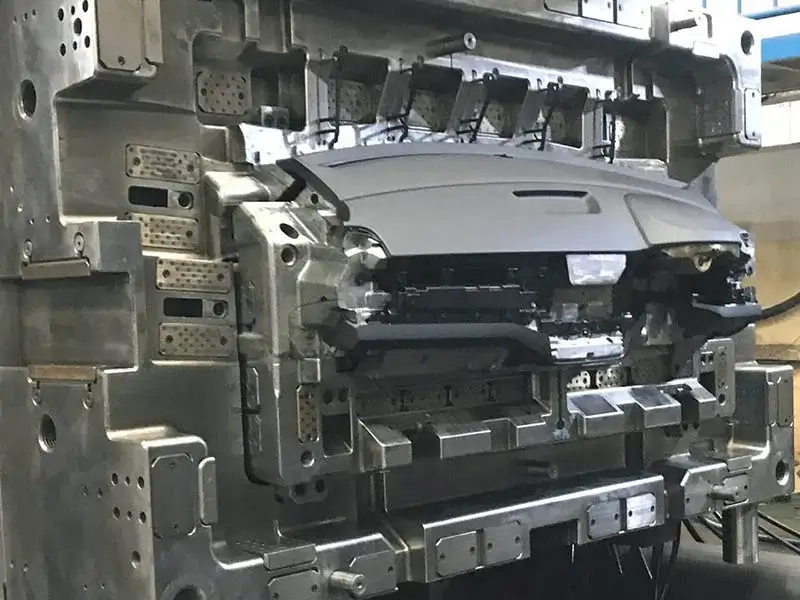
The core difference between a hot runner and a cold runner mold is whether the plastic inside the runner system remains molten between injection cycles or cools down and forms a solid runner after each cycle.
This structural difference directly affects mold cost, production cycle time, material utilization, and the final appearance quality of molded parts. For custom injection molded components, choosing between a hot runner and a cold runner is not simply a matter of comparing costs. The decision requires a comprehensive evaluation of part design, material characteristics, production volume, and quality requirements.
This article will break down the specific differences between hot runner and cold runner molds in terms of cost, cycle time, material compatibility, and appearance quality. It will also provide practical guidelines for selecting the right system for custom injection molding projects. This evaluation is a key step that our engineers at Jiangzhi complete during every DFM (Design for Manufacturability) review.
Hot Runner vs Cold Runner: Difference in Mold Cost
The first major difference between a hot runner and a cold runner system is the initial mold investment.
A hot runner system requires additional components, including heated manifolds, hot nozzles, heating elements, temperature controllers, and more precise mold manufacturing. These components increase the upfront tooling cost and require higher engineering accuracy during mold design and manufacturing.
A cold runner system has a simpler structure because the runner system does not require heating components. The mold only includes conventional components such as sprues, runners, and gates, which makes the tooling cost lower and the mold easier to manufacture.
The choice depends heavily on the project stage and production volume. A cold runner mold is usually more suitable for prototypes, low-volume production, or projects with limited tooling budgets. A hot runner mold requires higher initial investment but may provide better cost efficiency for long-term mass production.
Hot Runner vs Cold Runner: Difference in Part Cost for High-Volume Production
When comparing injection molding hot runner vs cold runner, the initial mold price is only one factor. For large production runs, the long-term part cost can be very different.
A hot runner system keeps the plastic inside the runner system molten during production. Since there is almost no solid runner waste and no additional degating process is required, the material utilization rate is much higher. As production volume increases, these savings become more significant.
A cold runner system produces solidified runners in every injection cycle. These runners either need to be discarded, recycled, or processed again. In many applications, additional labor or automated equipment is required to remove gates and clean the parts.
A hot runner system may have a higher upfront cost but can reduce the total cost per part when annual production volume is high. A cold runner system may have a lower tooling investment but higher recurring production costs.
Hot Runner vs Cold Runner: Difference in Material Waste
Material utilization is one of the most noticeable differences between a hot runner vs cold runner system.
A hot runner system keeps the runner material in a molten state and transfers it directly into the cavity during each cycle. Because no solid runner is created, material waste is close to zero.
A cold runner system creates solidified sprues and runners after every molding cycle. These waste materials can sometimes be reground and reused, but recycling adds additional handling steps and may not be suitable for all applications, especially when strict material properties are required.
Hot runners are especially valuable when using expensive engineering plastics or high-performance materials. Reducing material waste can directly lower production costs and improve material efficiency.
Hot Runner vs Cold Runner: Difference in Material Compatibility
Material selection can determine whether a hot runner or cold runner system is technically suitable.
A hot runner system works well with many common thermoplastics and is widely used in high-volume production. However, some heat-sensitive materials may degrade if they remain exposed to elevated temperatures inside the hot runner system for extended periods. Certain PVC formulations and some flame-retardant materials require careful evaluation before using a hot runner.
A cold runner system avoids continuous heating of the runner material, making it more flexible for some temperature-sensitive materials. In these cases, a cold runner may be necessary regardless of production volume.
Material compatibility is a technical limitation rather than a cost decision. Even if a hot runner provides production advantages, the selected runner system must match the material’s processing requirements.
Hot Runner vs Cold Runner: Difference in Gate Appearance
The gate design directly affects the final appearance of injection molded parts.
A hot runner system usually allows smaller and more controlled gate designs. Hot tip gates and valve gates can reduce visible gate marks and provide better appearance control, especially for cosmetic parts. However, certain hot runner gate types may have issues such as stringing or drooling if the temperature or process settings are not properly controlled.
A cold runner system generally produces more visible gate marks because the gate design often requires additional material separation after molding. Some parts may require trimming or secondary finishing operations.
Hot runners are often preferred for products with strict appearance requirements, such as consumer electronics housings, transparent parts, and visible automotive components.

Hot Runner vs Cold Runner: Difference in Maintenance Complexity
Maintenance requirements are another important consideration when selecting between hot runner and cold runner systems.
A hot runner system contains more components that can fail, including heaters, thermocouples, temperature controllers, and hot nozzles. Incorrect temperature control or material degradation can also cause nozzle blockage or processing problems.
A cold runner system has a simpler mechanical structure with fewer components. Maintenance is generally easier, troubleshooting is faster, and repair costs are usually lower.
Cold runners may provide advantages for projects requiring simple operation and frequent mold changes. Hot runners require experienced mold maintenance and process control but can provide better production efficiency.
Hot Runner vs Cold Runner: Difference in Multi-Cavity and Family Mold Applications
The difference between cold runner vs hot runner injection molding becomes more significant when dealing with multi-cavity molds or family molds.
A hot runner system provides better control over melt distribution. Through balanced manifold design and independent temperature control, it is easier to achieve consistent filling across multiple cavities, even when cavity shapes or flow requirements are different.
A cold runner system can also be used for multi-cavity molds, but balancing the runner layout becomes more challenging. Different runner lengths, pressure losses, and filling resistance may cause uneven filling between cavities.
Hot runners are often a better choice for high-volume multi-cavity production or family molds where consistent part quality is critical. Cold runners may still be suitable when cavity balance is easier to achieve or production requirements are lower.
How to Choose the Right Mold System for Custom Injection Molded Parts?
For custom injection molded parts, there is no universal answer when choosing between a hot runner vs cold runner system. The right choice depends on multiple project factors.
Production Stage & Annual Volume
If your project is still in the design validation phase or involves lower annual volumes, a cold runner mold is typically the most practical choice. It requires a significantly lower upfront tooling investment. Furthermore, if gate locations, runner layouts, or part geometries need adjustment after testing, cold runner systems offer superior modification flexibility at a much lower cost.
Once a design is frozen and cleared for stable, medium-to-high volume mass production, investing in a hot runner system becomes financially advantageous. The elimination of runner scrap, reduced cycle times, and automated operation will rapidly offset the higher upfront tooling expenditures by reducing the per-part cost.
Material Resin Characteristics
If your part requires heat-sensitive materials—such as certain PVC formulations, specific flame-retardant grades, or highly filled compounds—prolonged residence times within a heated manifold can cause material degradation.
For these materials, a cold runner system (or an insulated runner compromise solution) is often technically mandatory, regardless of how high the production volume is. Material stability must always take priority over volume-based cost modeling.
Part Aesthetics & Cosmetic Requirements
For consumer electronics housings, automotive interior parts, or any components with strict visible surface requirements, a hot runner system is highly recommended. It allows for smaller, well-controlled hot tip or valve gating, minimizing visible gate marks and improving surface finish.
For functional or internal parts where the gate area is completely hidden from the end-user, a cold runner system is perfectly sufficient. If cosmetics are not critical, specifying an expensive hot runner system introduces unnecessary costs without adding product value.
Cavity Configuration & Family Molds
When configured as a family mold—where multiple different custom parts are produced simultaneously within the same tool—achieving balanced filling is a significant challenge due to variations in part volume and flow resistance.
For these complex layouts, a hot runner system is the superior choice. Equipped with balanced manifold designs and independent zone temperature controls, it provides the precise melt distribution required to maintain consistent part weight, dimensions, and quality across all cavities.
Making the Right System with Jiangzhi
Choosing between a hot runner and a cold runner system is an interconnected technical decision, not an isolated cost calculation. A cold runner system provides a cost-effective solution for low-volume projects and applications requiring simpler mold structures, while hot runner injection molding systems can improve material efficiency, cycle time, and consistency in high-volume production.
The right runner system depends on multiple factors. During every DFM (Design for Manufacturability) review, Jiangzhi’s engineering team evaluates each project in detail to recommend the most suitable mold solution for each project.
Ready to optimize your next project? Upload your part drawings today to receive a professional DFM evaluation and an actionable manufacturing quotation from our engineering experts.