
Silicone compression molding is a versatile and efficient manufacturing process used to create high-performance silicone rubber parts. This technique offers unparalleled precision and flexibility, making it ideal for producing complex components used in a variety of industries, including medical, automotive, and consumer goods. By combining heat, pressure, and carefully controlled material composition, silicone compression moulding ensures high-quality, durable parts while minimizing material waste and production costs. In this article, we will explore how silicone compression molding works, its benefits, key process parameters, common challenges, and its wide range of applications across different sectors.
What is Silicone Compression Molding and How Does it Work?
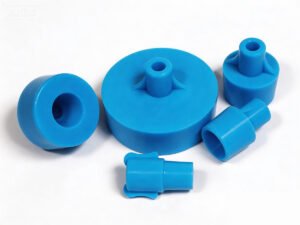
Silicone compression molding is a widely used process for creating durable, heat-resistant, and flexible silicone rubber molding parts. It involves placing a pre-measured amount of silicone into an open mold cavity, then applying heat and pressure to cure the material into the desired shape. This method is ideal for producing components like seals, gaskets, and custom silicone molding products.
The process’s success relies on carefully controlling factors like temperature, pressure, and material composition. Silicone compression moulding offers cost efficiency and minimal material waste, especially for low to medium production volumes. It is commonly used in industries such as medical, automotive, and consumer goods for high-precision parts manufacturing. Compared to other techniques like silicone injection molding, silicone compression molding stands out for its ability to handle complex shapes while maintaining consistency and quality.

Step-by-Step Breakdown of the Compression Molding Process
To better understand how silicone compression molding works, here is a step-by-step breakdown of the entire Silicone molding process:
1. Preparing the Mold
The first step is to design and prepare the mold. This includes selecting the right mold material, ensuring its dimensions match the part specifications, and preheating the mold to the required temperature. Molds are typically created based on CAD designs of the product.
2. Measuring the Silicone Material
Silicone rubber material is carefully measured, typically using automated or manual methods. The quantity must be precisely calculated to fill the mold cavity completely, avoiding both excess material and insufficient material. Proper moisture control of the material (generally kept below 0.5%) is also important to prevent defects during curing.
3. Loading the Silicone into the Mold
The silicone material is placed into the mold cavity. Depending on the product complexity, this can be done by hand or by using automated equipment for greater consistency.
4. Closing the Mold and Applying Pressure
Once the silicone is in place, the mold is closed, and pressure is applied. The pressure forces the material into all areas of the mold, ensuring it accurately fills all cavities, vents, and details of the part. The mold is heated at this stage, starting the curing process.
5. Curing and Setting the Silicone
The heat causes the silicone to cure, or vulcanize, solidifying the material into the shape of the mold. This stage typically lasts anywhere from several minutes to an hour, depending on factors such as part size and mold complexity.
6. Cooling and Removal
After curing, the mold is cooled to harden the material further. Once cooled, the mold is opened, and the finished silicone part is removed. The part may undergo secondary processes like trimming, deflashing, or post-curing, depending on its final application.
Advantages of Silicone Compression Molding
Lower Tooling Costs: Compared to other molding techniques like injection molding, silicone compression molding requires less expensive tooling.
Complex Geometries: Silicone compression molding allows for the creation of products with intricate shapes and details, making it ideal for complex designs.
Structural Stability: Compression-molded products have high structural integrity and are free of residual stress, which enhances their durability.
Material Efficiency: The process minimizes waste by ensuring that the silicone material fills the mold completely, reducing the need for post-production trimming.
Diverse Industry Use: It is widely used in industries such as automotive, medical, aerospace, electrical, and consumer goods due to its versatility and performance benefits.

Silicone Compression Molding Key Parameters Control Table
| Parameter | Recommended Range | Risks if Too Low | Risks if Too High |
|---|---|---|---|
| Mold Temperature | 150°C – 200°C | Incomplete curing, soft parts | Material degradation, uneven curing, part warping |
| Pressure (Compression Force) | 10-20 MPa (depending on part size and material) | Incomplete part filling, voids | Flashing, excessive wear on mold, part deformation |
| Curing Time | 5 – 15 minutes (depends on part thickness and material) | Incomplete curing, soft parts | Brittleness, over-curing, extended cycle time |
| Curing Temperature | 160°C – 200°C (HTV silicone) / 120°C – 180°C (LSR) | Under-cured parts, material softness | Material degradation, part warping |
| Cycle Time | 3 – 7 minutes (depends on part complexity and size) | Incomplete molding, surface defects | Increased production time, inefficiency |
| Compression Ratio | 2:1 to 3:1 (depending on material and part geometry) | Part underfilling, lack of part detail | Flashing, excessive material usage |
| Venting Size | 0.5 mm – 1 mm | Trapped air, voids, incomplete parts | Excessive flashing, reduced part precision |
| Mold Fit and Alignment | Perfect alignment and minimal gap | Flashing, warping, part misalignment | Material overflow, inconsistent parts |
| Cooling Rate | Gradual cooling to ambient temperature | Part cracking, thermal stress | Increased cycle time, risk of part distortion |
| Moisture Control | <0.5% moisture content in silicone material | — | Poor curing, reduced material strength, inconsistent parts |
Common Challenges and How to Overcome Them
Silicone compression molding is a reliable and efficient process, but like any manufacturing method, it comes with its own set of challenges. These challenges, if not properly addressed, can lead to defects and inefficiencies in the production of silicone parts. Some of the most common challenges include air entrapment, incomplete filling of the mold, excessive flashing, and the formation of voids. Below are the key challenges in silicone compression moulding and practical solutions to overcome them.
Voids
Voids, or air pockets trapped inside silicone parts, are a common challenge in silicone compression molding. These voids can compromise the structural integrity of the part, making it unsuitable for high-precision applications like medical silicone molding.
Causes of Voids
- Insufficient Pressure: Low pressure can prevent the silicone from completely filling the mold, leaving air pockets inside the part.
- Inconsistent Material Loading: Underloading the silicone material can result in cavities not being fully filled, leading to voids.
- Uneven Heating: Inconsistent mold heating can cause uneven curing, trapping air within the material.
Solutions to Overcome Voids
- Adequate Pressure and Material Loading: Ensure the right amount of silicone material is used, and apply enough pressure to fill the mold cavity completely.
- Proper Heating: Consistently heat the silicone and mold to ensure smooth material flow and uniform curing.
- Vacuum-Assisted Molding: For complex parts, using vacuum-assisted molding can help remove trapped air and prevent voids.
Flashing
Flashing occurs when excess material spills out of the mold cavity, leaving an unwanted thin layer of silicone around the part. This is a common issue in silicone molding for consumer goods or rubber compression molding.
Causes of Flashing
- Overloading the mold with too much silicone.
- Applying excessive pressure during the molding process.
- Poor mold design, with misaligned or worn-out mold halves.
Solutions
- Proper Material Loading: Avoid overfilling the mold with silicone. Ensure that the right amount of material is used for each part to prevent excessive overflow.
- Precision in Pressure Application: Applying just the right amount of pressure ensures that excess material is not forced out of the mold.
- Mold Maintenance: Regularly inspect and maintain molds to ensure proper alignment and to replace any worn-out parts.
Incomplete Mold Filling
Sometimes, silicone material does not fully fill the mold cavity, leading to defects in the final part. This challenge often occurs when the silicone does not flow evenly or fully into all areas of the mold.
Causes of Incomplete Mold Filling
- Poor silicone material flow due to high viscosity or improper heating.
- Uneven mold pressure or insufficient pressure.
- Complex mold design, such as sharp corners or deep recesses.
Solutions
- Optimized Heating: Ensure that the silicone is properly heated to reduce its viscosity, making it easier for the material to flow into the mold.
- Mold Design Optimization: Simplify the design where possible, eliminating sharp corners and deep cavities that hinder the flow of material.
- Pressure Adjustment: Apply consistent and adequate pressure to ensure that the silicone flows uniformly into all parts of the mold cavity.
Warping or Deformation
Warpage or deformation of the silicone part after molding can lead to functionality issues, particularly in industries like automotive silicone molding or medical silicone molding, where precise part shapes are critical.
Causes of Warping
- Uneven cooling of the silicone material.
- Rapid cooling after molding causes internal stresses to form in the silicone.
- Improper curing time or temperature.
Solutions
- Controlled Cooling: Allow the silicone part to cool at a gradual, controlled rate to prevent warping. The cooling process should be uniform across the entire part.
- Optimized Curing: Ensure that the curing process is carefully controlled with appropriate time and temperature settings. This will prevent internal stresses that lead to warping.
Applications of Silicone Compression Molding
Silicone compression molding is utilized across a wide variety of industries, with each application benefiting from its precision, durability, and versatility.
Silicone Molding for Medical Applications
Medical silicone molding is a critical process for producing parts used in healthcare products, including seals, gaskets, tubing, respiratory mask components, and catheter-related parts. The high biocompatibility of medical-grade silicone makes it ideal for these applications. Silicone’s ability to withstand repeated sterilization also makes it highly valuable in this sector.
Automotive Silicone Molding
Automotive silicone molding is commonly used for producing high-performance components such as gaskets, seals, vibration dampers, and wire harness boots. Silicone parts in the automotive industry are prized for their durability, heat resistance, and ability to perform in extreme environments.
Silicone Molding for Consumer Goods
In consumer goods, silicone compression molding is used to produce a wide range of products, from kitchen tools and seals to wearable accessories and protective covers. Silicone’s non-reactivity, ease of cleaning, and flexibility make it ideal for consumer goods silicone molding, offering products that are safe, long-lasting, and versatile.
Custom Silicone Molding for Specialized Applications
Custom silicone molding services allow manufacturers to produce parts tailored to specific needs. Whether it’s a specialized gasket, a custom rubber component, or a high-performance seal, silicone compression molding provides the flexibility to produce highly specialized components across industries.

When to Choose Silicone Compression Molding
Silicone compression molding service is particularly suitable for low to medium production volumes, thicker or larger parts, and projects where lower tooling cost is important. It is less ideal when very high volumes, extremely complex thin-wall geometries, or the shortest possible cycle times are required—in those cases, silicone injection molding (especially LSR) is often a better choice.
Differences Between Silicone Compression Moulding and Injection Molding Techniques
| Feature | Compression Molding | Injection Molding |
|---|---|---|
| Molding Process | Material is placed in an open mold, then closed under heat and pressure to form the part. | Material is injected into a closed mold under high pressure to form the part. |
| Material Types | Typically used for rubber, silicone, and other thermoset materials | Primarily used for thermoplastics, including specialized materials like liquid silicone rubber (LSR) |
| Production Speed | Slower production cycle, suitable for lower to medium volume | Faster cycle time, ideal for high-volume production |
| Part Complexity | Suitable for simple to moderately complex shapes | Capable of producing highly intricate and detailed parts with complex geometries |
| Size of Parts | Typically produces thicker and larger parts | Can produce both small and large parts with high precision |
| Tooling Cost | Generally lower tooling costs | Higher tooling costs due to the need for more precise molds and equipment |
| Unit Cost | Higher cost per unit for large production runs | Lower per-unit cost at large production volumes |
| Cycle Time | Longer cycle times due to curing or cooling phases | Faster cycle times, allowing for higher production rates |
| Material Waste | Relatively low waste, as material is placed precisely into the mold | Potential for higher waste during the injection process, especially with excess material and sprues |
| Ideal Applications | Custom silicone molding, automotive silicone molding, silicone molding for medical, large or thicker parts | Injection molding for consumer goods, small to medium-sized parts, high-volume production |
| Flexibility | Greater flexibility for small production runs or custom parts | Best suited for mass production, especially for parts that require complex features |
This table provides a clear comparison between the compression moulding process and the injection moulding process, helping manufacturers determine which technique is most suitable for their production needs.
Conclusion
Silicone compression molding is a highly efficient and flexible process that produces precise and durable silicone parts, suitable for industries like automotive, medical, and consumer goods. By understanding key steps and addressing challenges such as flashing, warping, and voids, manufacturers can optimize the molding process for superior results. Proper control of parameters such as pressure, temperature, and material selection ensures the production of high-quality custom silicone parts.
If you are looking for reliable silicone compression molding services, our team can support you with material selection, process optimization, and production of high-quality custom silicone parts.


