Mold maintenance is essential for controlling costs and ensuring reliable performance in injection molding. It includes its effect on total project expenses, structured systems, cycle-based procedures, common issues, and storage requirements. Consistent mold maintenance supports longer tool life and stable production quality.
Why Does Mold Maintenance Determine Total Cost of Ownership?
Mold maintenance directly influences the overall expenses of an injection molding program. When regular mold maintenance is not performed, production faces increased unplanned downtime for repairs. Scrap rates rise due to defects in parts, and molds may need replacement sooner than expected. These outcomes add substantial costs beyond the initial tooling investment.
Injection mold maintenance expenses should be calculated as part of the full project lifecycle. This includes routine care during active runs and any necessary repairs. Planning for mold maintenance from the beginning creates more accurate budgets and reduces surprises. A mold that receives proper attention can complete many more cycles before major work is required. In comparison, molds without scheduled maintenance often incur higher repair and replacement costs.
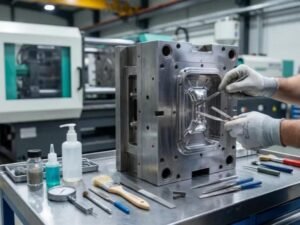
Our Structured Mold Maintenance System
A professional mold maintenance strategy usually includes three levels: preventive, corrective, and predictive. These elements work together to address tool condition at different stages.
Preventive Mold Maintenance
Preventive maintenance refers to planned inspections and servicing performed before a failure occurs. Typical preventive maintenance activities include:
- Cleaning mold surfaces
- Applying rust protection
- Checking lubrication points
- Inspecting wear components
- Checking cooling system performance
The purpose of preventive maintenance is to reduce the possibility of unexpected downtime and maintain stable production conditions. For example, cleaning vents regularly can prevent gas buildup and burn marks. Checking guide components can prevent alignment problems that may damage the mold structure over time.
Corrective Mold Maintenance
Corrective maintenance is performed when a problem is detected during production or inspection. Typical corrective actions include:
- Replacing damaged ejector pins
- Repairing worn inserts
- Restoring damaged cavity surfaces
- Fixing cooling leaks
- Replacing failed hot runner components
Corrective maintenance not only solves existing problems. Early correction also prevents minor defects from developing into more serious mold damage.
Predictive Mold Maintenance
Predictive maintenance uses production data and inspection records to determine when maintenance should be performed. Instead of using only a fixed calendar schedule, we evaluate:
- Shot count
- Material type
- Production conditions
- Component wear rate
- Historical maintenance records
For example, a mold producing glass-filled nylon parts may require more frequent inspection than a mold producing standard ABS parts because abrasive materials accelerate component wear.
Injection Mold Maintenance Schedule Based on Shot Count
One important principle in professional mold maintenance is that maintenance frequency should be based on production usage rather than only time. A mold running several hundred thousand cycles experiences different stress compared with a mold used occasionally for prototype production.
Routine Tasks After Each Run
Basic mold maintenance occurs every time the mold is removed from the press or prepared for a new run. While the mold is still warm, internal surfaces are cleaned with approved solvents to remove residue. The ejector system is moved forward, treated with rust preventive, and then retracted. Water lines are fully drained and blown out to eliminate moisture. Bolts, clamps, and plates are checked and tightened as needed. The last parts produced are saved as a quality reference.
Regular Inspection Based on Shot Count
During production, specific components should be inspected according to mold usage.
Ejector Pins: Ejector pins experience repeated mechanical movement during every molding cycle. Over time, they may develop wear, bending, fatigue or poor lubrication. Damaged ejector pins can cause difficulty removing parts, ejector marks, part deformation, and production interruption. Understanding the ejector pin design helps ensure reliable ejection performance, and regular inspection and replacement of worn pins help maintain long-term mold stability.
Guide Pins and Bushings: Guide components maintain accurate alignment between mold halves. Wear in these areas can affect mold positioning and create problems such as flash, uneven parting lines, and dimensional variation. Checking guide systems during scheduled maintenance helps protect mold precision.
Sealing Components: Seals used in cooling systems, hydraulic systems, or other mold mechanisms also require regular inspection. Damaged seals may lead to water leakage, cooling instability, and mold corrosion. Replacing small sealing components at the appropriate time can prevent more expensive repairs.
Major Mold Maintenance and Refurbishment
After extended production cycles, molds may require major maintenance to restore performance. Major maintenance usually includes:
- Cavity and core polishing
- Surface restoration
- Plating repair
- Replacement of wear components
- Cooling channel cleaning
- Hot runner inspection
The purpose of major maintenance is to restore mold performance and maintain part quality for continued production. For high-volume production molds, planned refurbishment is often more economical than replacing the entire tooling system.
Common Issues in Injection Molds
Several recurring problems appear when mold maintenance is irregular. Regular inspection and targeted maintenance can prevent these issues from affecting production quality and mold lifespan.
Cooling Channel Scaling and Blockage
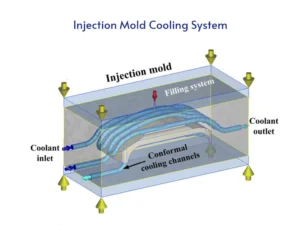
Cooling system problems are one of the most common issues found during injection mold operation. Over time, mineral deposits, rust, and contaminants in cooling water can accumulate inside cooling channels. When cooling efficiency decreases, the mold temperature becomes unstable. Effective cooling system design helps maintain stable mold temperature and consistent production quality.
During mold maintenance, cooling channels should be inspected and cleaned regularly, especially for molds used in high-volume production. Proper water quality control and periodic cleaning help maintain consistent heat transfer performance.
Vent Blockage and Gas Buildup
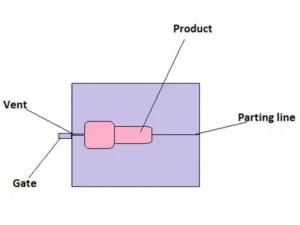
Mold vents allow trapped air and gas to escape during injection. When vents become blocked by plastic residue, carbon deposits, or material degradation, gas cannot be released effectively.
Regular cleaning of vent areas is an important part of preventive mould maintenance. Proper injection molding venting improves filling consistency and reduces quality issues during production.
Hot Runner System Problems
For molds equipped with hot runner systems, the heater, nozzle, and temperature control components require regular inspection. Common hot runner issues include heater failure, temperature fluctuation, nozzle blockage, and material degradation inside the system. These problems can affect filling balance, cycle stability, and part quality.
During scheduled mold maintenance, hot runner components should be checked based on production conditions and material usage. Early detection of abnormal temperature changes or filling issues can reduce repair time and production losses.

Proper Storage Practices During Downtime
Storage conditions are also an important part of overall mold maintenance. Before a mold is placed in storage, it receives thorough cleaning and rust-preventive treatment. All water lines must be completely dry. Plates can be separated if this is practical for the design. The mold is stored in a controlled environment with stable temperature and low humidity. Clear tags indicate the current condition, last cycle count, and upcoming maintenance needs. For molds that remain unused for more than two months, periodic inspections confirm that protective measures are still effective. Following these practices allows a quick and reliable return to production when needed.
Conclusion
Effective injection mold maintenance is not just a chore—it’s a strategic investment that directly protects your bottom line, reduces unexpected downtime, and stabilizes production quality.
At Jiangzhi, our mold tooling services including professional maintenance is integrated into our long-term project management. Whether you are running high-volume production or technical automotive components, our custom maintenance systems ensure your tooling performs at its peak for millions of shots. Ready to optimize your next injection molding project? Contact us for a free tooling consultation.