Thermoplastic polyurethane (TPU) is one of the most versatile elastomeric materials used in extrusion, valued for combining the flexibility of rubber with the processability of thermoplastics. This guide looks at what TPU extrusion is, why choose TPU for this process, common applications, and what it takes to extrude TPU successfully.
What Is TPU Extrusion?
Thermoplastic polyurethane (TPU) is a type of thermoplastic elastomer, meaning it combines the stretch and flexibility of rubber with the ability to be melted and reshaped like a plastic. It’s known for its elasticity, abrasion resistance, and resistance to oils and chemicals, and it’s available across a wide hardness range, from soft and rubber-like to semi-rigid.
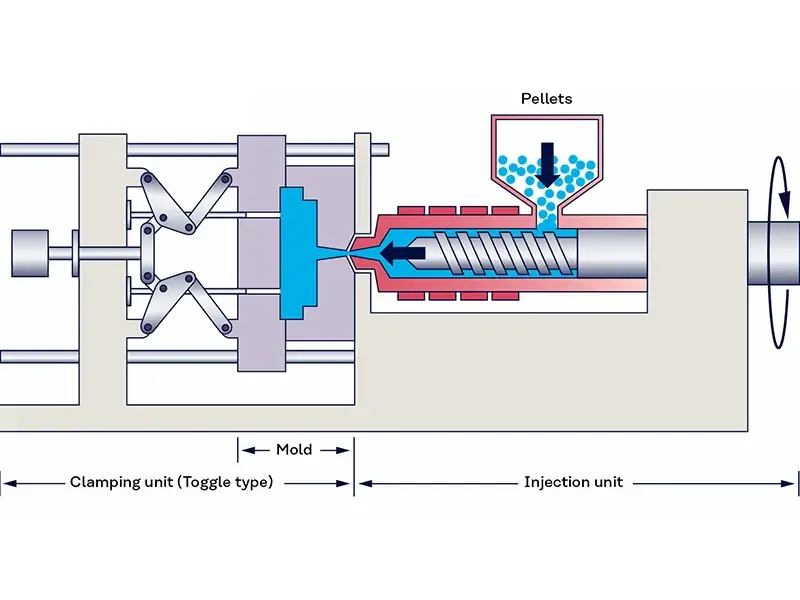
TPU extrusion is the process of melting TPU pellets and forcing them through a shaped die to form continuous products such as tubing, film, and sheet. It follows the same basic process as standard extrusion molding. Because TPU is moisture-sensitive and shear-sensitive, though, steps like drying, screw design, and cooling need extra attention.
Why Use TPU for Extrusion?
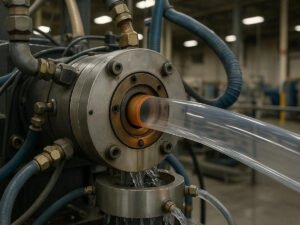
TPU is well suited to extrusion because it can be continuously formed into flexible profiles with consistent dimensions, although it requires careful process control.
Stable Melt Flow
When heated within the appropriate processing range, TPU melts and flows through the die relatively consistently. Stable melt flow helps maintain a uniform extrusion rate and reduces variations in the profile during continuous production.
Good Melt Strength
After leaving the die, the TPU melt needs enough strength to resist excessive deformation before it cools. Good melt strength helps the material retain the intended cross-sectional shape and reduces distortion during the early cooling stage.
Dimensional Stability
TPU can maintain relatively consistent dimensions when extrusion speed, die temperature, cooling, and sizing conditions are properly controlled. This makes process control important for achieving the required thickness and profile dimensions.
Wide Hardness Range
TPU is available in a wide range of hardness grades. Extruders can select a grade according to the required flexibility or stiffness while maintaining the same basic extrusion method, giving greater flexibility in material selection.
Surface Quality
TPU can produce a smooth extruded surface when the material temperature, die condition, extrusion speed, and cooling are properly controlled. Consistent processing helps reduce surface defects and maintain uniform appearance along the extrusion.
Continuous Processing Capability
Once TPU is properly dried, melted, and fed into the extrusion system, it can be continuously pushed through a die and cooled into a uniform profile. This continuous process makes TPU suitable for producing long lengths with consistent cross-sections.
Common Applications of TPU Extrusion
TPU extrusion is used across a wide range of industries, typically where flexibility needs to be paired with durability:
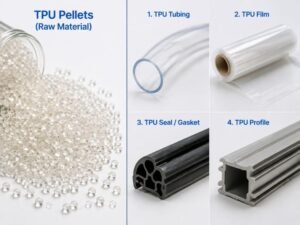
- Medical and Pneumatic Tubing: TPU’s biocompatibility, kink resistance, and flexibility make it a common choice for catheters, IV lines, and pneumatic control tubing.
- Cable and Wire Jacketing: Extruded TPU jackets protect cables in robotics, industrial automation, and outdoor equipment.
- Hot-melt Adhesive Film: TPU film is widely extruded as a bonding layer in technical textiles, laminated fabrics, and footwear components.
- Waterproof, Breathable Membranes: Microporous or monolithic TPU films are used in outdoor apparel and footwear.
- Seals and Gaskets: Extruded TPU profiles are used where standard rubber gaskets wear out too quickly under repeated compression or abrasion.
- 3D Printing Filament: TPU’s flexibility makes it a popular material for flexible 3D-printed parts, produced via monofilament extrusion.
Extruder Equipment Considerations for TPU Extrusion
Because TPU behaves differently from rigid thermoplastics, extrusion lines need to account for a few TPU-specific factors:
- Screw Design: TPU is shear-sensitive, so screws typically use a gentler compression ratio than those used for rigid plastics to avoid excess shear heat degrading the material.
- Drying Integration: TPU readily absorbs moisture, so most TPU extrusion lines pair the extruder with a dedicated hopper dryer. Even brief exposure to humid air can cause hydrolysis and defects like bubbling or surface streaking.
- Temperature Control: TPU has a relatively narrow processing window, so precise, zone-by-zone barrel temperature control helps avoid under-melting or thermal degradation.
- Cooling Systems: TPU extrudate stays soft longer after leaving the die, so cooling needs to be gradual and well-controlled to prevent warping before the part fully sets.
Conclusion
TPU extrusion combines standard extrusion with the elasticity, durability, and chemical resistance of TPU, making it a strong choice for flexible components across medical, industrial, and consumer applications. Getting consistent results takes real process expertise, from moisture control to screw and cooling design. With expertise in custom plastic manufacturing, Jiangzhi helps customers develop custom plastic parts that meet specific design requirements and performance expectations. Contact us to discuss your project.