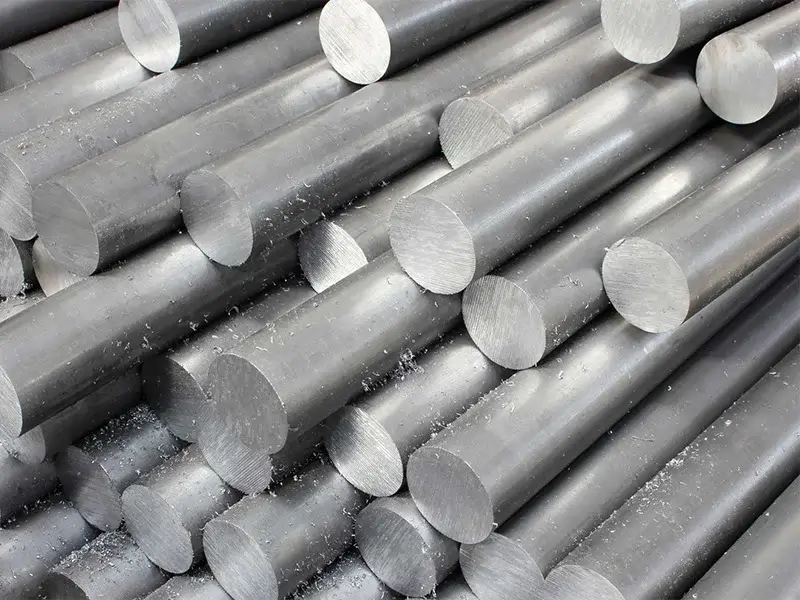
Metal is strong and versatile, but on its own it’s often vulnerable to corrosion, wear, and surface damage over time. This is why surface treatment is such a common step in metal part manufacturing. This guide covers the main types of metal surface treatments, their applications, and common mistakes to avoid.
What Is Metal Surface Treatment?
Metal surface treatment refers to any process used to modify the outer layer of a metal part, improving its appearance, corrosion resistance, hardness, or ability to bond with paint, adhesives, or other coatings. It is commonly applied after manufacturing processes such as CNC machining. Without proper surface treatment, most metals are vulnerable to oxidation, wear, and surface damage that can shorten a part’s usable life.
Surface treatments generally fall into three categories:
- Mechanical Treatments: blasting, tumbling, polishing, brushing
- Chemical Treatments: anodizing, passivation, blackening
- Coating and Deposition Treatments: electroplating, powder coating, galvanizing, tinning
Common Metal Surface Treatment Methods
Here’s a closer look at how each common metal surface treatment method works and where it’s typically used.
1. Sandblasting / Shot Peening
High-speed particles (sand, glass beads, or steel shot) are projected onto the part’s surface to remove rust, scale, and impurities while creating a uniform texture. Shot peening also compresses the surface layer, which improves fatigue resistance — a common step before painting or coating to improve adhesion.
It is widely used in the construction industry for preparing structural steel before painting, as well as in general manufacturing for cleaning cast parts and improving the fatigue resistance of springs and gears.
2. Tribofinishing (Barrel Finishing)
Parts are placed in a rotating or vibrating drum together with an abrasive media mix. The friction generated smooths surfaces, deburrs sharp edges, and removes light surface defects. This method works well for batches of small or irregularly shaped parts.
It is widely used in the hardware and fastener industry for deburring and finishing small stamped or machined parts, as well as in electronics manufacturing for preparing precision components produced in bulk.
3. Polishing and Brushing
Both use abrasive contact to refine the surface, but with different goals: polishing removes visible marks entirely to produce a mirror-like or reflective finish, while brushing leaves fine, uniform directional lines for a matte, textured look. Polishing is often functional (e.g., reflective components); brushing is mostly cosmetic.
It is widely used in the home appliance industry for kitchenware and appliance panels, as well as in the architectural and optical industries for decorative hardware, reflectors, and instrument housings.
4. Anodizing
Anodizing is almost exclusively used for aluminum CNC machining. It grows a controlled oxide layer on the part’s surface through an electrolytic bath. The resulting layer is hard, corrosion-resistant, and can be dyed in a wide range of colors. It also gives aluminum electrical insulation properties it wouldn’t otherwise have.
It is widely used in the consumer electronics industry for device housings, as well as in the construction and outdoor equipment industries for aluminum architectural profiles and color-matched finishes.
5. Passivation
Applied mainly to stainless steel, passivation removes embedded iron particles and other surface impurities using an acid bath, then forms a thin, protective chromium-oxide layer. This restores stainless steel’s natural corrosion resistance, particularly after steel CNC machining.
It is widely used in the medical and food-processing industries for equipment that must resist corrosion and stay sanitary, as well as in general manufacturing for stainless steel fasteners and precision-machined components.
6. Blackening (Burnishing)
Steel, copper, or brass parts are treated in a chemical bath to produce a uniform black surface layer. Besides its appearance, blackening reduces light reflection (useful in optical or precision equipment) and offers moderate corrosion protection without adding measurable thickness to the part.
It is widely used in the optical and precision instrument industries for reducing glare on internal components, as well as in the firearms and tooling industries for a durable, non-reflective finish.
7. Electroplating (Nickel, Chrome, Zinc)
An electrical current deposits a thin metal layer onto the part’s surface. Nickel and chrome plating are common for improving both appearance and wear resistance — hard chrome plating, in particular, is used on parts subject to heavy friction, such as pistons and shafts. Zinc plating is a cost-effective option for general corrosion protection on steel fasteners and brackets.
It is widely used in the automotive industry for engine components and trim, as well as in the construction and industrial hardware industries for bathroom and kitchen fixtures, fasteners, and brackets.
8. Powder Coating
A dry powder is electrostatically applied to the part and then cured under heat to form a durable, even finish. Compared to liquid paint, powder coating resists chipping and fading better, offers a wide color range, and produces very little waste — a good fit for parts that need both a strong finish and consistent batch-to-batch color.
It is widely used in the furniture and outdoor equipment industries for weather-resistant finishes, as well as in the home appliance and industrial machinery industries for durable, consistently colored housings and panels.
9. Hot-Dip Galvanizing
Steel parts are dipped into a molten zinc bath, forming a strong metallurgical bond between the zinc and the base metal. This method is prized for structural and outdoor parts because the zinc layer offers “self-healing” protection. If the surface is scratched, the surrounding zinc corrodes preferentially to protect the exposed steel.
It is widely used in the construction and infrastructure industries for structural steel framing, guardrails, and signage posts, as well as in agriculture and utilities for equipment exposed to long-term outdoor weathering.
10. Tinning
A thin layer of tin is deposited onto copper or brass parts, mainly to prevent oxidation and improve solderability. This treatment is especially common for electrical and electronic components, such as connectors and terminals.
It is widely used in the electronics and telecommunications industries for connectors, terminals, and PCB components, where reliable soldering and oxidation resistance are essential.
How to Choose the Right Treatment for Your Custom Parts
With the main options laid out, the actual decision usually comes down to four factors:
- Identify the Base Material: Aluminum, steel, stainless steel, copper, and brass each respond differently to treatment. Anodizing only works on aluminum; passivation is built for stainless steel; tinning is typically used on copper alloys. Understanding the characteristics of common metal materials is an important first step when selecting the right finishing process.
- Assess the Operating Environment: Parts exposed to moisture, salt spray, or outdoor weather need stronger corrosion protection (galvanizing, powder coating, hard chrome), while indoor or low-stress components may only need light protection or a cosmetic finish.
- Define the Functional Requirements: If the part needs to resist friction or wear (bearings, pistons, shafts), mechanical durability matters more than appearance. If it needs to bond with paint or adhesive downstream, a treatment that improves surface adhesion (blasting, texturing) should come first.
- Weigh Budget and Volume: Painting and zinc plating are generally the most economical for large volumes; anodizing and hard chrome plating cost more but deliver longer service life and better appearance, which can be worth it for higher-end or customer-facing parts.
If you’re not sure which combination fits your part, the fastest way to find out is to send us your drawing and target application.