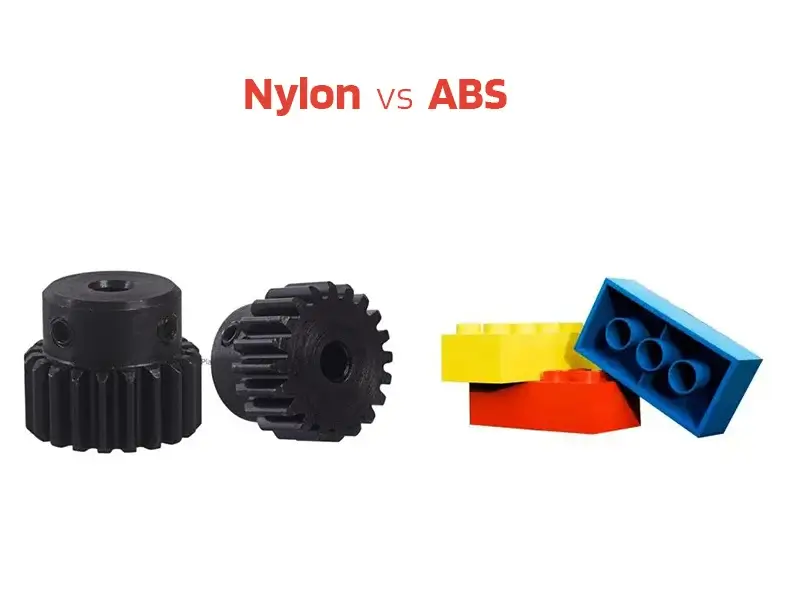
When people ask what the strongest plastic is, they usually expect a simple answer. But strength can mean different things depending on the situation, and the material that wins on one measure often loses on another. This guide breaks down what “strong” really means, compares five widely used engineering plastics, and helps you pick the right one for your project.
What Does “Strongest Plastic” Actually Mean?
There’s no single “strongest” plastic, because strength isn’t one property. It’s a mix of different measurements. The main ones to know:
- Tensile Strength: resistance to pulling or stretching
- Impact Strength: resistance to sudden shock or force
- Hardness: resistance to scratching and wear
- Heat Resistance: how well strength holds up at high temperatures
A good example of why this matters: polycarbonate and ABS have similar tensile strength, but polycarbonate has far higher impact strength. In practice, tensile strength and impact strength are the two measures that matter most for real-world product design.
Common Types of Strong Plastics
PEEK (Polyetheretherketone)
PEEK is one of the highest-performing engineering plastics available. It offers excellent tensile strength and holds up well under continuous use at very high temperatures. Carbon-fiber-reinforced versions push tensile strength even higher, with a solid boost in impact resistance as well.
PEEK is typically processed by injection molding or 3D printing (FDM/SLS).
It’s used in aerospace components, medical implants, and oil and gas equipment where high heat and chemical exposure are common.
HDPE (High-Density Polyethylene)
HDPE has a lower tensile strength than PEEK, but it makes up for it with excellent chemical resistance and impact toughness. It’s a lightweight material with a moderate melting point, which keeps it out of high-heat applications.
HDPE can be processed through injection molding, blow molding, rotational molding, or extrusion. For more details, you can refer to our guide on HDPE molding.
Common uses include crates, pallets, storage containers, and piping.
PC(Polycarbonate)
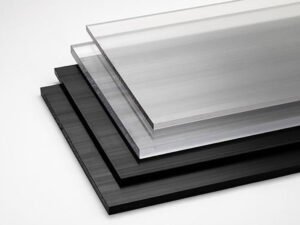
Polycarbonate’s tensile strength is similar to ABS and acrylic, but it stands out for having the highest elongation and impact strength of the group. This makes it the go-to choice when a part needs to absorb impact without shattering.
It’s typically processed by injection molding or extrusion.
You’ll find polycarbonate in safety glasses, bulletproof windows, and phone cases.
Nylon (Polyamide, PA)
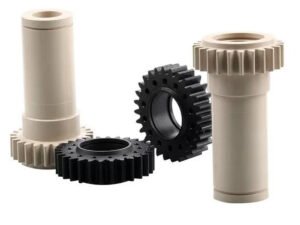
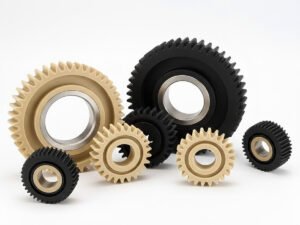
Nylon offers strong tensile strength, especially in reinforced grades. It combines strong impact resistance with good thermal stability, making it a versatile choice for mechanical parts.
Nylon is commonly used in nylon injection molding, often with carbon fiber reinforcement to improve strength and durability.
Typical applications include gears, automotive parts, and medical components.
ABS (Acrylonitrile Butadiene Styrene)
ABS has lower tensile strength than the other materials on this list, but it’s valued for its impact toughness, ease of machining, and low cost.
It’s commonly processed by ABS injection molding or 3D printing (FDM).
ABS shows up in automotive interiors, household goods, and electronics.
Quick Comparison Between Different Materials
| Material | Tensile Strength | Impact Strength | Max Temp | Common Process | Typical Use |
|---|---|---|---|---|---|
| PEEK | ~100 MPa | 8–10 kJ/m² | 240°C | Injection molding, 3D printing | Aerospace, medical implants |
| HDPE | 25–33 MPa | High | 120–130°C (melt) | Injection, blow, rotational molding | Crates, pallets, piping |
| PC | Similar to ABS | Highest of group | Moderate-high | Injection molding, extrusion | Safety glasses, phone cases |
| Nylon | Up to 80 MPa | Strong | Moderate-high | Injection molding | Gears, automotive parts |
| ABS | Lower | Good | Moderate | Injection molding, 3D printing | Automotive interiors, electronics |
How Processing Affects Strength
The same material can perform very differently depending on how it’s manufactured. PEEK 3D-printed parts, for example, can have tensile strength anywhere from 56 to 97 MPa depending on the printing method used. Recycled HDPE loses 5–15% of its tensile and impact strength with each recycling cycle. In short, the material you choose is only half the equation, and the process matters just as much. Understanding the major plastic molding types can help you choose the right process for your application.
How to Choose the Right Plastic
The right plastic depends more on a handful of practical factors. Here’s what to weigh before deciding.
Type of Stress
Figure out whether the part mainly needs to resist pulling and stretching, sudden impact, or surface wear. A bracket under constant load calls for high tensile strength (nylon, PEEK), while a housing that might get dropped needs high impact strength instead (polycarbonate, HDPE).
Operating Temperature
Check both the normal operating temperature and any peak or spike temperatures the part could see. Materials that perform well at room temperature can weaken sharply at higher heat. PEEK stays reliable up to 240°C, while standard HDPE softens well below 130°C.
Chemical Exposure
If the part will contact acids, solvents, or cleaning chemicals, chemical resistance matters as much as mechanical strength. HDPE and PEEK both hold up well here, which is why they’re common in chemical storage and industrial equipment.
Budget and Manufacturing Process
Higher-performance materials like PEEK cost significantly more than commodity plastics like ABS or HDPE, and the manufacturing process you’re using (injection molding, extrusion, 3D printing) may narrow your options further. For cost-sensitive projects with moderate strength needs, ABS or HDPE are usually the more practical choice.
Weight Considerations
If reducing weight matters, as in aerospace or automotive parts, strength-to-weight ratio becomes more important than raw strength. PEEK and reinforced nylon both offer high strength at relatively low weight compared to metals.
Conclusion
There’s no single “strongest plastic.” The right answer depends on what kind of strength you need and how the part will be made. Match the material to your stress type, temperature range, and manufacturing process, and you’ll land on the right choice. If you’re still weighing options, the team at Jiangzhi can provide custom plastic parts services to match materials to real-world requirements. Get in touch, and we’ll help you find the right fit for your project.