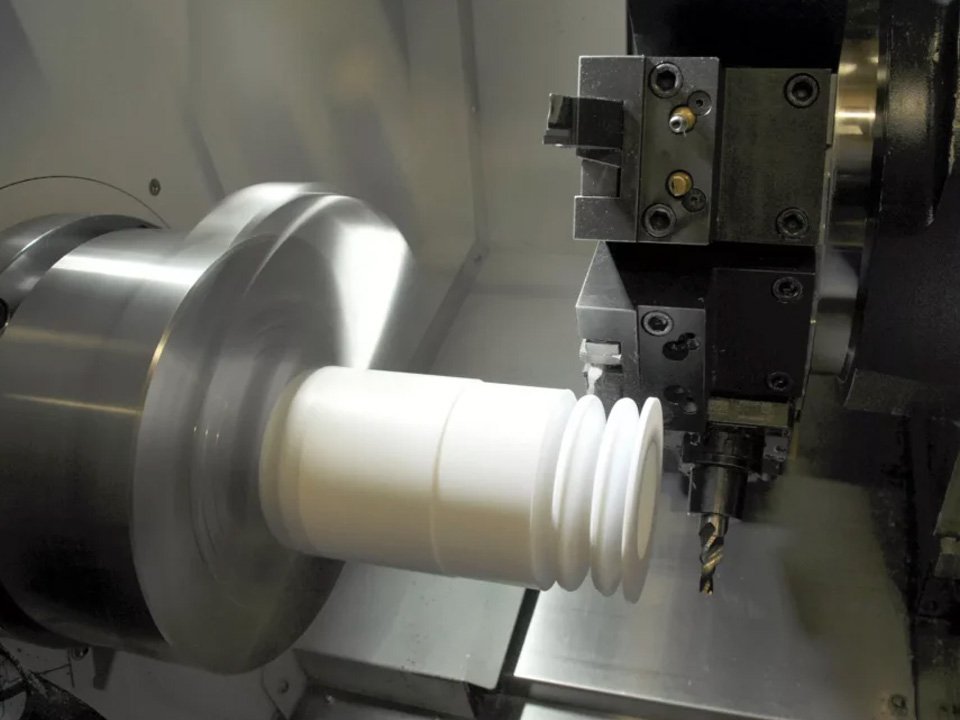
Ultra-high molecular weight polyethylene (UHMW) offers excellent wear resistance, strong chemical stability, low friction coefficient, and inherent self-lubrication. In addition, its impact resistance remains stable even under demanding operating conditions.
However, these same properties also make UHMW injection molding difficult. Compared with standard thermoplastics, UHMW has much higher melt viscosity, poorer flowability, and stricter process control requirements. Successful production depends on matching material behavior with mold design, equipment capability, and precise molding parameters.
Why UHMW Is Difficult to Process
The processing difficulty of UHMW injection molding is caused by its molecular structure and physical behavior.
High Molecular Weight and Chain Entanglement
UHMW polyethylene typically has a molecular weight in the range of 3 to 10 million g/mol. This extremely long molecular chain structure creates severe entanglement between molecules. As a result, the material does not behave like conventional polyethylene during melting and flow.
High Melt Viscosity and Poor Flowability
The extremely high molecular weight of UHMW creates very high melt viscosity. This makes the material flow poorly into the mold, especially in parts with long flow paths, thin walls, or complex geometries.
High Injection Pressure Requirements
Due to its resistance to flow, UHMW often requires significantly higher injection pressure compared to standard thermoplastics. While this helps push the material into the cavity, it also introduces secondary issues such as mold stress, flash risk, and dimensional variation. For related process control principles, see our guide to injection pressure in injection molding.
Uneven Melting and Temperature Sensitivity
UHMW has a narrow processing temperature window. Small variations in barrel temperature can result in inconsistent melting. Some areas may remain partially solid while others become too fluid, creating weak zones or surface defects.
Cooling and Internal Stress Control Difficulties
Because of its high viscosity and limited flow relaxation, UHMW tends to develop uneven internal stress during cooling. This can result in dimensional instability, warpage, or long-term deformation. Unlike more flowable plastics, UHMW requires careful cooling balance and stress control.
UHMW Injection Molding Process Flow
Although UHMW injection molding is challenging, a controlled and adapted process can be used to achieve stable results.
- Material Preparation: UHMW is often supplied in powder form. For injection molding, it is converted into pellets through specialized compounding. This improves feeding consistency and reduces hopper bridging. The material should also be dried or conditioned according to supplier recommendations.
- Machine Setup: Specialized screws with low compression ratios are installed to handle high viscosity without excessive shear heat. Barrel temperature profiles are set between 200°C and 300°C with precise zoning for uniform melting.
- Injection Phase: Injection speeds are kept lower to prevent melt fracture. Holding pressure is applied for longer durations to compensate for shrinkage. Precise control of pressure and speed is required throughout this stage.
- Cooling Phase: Controlled cooling is applied to minimize warpage. Cooling time is generally longer than with other thermoplastics due to the material’s thermal properties.
- Demolding: The part is ejected carefully, taking into account UHMW’s flexibility and toughness. Proper draft angles and mold design are essential for clean release.
- Post-Processing: Additional steps such as trimming, annealing, or machining are performed when tight tolerances are needed.
- Process Monitoring: Key parameters, including temperature, pressure, and cycle time, are monitored continuously. This ensures repeatability and consistent quality across production batches.
Jiangzhi’s Custom Solutions for UHMW Injection Molding
At Jiangzhi, we address the specific difficulties of UHMW injection molding by optimizing mold design, tooling, and process parameters.
Solutions for High Melt Viscosity Challenges
High viscosity often causes short shots and incomplete filling. To solve this, we use extended-stroke screws with 28–30 L/D ratio and low-shear barrier flights. These screws provide better melting control and lower shear stress, helping the material fill the cavity more consistently.
Solutions for Poor Flowability
Poor flow leads to unfilled areas and surface defects. We maintain hot runners at 220°C and mold temperatures between 100–120°C. This keeps the melt mobile longer, improving flow length and enabling complete cavity filling in demanding geometries.
Solutions for Shrinkage and Warpage
Uneven shrinkage commonly results in dimensional variation and part distortion. Our design approach includes uniform wall thickness of 8 mm or less, balanced gate placement, and conformal cooling channels. These features help control injection molding shrinkage and reduce the risk of warping in injection molding.
Solutions for Delamination at Weld Lines
Weld lines in UHMW parts are prone to weakness and delamination because of poor molecular diffusion at flow front intersections. We apply valve-gate sequencing together with melt front simulation using Moldflow software. This helps improve weld line strength and reduce defects associated with knit lines and weld lines.
Common Applications of UHMW Injection Molding
UHMW injection molding service is typically used in wear resistance, low friction, and chemical stability applications.
- Mining and Bulk Material Handling: Chute liners, conveyor rollers, and wear plates.
- Food Processing and Packaging: Guide rails, wear strips, and star wheels.
- Medical and Healthcare: Instrument components and protective housings.
- Automotive and General Machinery: Bushings, gears, and seals.
- Chemical Processing and Marine: Pump components, valve seats, and dock fenders.
Why Choose a Custom Factory Over General Suppliers?
Selecting a custom factory for UHMW injection molding provides distinct advantages over working with general suppliers.
Standard injection molding facilities often lack the specialized equipment and accumulated experience needed for this material. As a result, projects may experience higher defect rates, extended debugging periods, and inconsistent part quality.
A dedicated custom manufacturer maintains control over the entire process, from initial design review to final quality verification. This end-to-end oversight leads to better communication and faster problem resolution.
In the long run, custom production delivers higher yields, fewer rejected parts, and longer tool and component life. While upfront costs may be higher, the overall value is usually better.
Conclusion
UHMW’s high melt viscosity and processing challenges make UHMW injection molding difficult without proper expertise. Jiangzhi offers professional UHMW injection molding services with proven experience in overcoming flow, shrinkage, warpage, and weld line problems.
If your project requires durable, wear-resistant UHMW components, our engineers can help evaluate part design, mold structure, and production feasibility through a customized injection molding service.