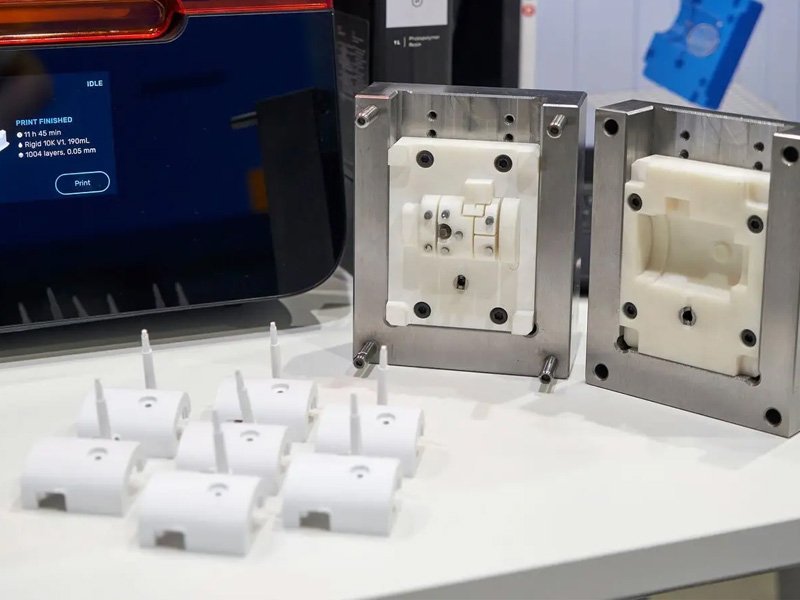
Rapid injection molding is revolutionizing the manufacturing landscape, offering a fast and efficient solution for producing high-quality plastic parts in shorter timeframes. Unlike traditional methods, this innovative process enables companies to quickly prototype and manufacture low- to medium-volume parts, significantly reducing lead times and costs. This article explains how rapid injection molding works, how it differs from traditional injection molding, and where it is commonly used.
What is Rapid Injection Molding?
Rapid injection molding (RIM) is a manufacturing process that uses rapid tooling to produce plastic parts with shorter lead times. It is widely used for prototype development, design validation, and low-to-medium volume production.
By using quickly manufactured molds, typically made from aluminum or soft steel, rapid injection molding reduces tooling time while maintaining good part quality and dimensional accuracy. It helps accelerate product development and bring products to market faster before full-scale manufacturing.
How Does Rapid Injection Molding Work?
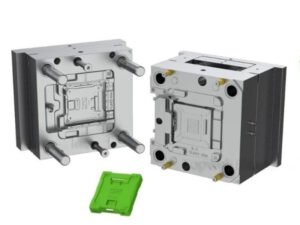
Before injection molding starts, rapid tooling is produced using faster mold-making methods, typically aluminum or soft steel molds.
Once the mold is ready, suitable thermoplastic materials are prepared for the injection molding process. Plastic pellets are heated until they melt and are then injected into the mold cavity under high pressure. The molten plastic fills the mold, taking the shape of the desired part. After cooling and solidifying, the mold is opened, and the part is ejected. For a more detailed explanation of each stage in the injection molding process, you can refer to our article on the injection molding process.
Key Design Tips for Rapid Injection Molding
Proper part design plays an important role in reducing tooling costs, improving mold performance, and achieving consistent part quality. Some important design considerations include:
- Maintain Uniform Wall Thickness: Consistent wall thickness helps ensure proper material flow, reduces defects, and improves part quality.
- Add Appropriate Draft Angles: Draft angles make part ejection easier and help prevent damage to both parts and molds.
- Avoid Unnecessary Undercuts: Simplifying part geometry can reduce mold complexity and minimize tooling costs.
- Use Ribs and Bosses Properly: Properly designed ribs and bosses can improve part strength while maintaining efficient molding performance.
When Should You Use Rapid Injection Molding?
Rapid injection molding is widely used in product development and manufacturing projects that require shorter lead times, lower tooling costs, and flexible production capabilities. It is commonly applied in the following scenarios:
Rapid Prototyping
Rapid injection molding is commonly used to produce functional prototypes before full-scale production. It allows companies to evaluate part designs, test fit and functionality, and verify material performance using production-grade materials and injection molding processes. This helps identify potential design issues early and reduce risks before moving into mass production.
This approach is widely used in industries such as consumer electronics, automotive, aerospace, and medical devices, where product performance and design validation.
Low-Volume Production
For projects requiring hundreds or thousands of parts, rapid injection molding provides a cost-effective solution compared with traditional injection molding. It is suitable for small-batch manufacturing, market testing, customized products, and products with uncertain demand. By using lower-cost rapid tooling, companies can reduce initial investment while still achieving high-quality molded parts.
It is commonly used to produce components such as smartphone enclosures, automotive switches, connectors, medical device housings, and other plastic parts.
Bridge Production
Rapid injection molding serves as a bridge between prototype development and full-scale manufacturing. It allows companies to produce parts while waiting for production molds to be completed or while preparing for mass production. This helps avoid production delays, supports early product launches, and provides a practical solution for companies that need reliable parts before committing to high-volume manufacturing. This is especially useful in industries such as automotive and consumer electronics.
Supply Chain Backup
Rapid injection molding can also serve as a backup manufacturing solution during unexpected supply chain disruptions. When production delays, supplier issues, or tooling problems affect part availability, rapid tooling enables manufacturers to quickly produce replacement components and maintain product supply.
Differences Between Traditional and Rapid Injection Molding
While rapid and traditional injection molding share the same core process, they differ in several key aspects. The table below summarizes the key differences: