How to Reduce Injection Molding Costs: 6 Proven Strategies

Many companies look for ways to achieve low-cost injection molding without compromising quality or functionality. However, low-cost injection molding is not achieved through a single decision or a single stage of production. It is the result of a series of coordinated choices involving part design, material selection, mold strategy, order quantity, and supplier planning.

When these decisions are made early, companies can reduce tooling costs, shorten cycle times, and avoid expensive revisions. When they are delayed, cost problems often appear after mold construction has already started. The following six strategies help reduce injection molding costs while keeping production practical and reliable.

Start Saving in the Design Phase

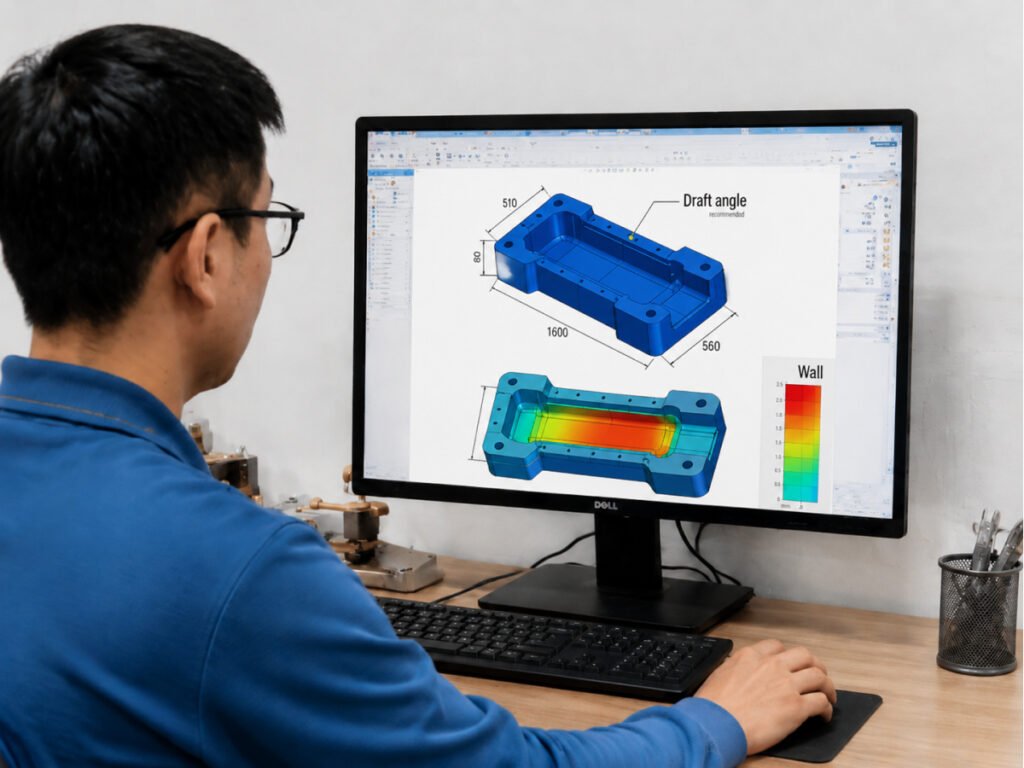
The design stage offers the largest opportunity for low-cost injection molding. Changes made here cost far less than adjustments after tooling begins. A Design for Manufacturability (DFM) review should happen early. This review identifies issues that increase tooling complexity, cycle time, and defect risk. For related design principles, see our plastic part design guideline.

  • Avoid undercuts, which are features that prevent easy part removal from the mold. Undercuts require complex mold mechanisms and raise tooling costs.
  • Maintain consistent wall thickness. Thick and thin sections in the same part create uneven cooling, which can lead to defects and longer cycle times.
  • Add a proper draft, typically one to two degrees, so parts release smoothly from the mold. Without sufficient draft, ejection becomes difficult and may damage parts or molds.
  • Reduce unnecessary geometric complexity. Simple geometry and fewer features generally support low-cost injection molding more effectively than complex shapes.

Optimize Design Drawings

Choose the Right Material Without Over-Specifying

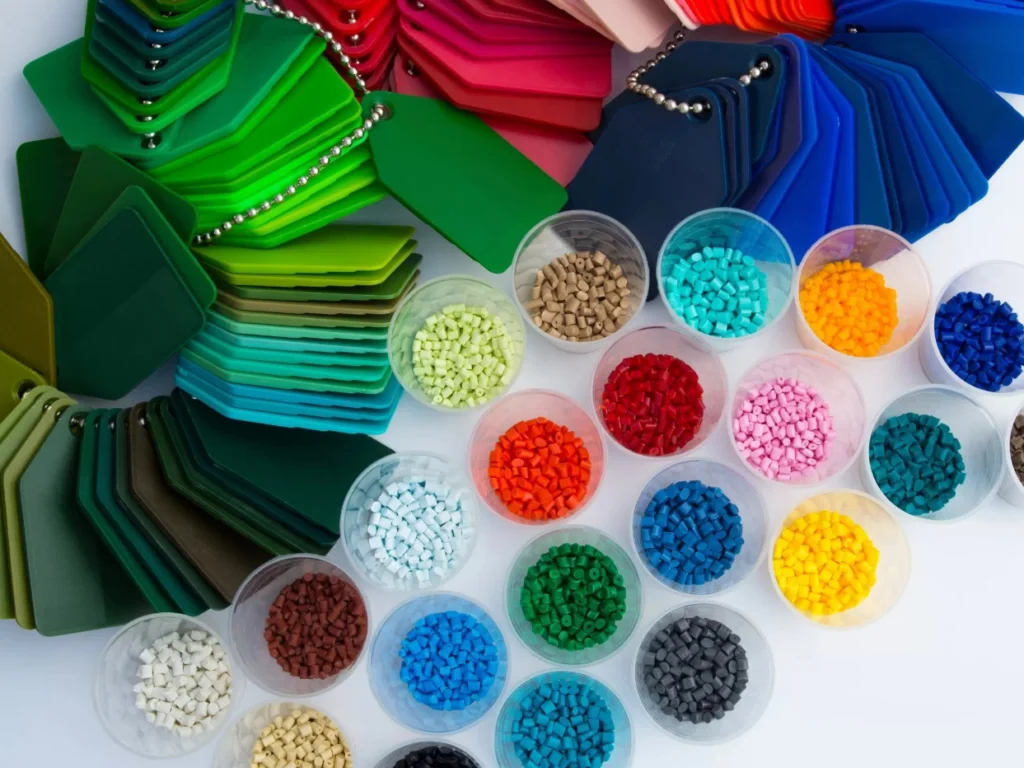
Material selection is another critical factor in low-cost injection molding. While material cost is only one part of total cost, it affects processing behavior, cycle time, and defect rates. The goal is to balance performance requirements with material efficiency instead of choosing a resin that exceeds the real application needs.

When selecting materials, it is important to evaluate:

  • Mechanical strength requirements
  • Thermal resistance conditions
  • Surface finish expectations
  • Chemical exposure environment

injection molding material selection guide

Select the Appropriate Mold Based on Production Volume

Mold type should match the expected production volume for effective low-cost injection molding. Different mold types are suitable for different production volumes.

  • Aluminum molds work well for low volumes, often under 10,000 parts. They cost less to produce and modify.
  • For medium volumes, pre-hardened steel molds provide a balance of durability and price.
  • High-volume production, above 100,000 parts, usually requires hardened steel molds that withstand repeated cycles.

Selecting the wrong tooling strategy can lead to inefficient cost distribution. Clear volume information helps suppliers design molds that support low-cost injection molding for the specific project scale. For volume planning, compare this with our guide to low-volume injection molding.

Reduce Secondary Operations

Secondary processes add high costs to injection molded parts. These include assembly steps, surface finishing, and post-processing tasks that occur after molding.

Common approaches include:

  • In-mold texturing to eliminate post-finishing processes
  • Part consolidation to reduce assembly requirements
  • Insert molding to integrate multiple components into a single process
  • Simplified surface requirements where functional design allows

Plan Purchase Quantities Carefully

Production volume has a direct influence on unit cost in injection molding. Tooling cost is typically amortized across total production quantity, meaning that higher volumes generally reduce per-unit cost. Our injection molding cost guide explains how tooling, material, and production volume interact.

However, incorrect planning can lead to inefficiencies. Overestimating demand may result in underutilized tooling, while underestimating demand can increase unit cost significantly.

Key considerations include:

  • Accurate estimation of annual and lifetime demand
  • Batch size optimization for production runs
  • Alignment between tooling capacity and procurement strategy

Supplier Selection and Manufacturing Location

Supplier and location decisions also play an important role in total manufacturing cost. These decisions extend beyond unit pricing and must include logistics, lead time, and communication efficiency.

  • Overseas production in regions like Asia often provides lower mold and molding costs. However, shipping, duties, and longer lead times add to the total.
  • Nearshore or local production may have higher hourly rates but reduces transportation costs, shortens delivery times, and simplifies communication.

For small production volumes, alternative processes such as CNC machining or 3D printing may offer more cost-effective solutions compared to injection molding. These methods reduce tooling investment and allow faster design iteration.

Conclusion

These six strategies provide proven ways to achieve low cost injection molding. Companies that apply these approaches from the start of a project typically achieve better results, fewer revisions, and more predictable production costs.

Jiangzhi helps customers reduce cost through early DFM review, material selection support, tooling strategy, and production planning. Contact us to discuss your project and find the most suitable injection molding service for your cost and quality targets.

Scroll to Top