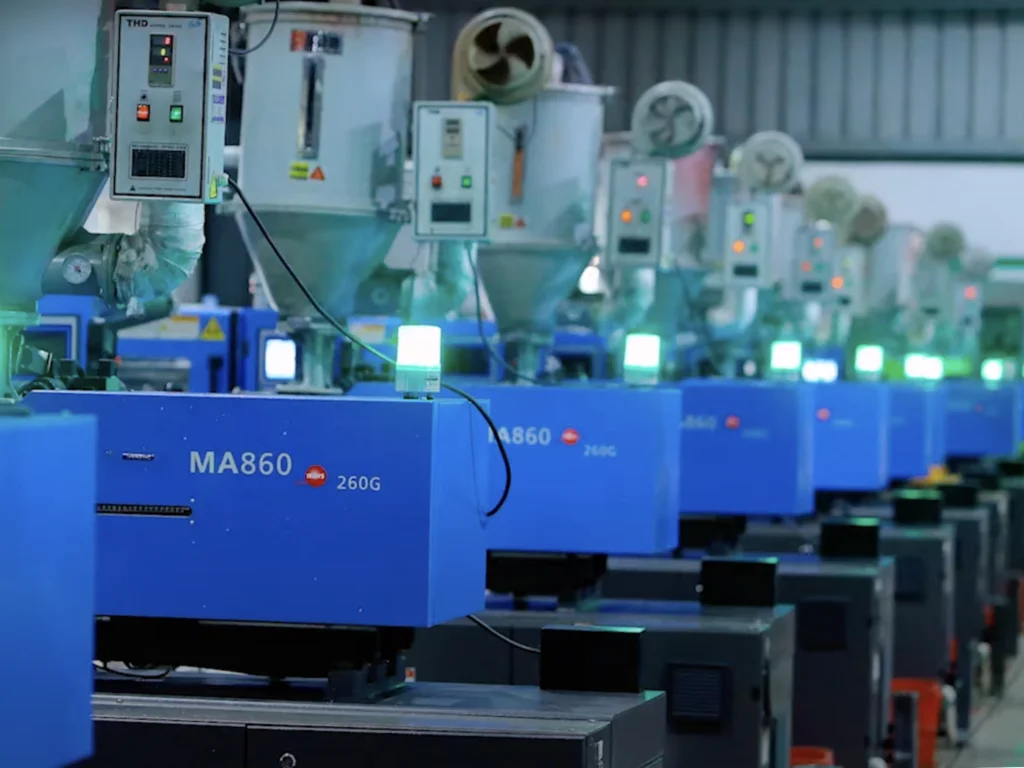
Injection moulding packaging is widely used in industrial packaging due to its ability to produce high-precision, repeatable, and scalable plastic packaging parts. Unlike packaging methods focused only on forming containers, injection moulding packaging also includes functional components such as closures, caps, inserts, and structural elements that support complete packaging systems.
What is Injection Moulding Packaging?
Injection moulding packaging refers to plastic packaging components produced by injecting molten plastic resin under high pressure into a precisely engineered steel mould. The material cools and solidifies inside the cavity, forming packaging parts with consistent dimensions and surface finish. The full cycle — from injection to ejection — often completes in seconds, which supports efficient production runs.
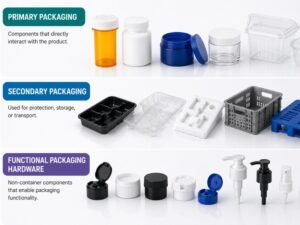
Injection moulding packaging can be classified into three functional levels based on its application in packaging systems: primary packaging, secondary packaging, and functional packaging hardware.
- Primary Packaging: Primary packaging refers to components that directly interact with the product. In injection moulding packaging, this includes items such as pharmaceutical containers, cosmetic jars, and food-contact packaging components. These must comply with food safety, pharmaceutical, or cosmetic regulations.
- Secondary Packaging: Secondary packaging is used for protection, storage, or transport. In injection moulding packaging, this includes trays, protective inserts, and structural packaging parts.
- Functional Packaging Hardware: This category includes non-container components that enable packaging functionality. Examples include caps, closures, pumps, dispensing systems, and locking mechanisms. These parts require high dimensional accuracy and mechanical reliability, especially in applications involving repeated use or sealing performance.
Injection Moulding Packaging Differs from Other Common Plastic Forming Methods:
- Blow moulding works best for hollow, thin-walled containers like large bottles because it inflates a parison inside a mould.
- Thermoforming heats plastic sheets and forms them over or into simple moulds, which suits shallow trays and clamshells but offers lower precision for complex geometries or thick sections.
- Injection moulding packaging provides tighter tolerances, the ability to integrate threads and undercuts in one shot, and better suitability for intricate details.
Common Injection Moulding Packaging Products
Injection moulding is commonly used for packaging products that require precise features, consistent quality, and efficient mass production. Different packaging applications benefit from injection moulding for specific manufacturing reasons.
Caps and Closures: Bottle caps, flip-top lids, screw caps, and child-resistant mechanisms require accurate threads and sealing surfaces to prevent leaks. Injection moulding multi-cavity moulds can reproduce these small functional features with tight dimensional control, ensuring reliable torque and leak-proof performance across large batches.
Containers and Tubs: Thin-walled food containers, yogurt cups, ice cream tubs, and industrial buckets need stable, uniform walls to maintain strength and stackability during filling and transport. Injection moulding precisely controls wall thickness (sometimes below 0.5 mm), preventing warping during cooling and supporting high-speed filling lines.
Trays and Pallets: Transport trays, display trays, and industrial pallets require rigidity and load-bearing capacity for repeated use and stacking. Injection moulding integrates ribs and structural features directly into the part design, adding strength without increasing wall thickness or requiring secondary assembly.
Jars and Specialized Packaging: Cosmetic jars, pharmaceutical containers, and custom boxes rely on surface finish and visual consistency to support brand presentation. Mould cavities can be finished with fine textures and embossed logos, and multi-cavity or multi-colour moulding reproduces these details consistently across production runs without secondary decoration.
Functional Components: Dispensing pumps, measuring caps, and protective inserts often combine moving or connecting features such as hinges and snap fits. Injection moulding can form these complex geometries as a single component, reducing assembly steps and potential failure points.
Materials Used in Injection Moulding Packaging
Material selection directly affects compliance, cost, and performance. Common choices include:
- Polypropylene (PP): Widely used for food containers and caps due to its chemical resistance, flexibility, and low cost. It performs well in living-hinge applications.
- Polyethylene (HDPE, LDPE): HDPE offers higher rigidity, while LDPE provides flexibility. Both materials are commonly used for bottles, crates, and industrial containers.
- Polyethylene Terephthalate (PET): Provides clarity and strength for visible packaging, though often processed via injection stretch blow moulding for bottles.
- Polystyrene (PS) and Others: Used for rigid transparent trays or specialized medical applications.
There’s another factor worth considering: sustainability. Sustainability has become an important consideration in packaging material selection as brands seek to reduce environmental impact and meet sustainability goals. PCR plastics can reduce reliance on virgin materials, while lightweighting helps lower material consumption. Biodegradable or bio-based plastics may also suit specific applications where performance and regulatory requirements allow.
Design Considerations for Injection Moulding Packaging
Beyond standard moulding design principles (uniform wall thickness, draft angles, gate placement, and shrinkage allowance), packaging components have a few specific requirements:
- Sealing and Closure Performance: Caps and closures need precise thread geometry and sealing surfaces for consistent torque and leak-proof performance.
- Transparency and Surface Finish: Visible packaging (jars, food containers) requires resin and mould polishing that preserve optical clarity.
- Drop and Stacking Strength: Transport and retail packaging should be designed to withstand drop testing and stacking loads, often through rib placement rather than added thickness.
Advantages and Disadvantages of Injection Moulding for Packaging
Advantages
- Lower unit costs at volume due to fast cycle times and multi-cavity capability.
- High consistency across production runs, which supports stable filling line performance and fewer rejects.
- Design flexibility for complex features that reduce assembly labor downstream.
- Material efficiency and options for lightweighting or recycled content.
- Durability that protects products during transport and storage.
Disadvantages
- High initial mould investment, which impacts projects with lower volumes or frequent design changes.
- Longer lead times for new tooling compared to off-the-shelf solutions.
- Potential limitations on very large or extremely thin parts without process adjustments.
To address these challenges, Jiangzhi conducts DFM reviews to optimize material usage and cycle times, offers modular mould options for future design changes, and confirms material compliance early. First-article inspection ensures parts meet specifications before full production begins.